Nail ideas / Goth & dark
Black lace nails: opaque and sheer motifs that actually fit
Black lace nails bring the look of delicate textile onto a tiny canvas, which means placement and scale are everything—the wrong motif size turns an intricate design into an unreadable blur at arm's length. Understanding which lace elements translate well to nails, and which ones get lost, helps you plan a set that stays legible and intentional.
Three rules
Start here.
- Scale your motif to your nail size before you start: print or sketch the lace element at actual nail dimensions to check whether the detail reads clearly at that size, because a pattern that looks intricate and lovely on screen often needs to be dramatically simplified to work on a real nail.
- Reserve the most detailed lace work for one or two accent nails—typically the ring finger or thumb—and use a simpler supporting element like a solid black tip, a sheer black wash, or a single scallop border on the remaining nails so the set feels cohesive without every nail competing for attention.
- When painting lace linework freehand, use a thin striping brush and a gel or polish that has a slightly thicker consistency than a sheer formula; runny black polish spreads outside your intended lines instantly, while a slightly thicker formula stays where you place it long enough for you to adjust the shape.
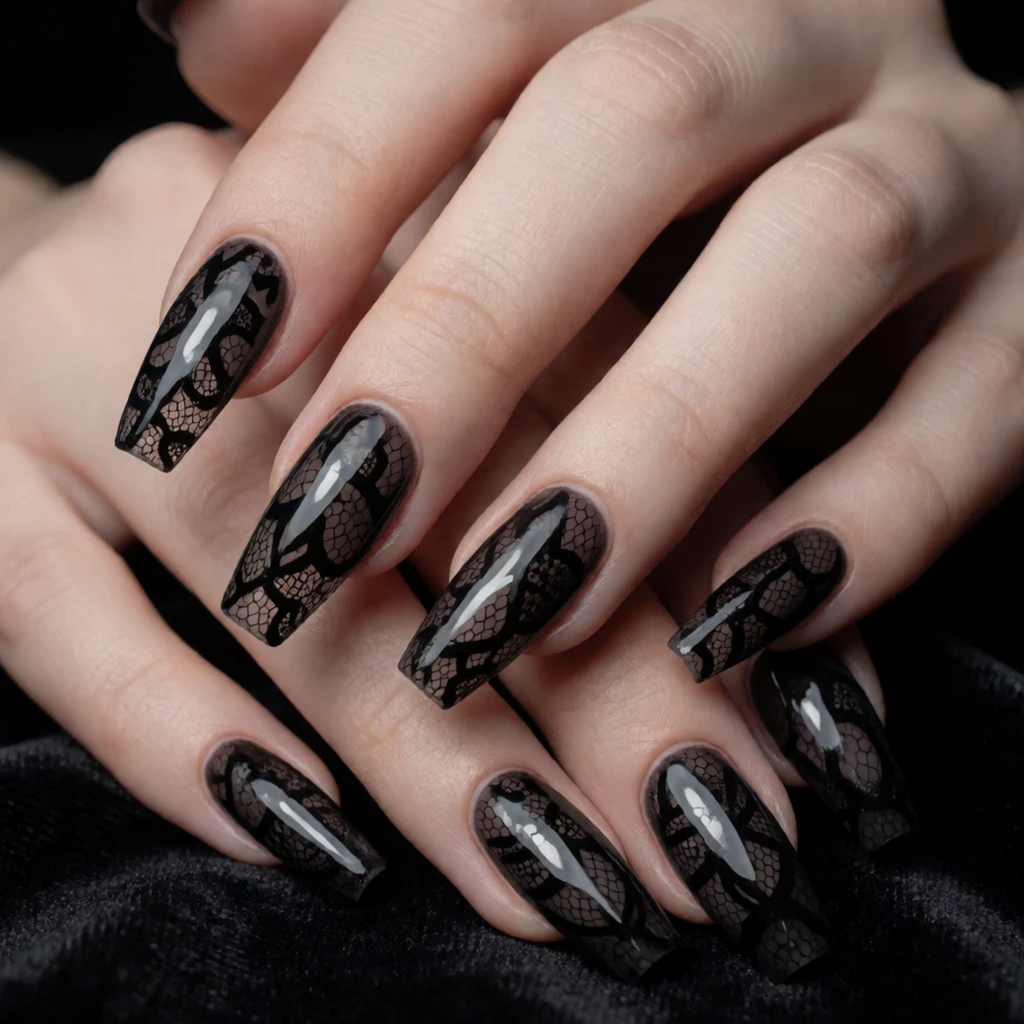
A styling reference, not a product photo.
What defines it
The basics
Black lace nails refer to manicure designs that replicate the appearance of woven lace fabric using nail art techniques, polish, gel or stamping plates. The lace effect can be opaque—solid black lines on a lighter base that mimic the dense weave of cotton or silk lace—or sheer, where a translucent black or very dark gray layer allows the base color or nail to show through in a way that mimics the see-through quality of real lace fabric. Both approaches read very differently finished.
Opaque black lace designs work best when the motif is simple enough to distinguish from a normal conversation distance—about an arm's length. Fine, delicate lace patterns that look beautiful in reference photos often collapse into a smear of black at actual nail size. The most readable opaque lace elements at a practical scale are: open scallop borders along the tip, large individual floral medallions placed in the center of the nail, and repeating dot-and-arch patterns that echo vintage lace edges.
Sheer lace effects are created differently—typically using a very diluted black gel or a sheer black jelly polish layered over a white, cream or nude base. Instead of painted lines, the sheer layer creates a tinted veil that implies lace texture without requiring precise linework. This approach is more forgiving on shorter nails and for people who are newer to nail art, because slight imperfections in the sheer layer blend in rather than standing out the way a wobbly black line would.
Repeatable combinations
Formulas to try
- Scallop border on a white base
- Apply an opaque white or cream base, then use a thin striping brush and black gel or polish to paint a row of connected scallop arcs along the tip of the nail, following the free edge's curve. Add small dots above each arch to echo traditional lace trim. This is one of the most legible lace patterns at nail scale.
- Sheer black veil over nude
- Apply a warm nude or beige base in two coats. Mix a small amount of black gel with clear gel to thin it down until it is translucent, then apply a single layer over the entire nail or just the upper two-thirds. The result looks like fabric draped over skin rather than painted-on linework. Cure and seal with topcoat.
- Single floral medallion accent
- Paint nine nails in a single matte black or deep charcoal, then use a white or nude base on one accent nail per hand. On that accent nail, paint one large lace-style floral or mandala shape in black using a fine detailing brush. Keeping the motif to a single nail keeps it readable and gives it room to breathe.
- Stamping plate lace
- Nail stamping plates designed with lace motifs let you transfer a precise pattern onto the nail using a stamper and scraper tool. Apply the stamp over a dry, light-colored polish base. Stamping is particularly useful for lace because the fine repeated lines in the plate come out more consistently than freehand linework for most people.
- Half-nail sheer lace panel
- Leave the bottom half of the nail as a solid opaque base color—white, blush or even deep red—and apply the sheer black lace layer only over the top half of the nail. The visible line where opaque meets sheer creates a graphic panel effect that mimics a lace overlay on fabric. Blend the edge softly with a brush before sealing.
Your needs, your plans
Before you buy
- Nail length and motif space
- Nails shorter than about 6mm of free edge leave very little space for detailed lace work. On short nails, lean toward sheer overlay techniques or a scallop border at the tip rather than complex interior motifs, which will read as a smudge rather than a pattern when the nail bed is small.
- Base color effects on lace
- Black lace motifs read most clearly against white, cream or pale pink bases because the contrast is maximum. Over a deep burgundy or forest green base they create a rich, tonal effect that is harder to read from a distance but has a moody, luxurious quality up close. Both are valid—just decide which effect you want before you start.
- Gel versus stamping polish
- Regular gel and nail polish are thinner and may bleed if you try to paint fine lace lines freehand. Stamping polish is formulated to be thicker and more opaque so it picks up from the plate cleanly and stamps sharply onto the nail. If you are using stamping plates for lace, use a polish or gel specifically designed for stamping.
- Negative space lace
- Instead of painting lace onto a base, you can create a reverse version by applying strips of nail tape or stencils to a white or clear base, painting over with black, then removing the tape before the black dries. The exposed white becomes the lace pattern itself. This works well for geometric or grid-style lace shapes.
From what you own
Build it and repeat it
Begin with clean, shaped nails and a full base coat. Apply your chosen base color—white or cream works for most lace looks—in two even coats and let it cure or dry completely before touching the design layer. If you are using a stamping plate, have your stamper, scraper, and stamping polish ready before you open the topcoat on your base coat, since you want to stamp onto a surface that is fully set but not yet sealed by a topcoat.
For freehand lace, load your striping brush with a small amount of black gel or polish and test the flow on a piece of paper before touching nail. Work from the tip of the nail downward so your hand doesn't drag across completed linework. Seal the finished design with a gel topcoat and cure fully, or use a quick-dry topcoat over regular polish, applying it in light smooth strokes so it doesn't drag the black linework. Clean any overflow on the skin with an acetone brush before the topcoat sets.
Shop the pieces
16 goth & dark pieces
Links open similar items, not the pictured ones.
-
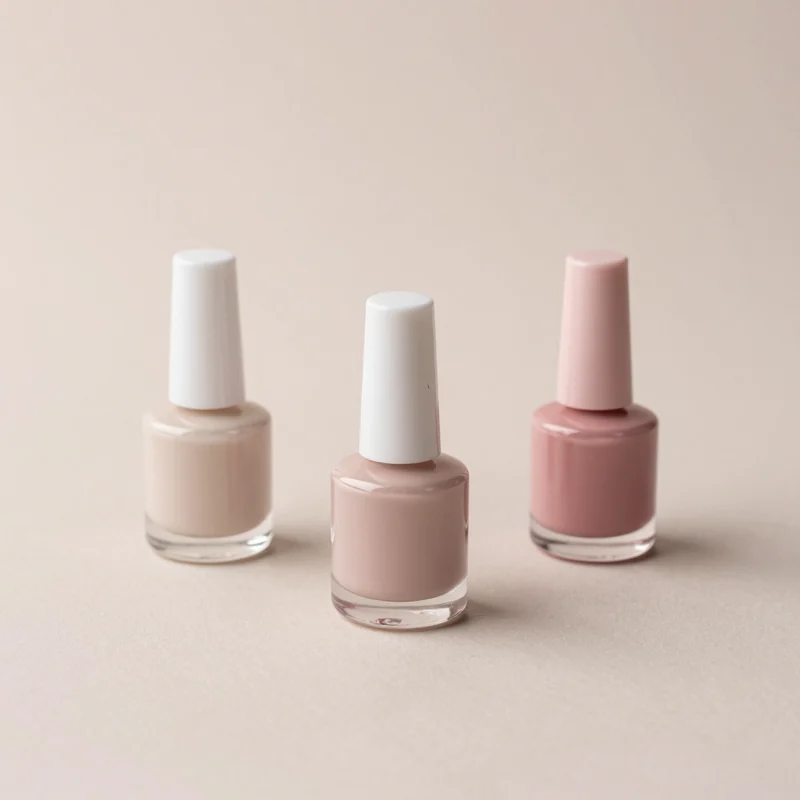
Nude pink nail polish set
What to check
A real product chosen to look like the picture. The picture is a styling reference, not this exact product.
-
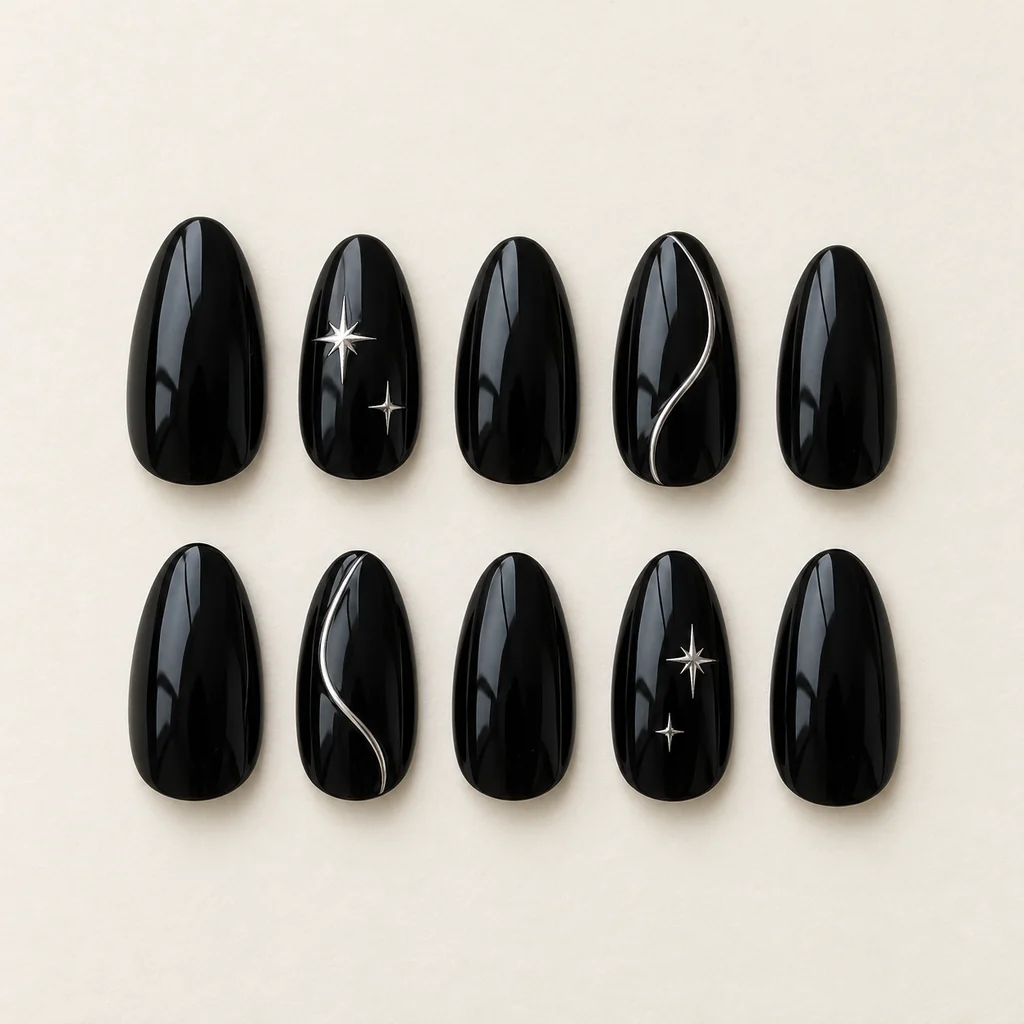
Goth press-on nails
What to check
A real product chosen to look like the picture. The picture is a styling reference, not this exact product.
-
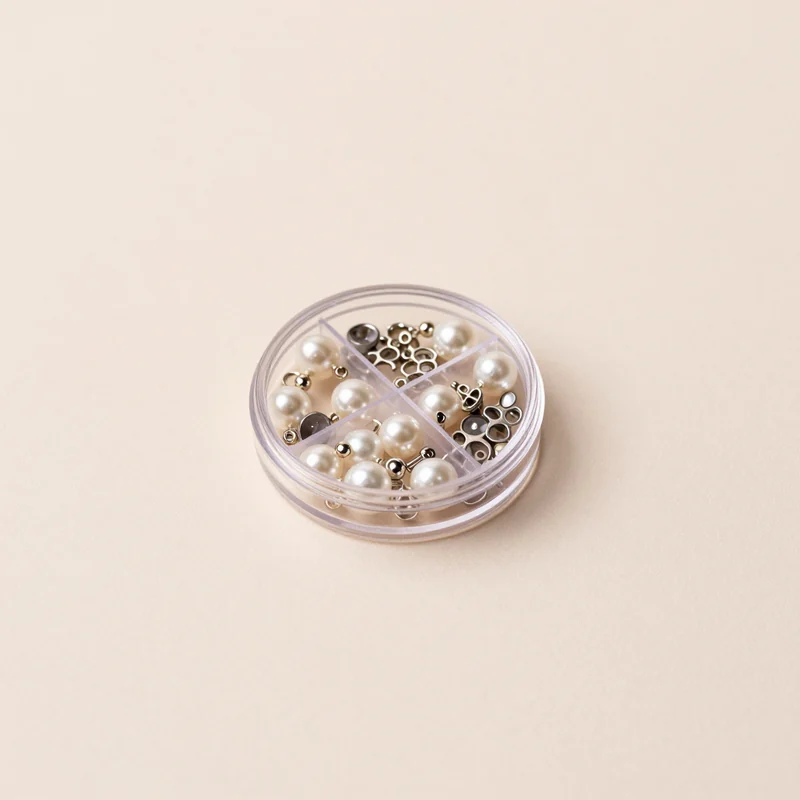
Charms
What to check
A real product chosen to look like the picture. The picture is a styling reference, not this exact product.
-
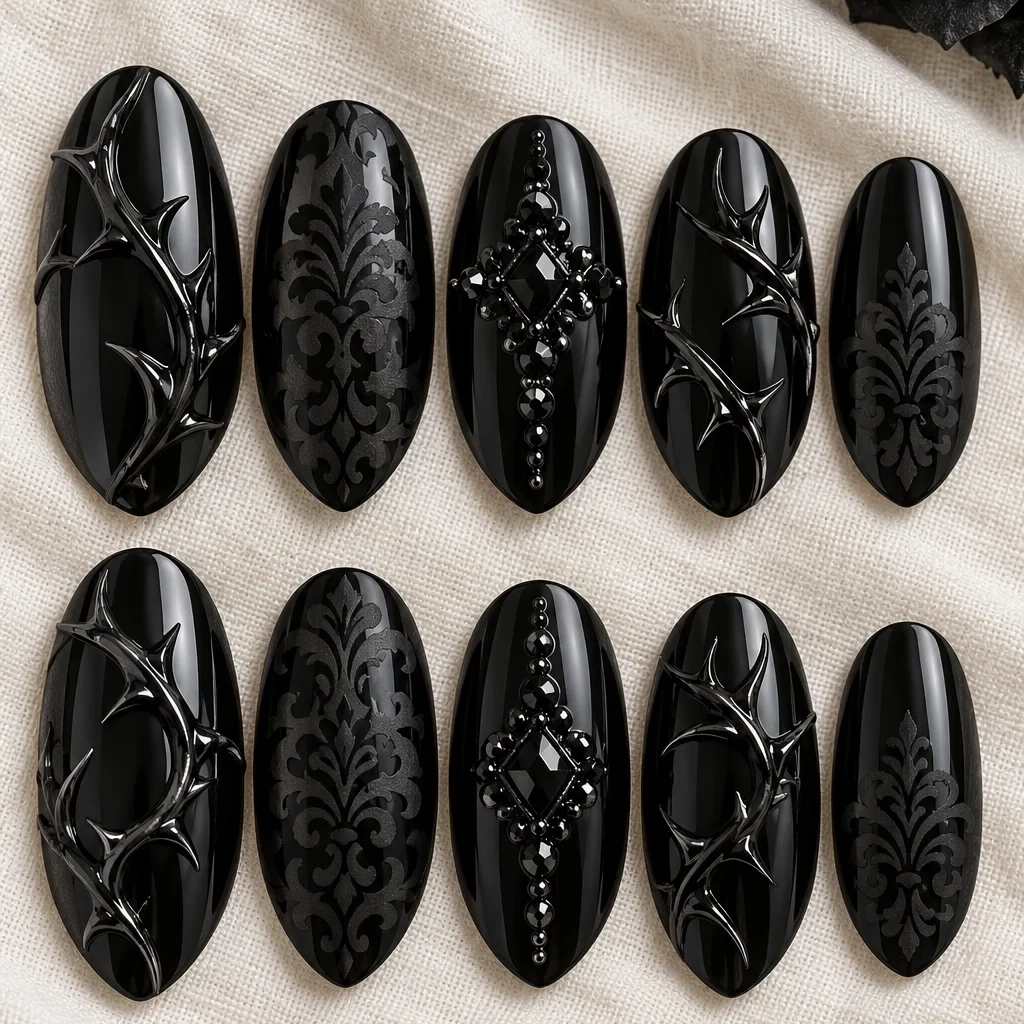
Black Goth Nails
What to check
A real product chosen to look like the picture. The picture is a styling reference, not this exact product.
-
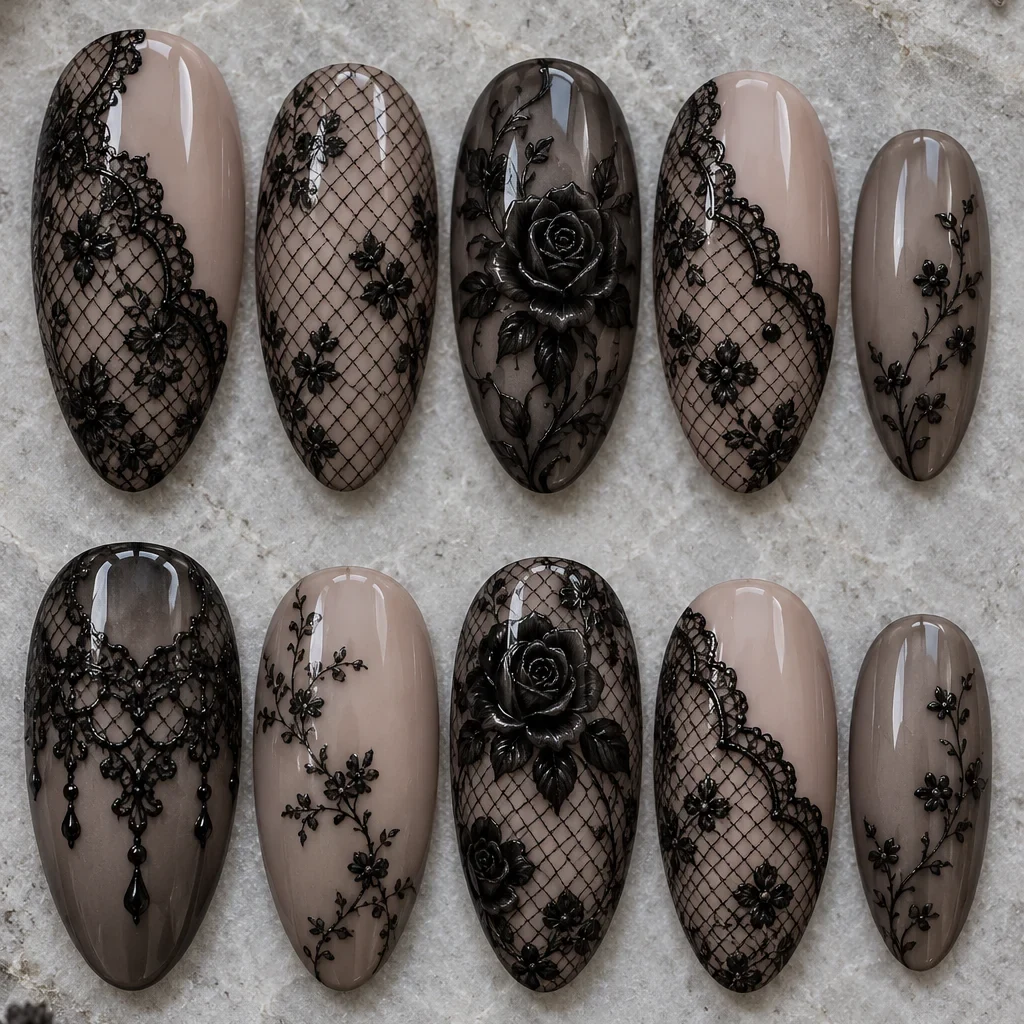
Black Lace Nails
What to check
A real product chosen to look like the picture. The picture is a styling reference, not this exact product.
-
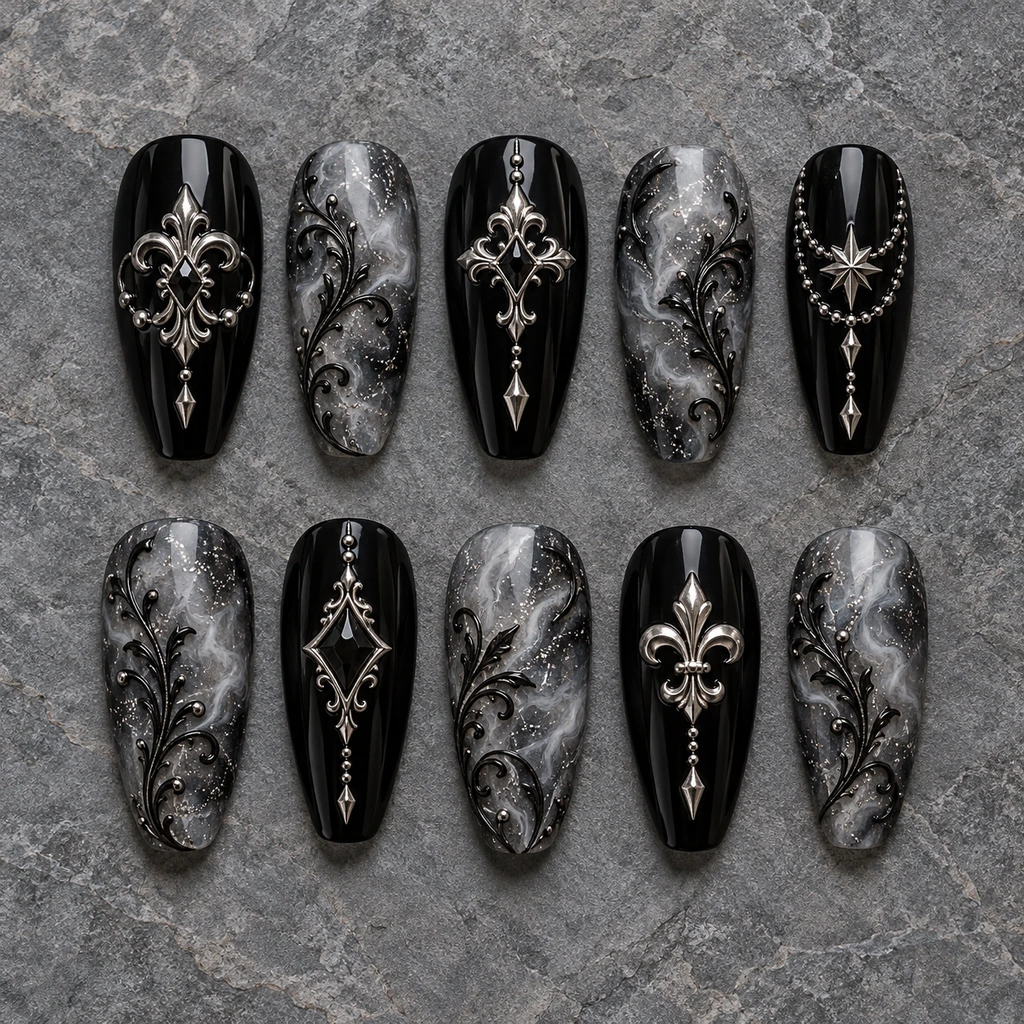
Dark Goth Nails
What to check
A real product chosen to look like the picture. The picture is a styling reference, not this exact product.
-
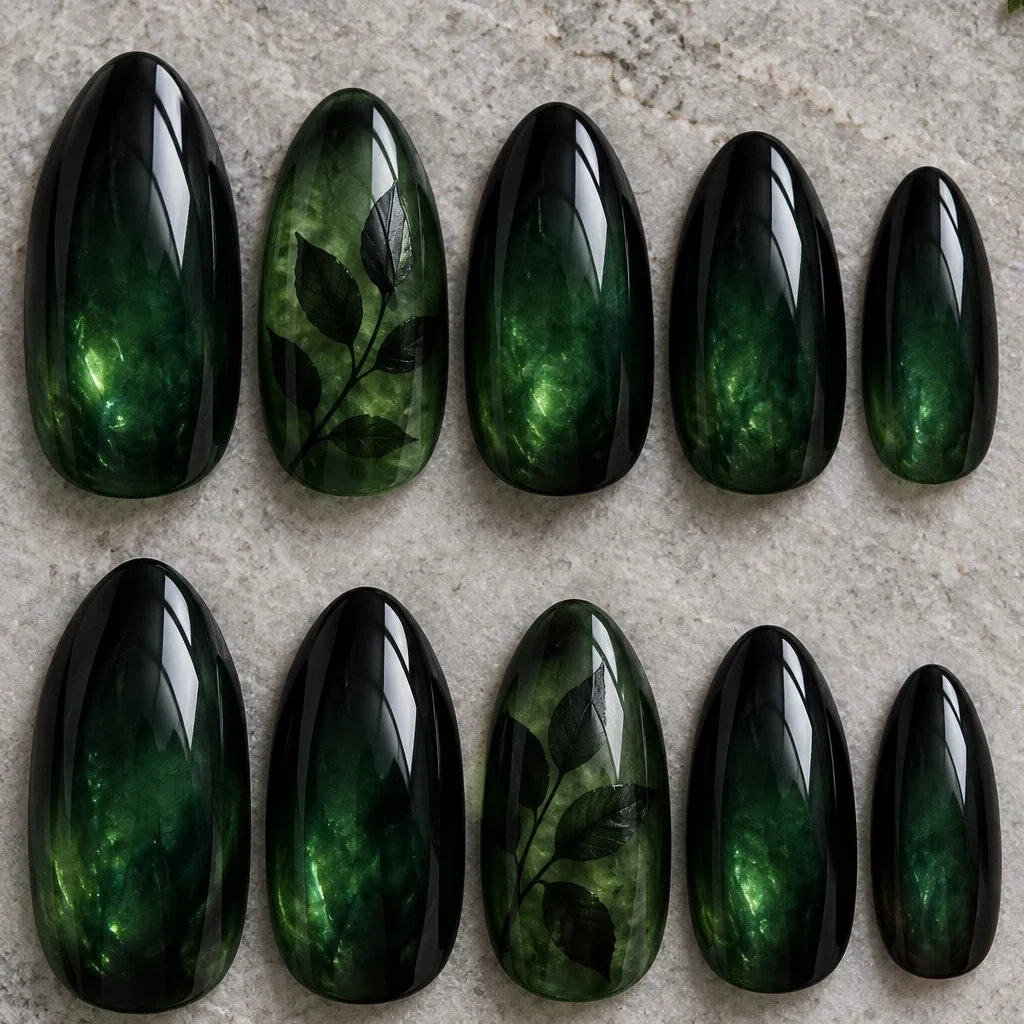
Forest-black jelly
What to check
A real product chosen to look like the picture. The picture is a styling reference, not this exact product.
-
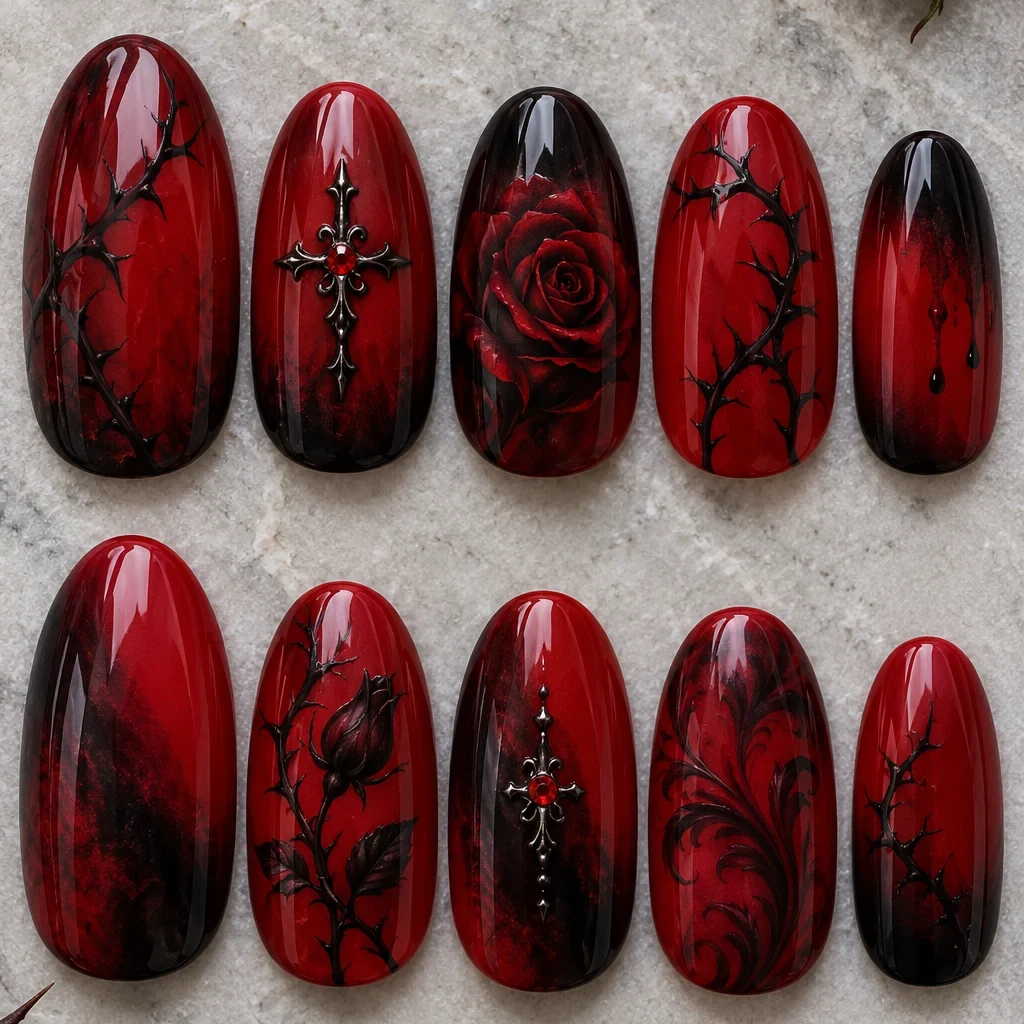
Red Goth Nails
What to check
A real product chosen to look like the picture. The picture is a styling reference, not this exact product.
Show all 16 pieces
-
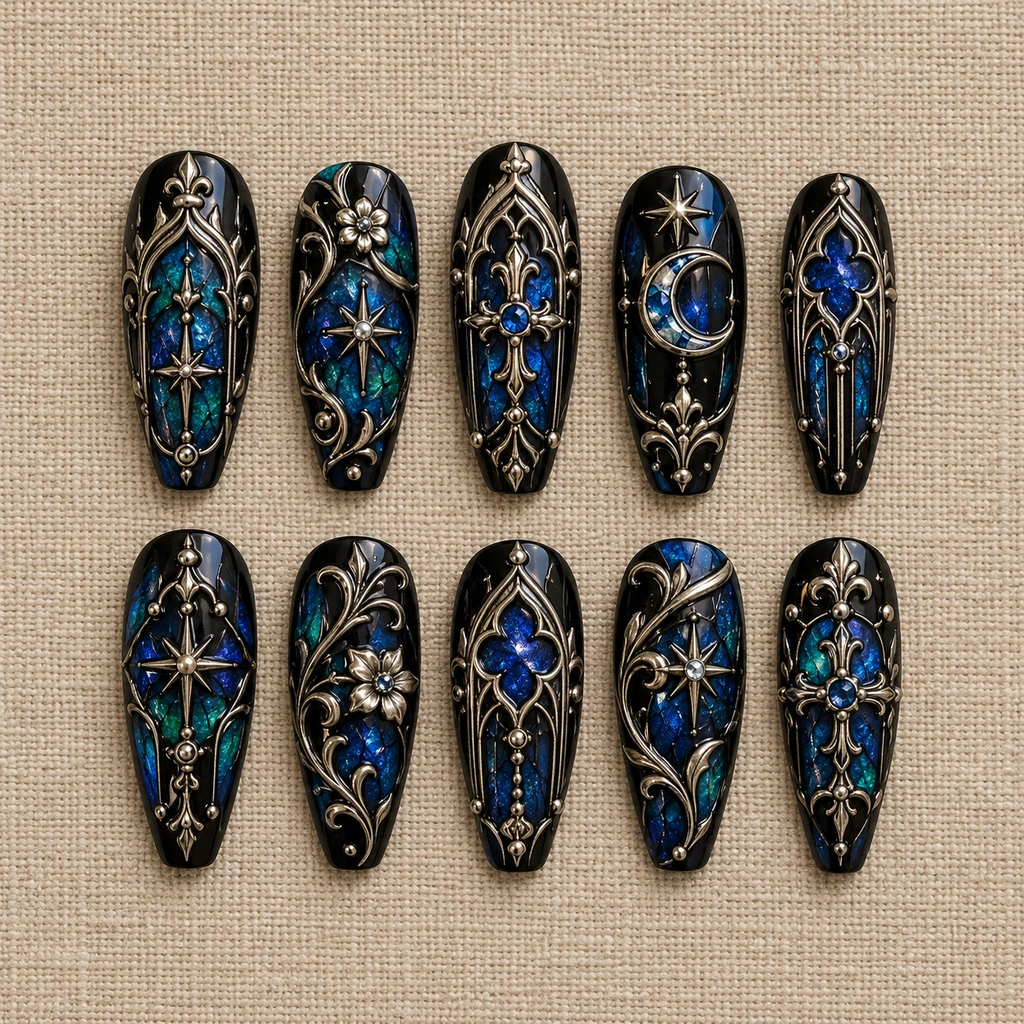
Blue Goth Nails
What to check
A real product chosen to look like the picture. The picture is a styling reference, not this exact product.
-
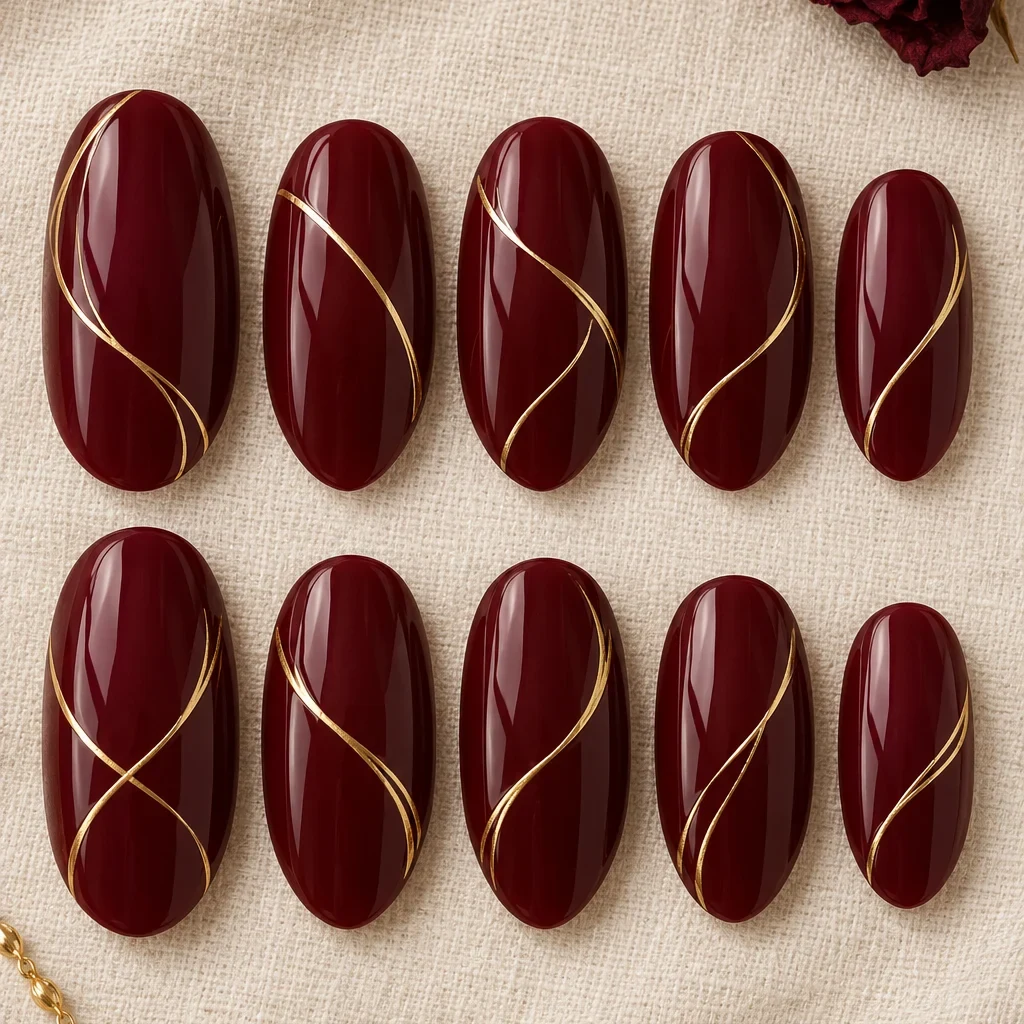
Burgundy Gold Line Nails
What to check
A real product chosen to look like the picture. The picture is a styling reference, not this exact product.
-
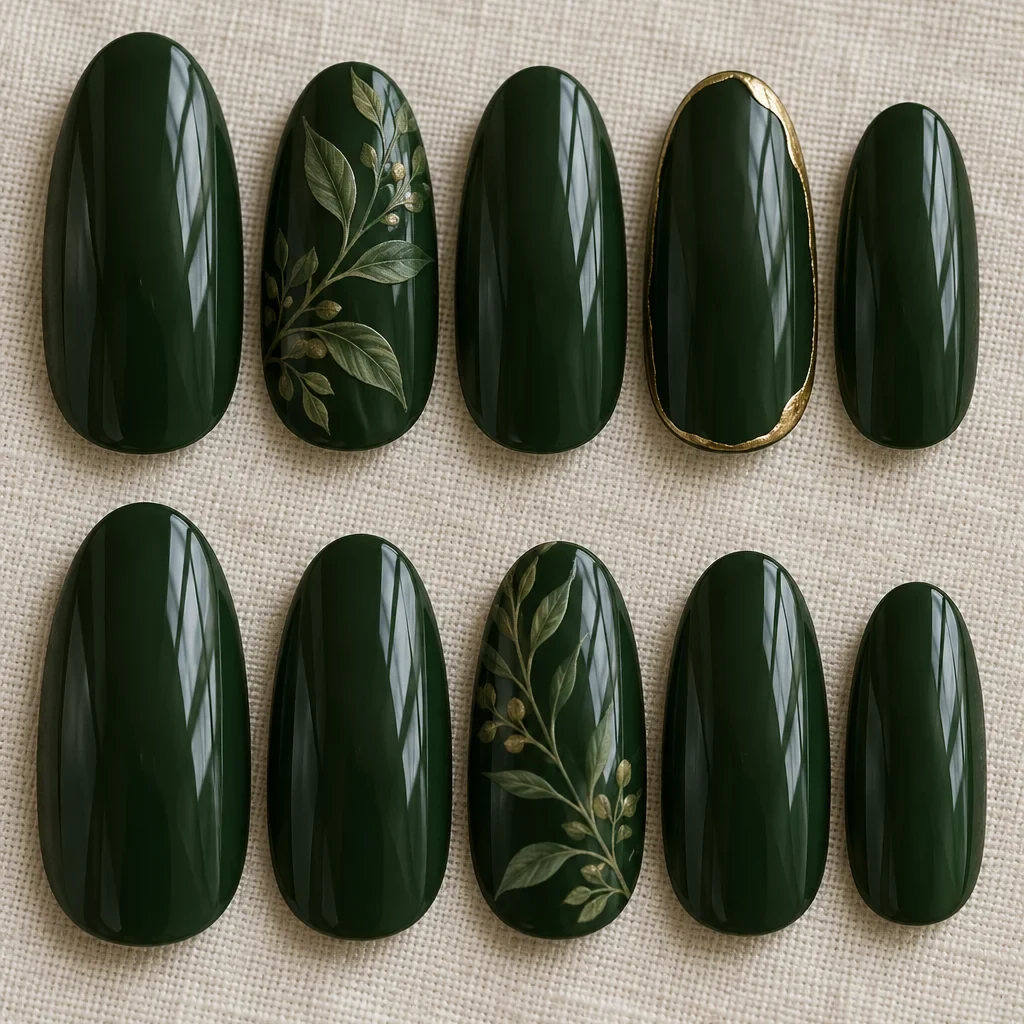
Dark Green Nails
What to check
A real product chosen to look like the picture. The picture is a styling reference, not this exact product.
-
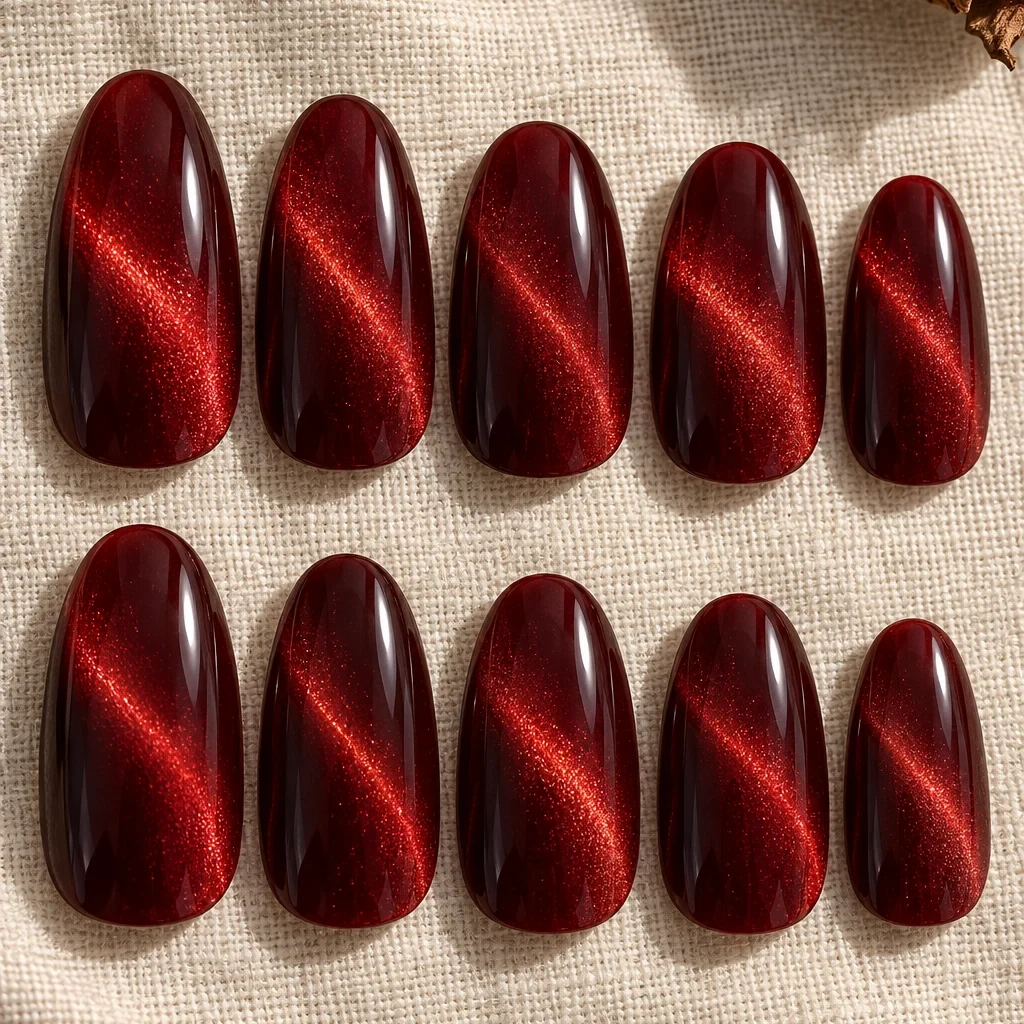
Dark Red Cat Eye Nails
What to check
A real product chosen to look like the picture. The picture is a styling reference, not this exact product.
-
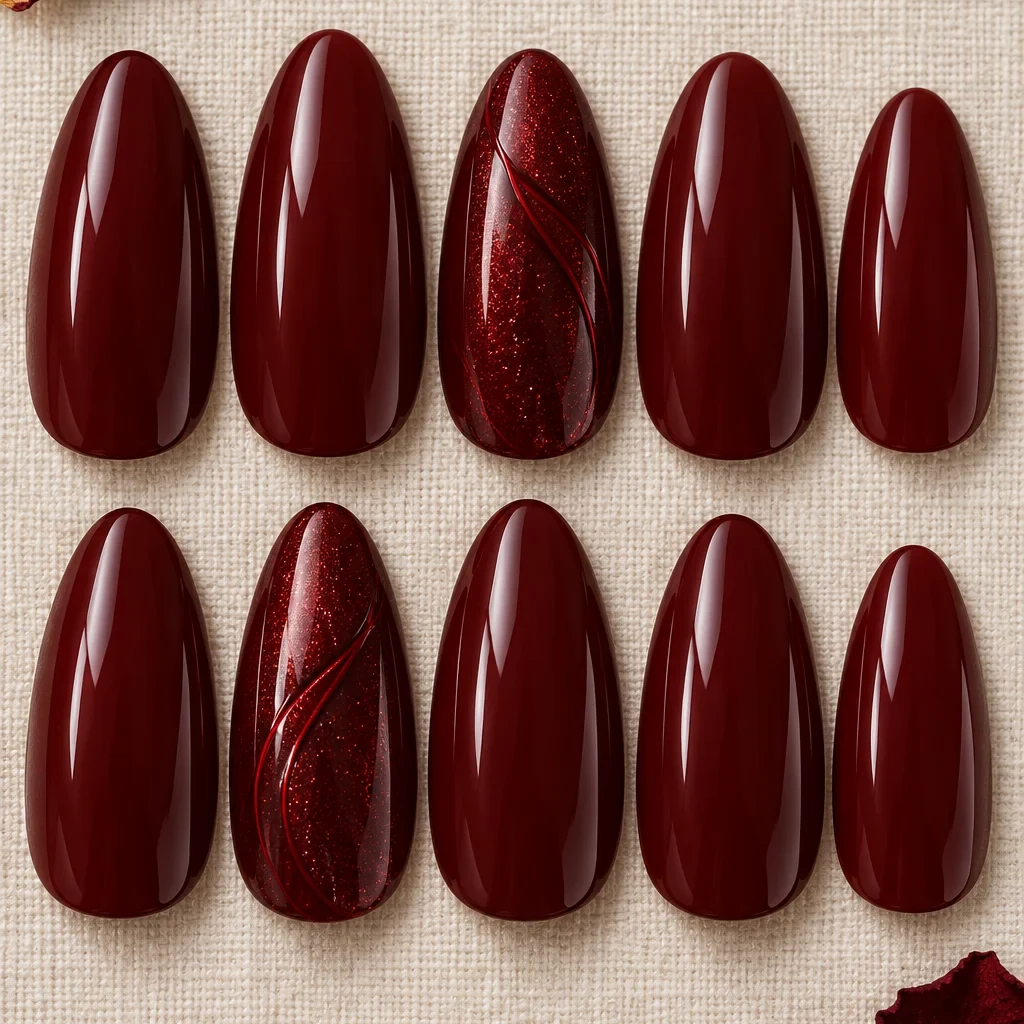
Dark Red Nails
What to check
A real product chosen to look like the picture. The picture is a styling reference, not this exact product.
-
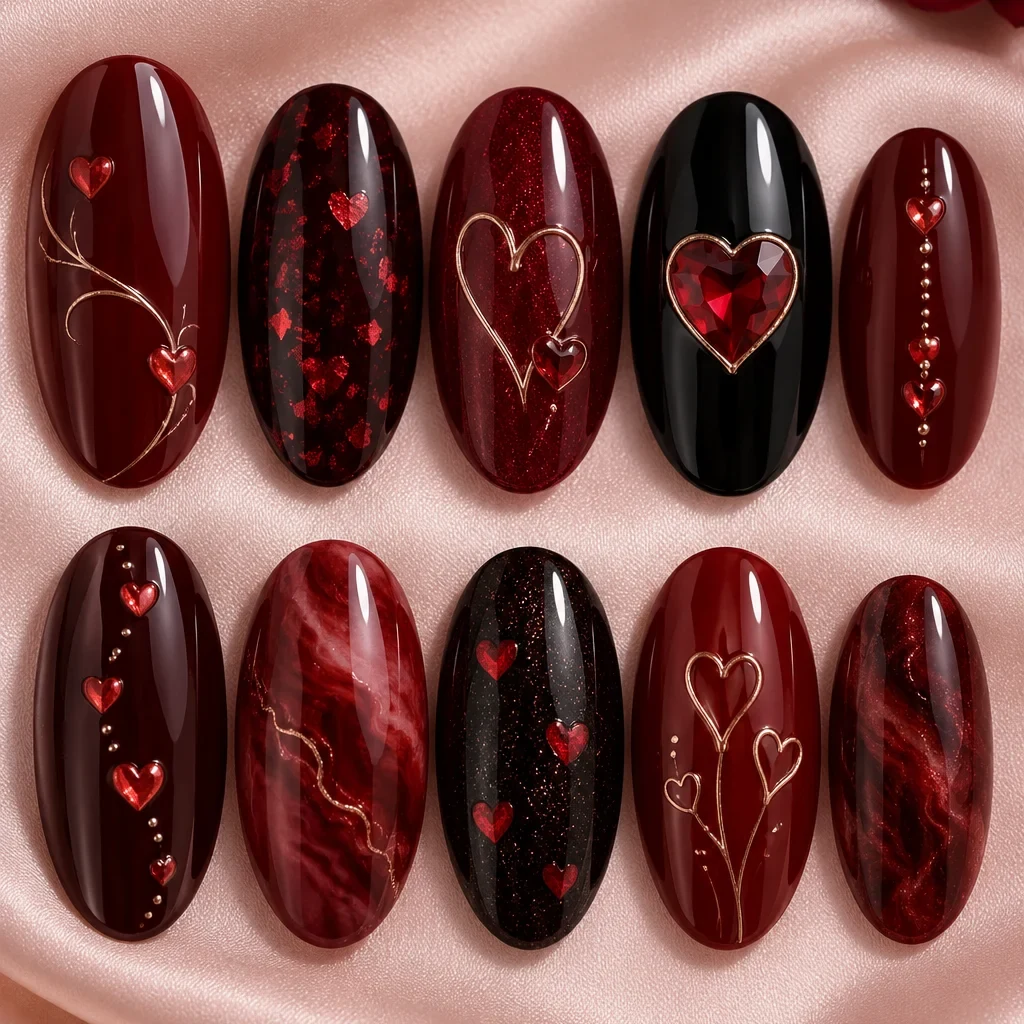
Dark Valentines Day Nails
What to check
A real product chosen to look like the picture. The picture is a styling reference, not this exact product.
-
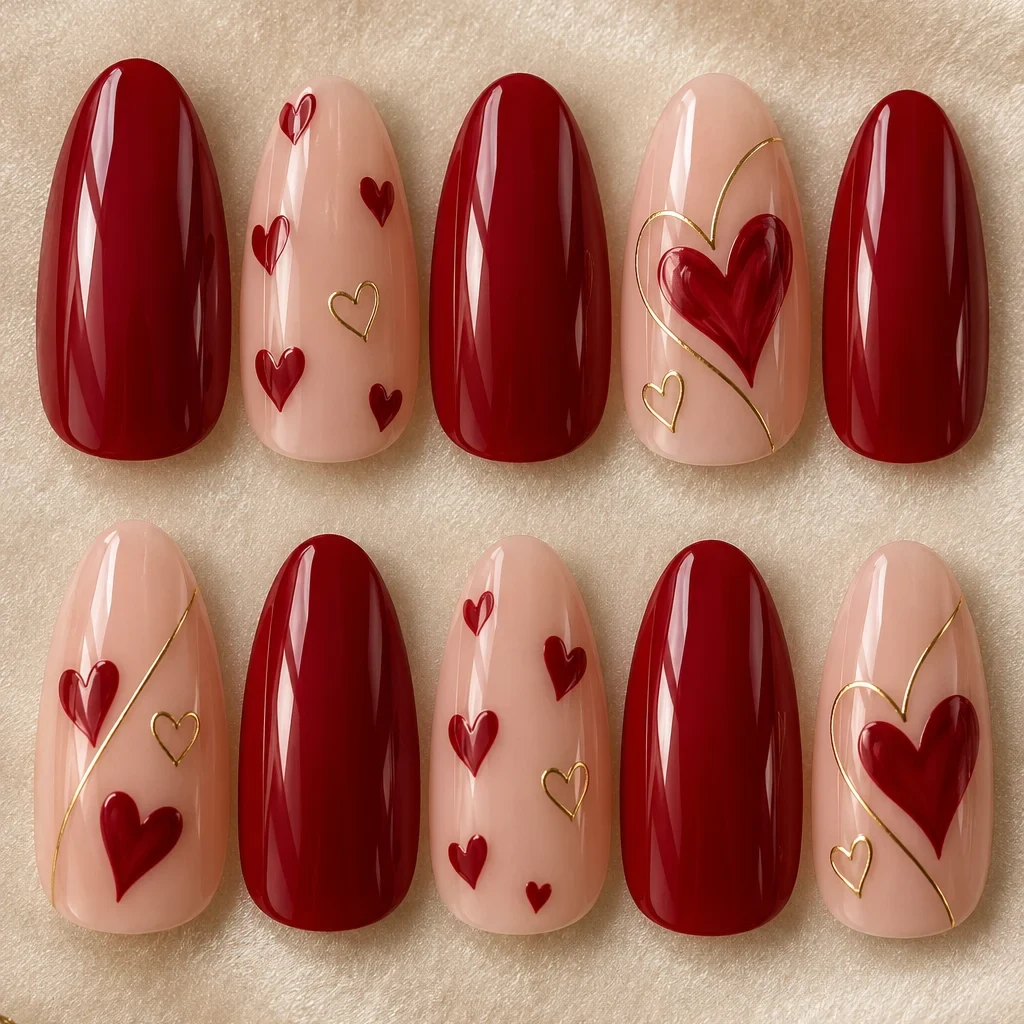
Deep Red Heart Nails
What to check
A real product chosen to look like the picture. The picture is a styling reference, not this exact product.
-
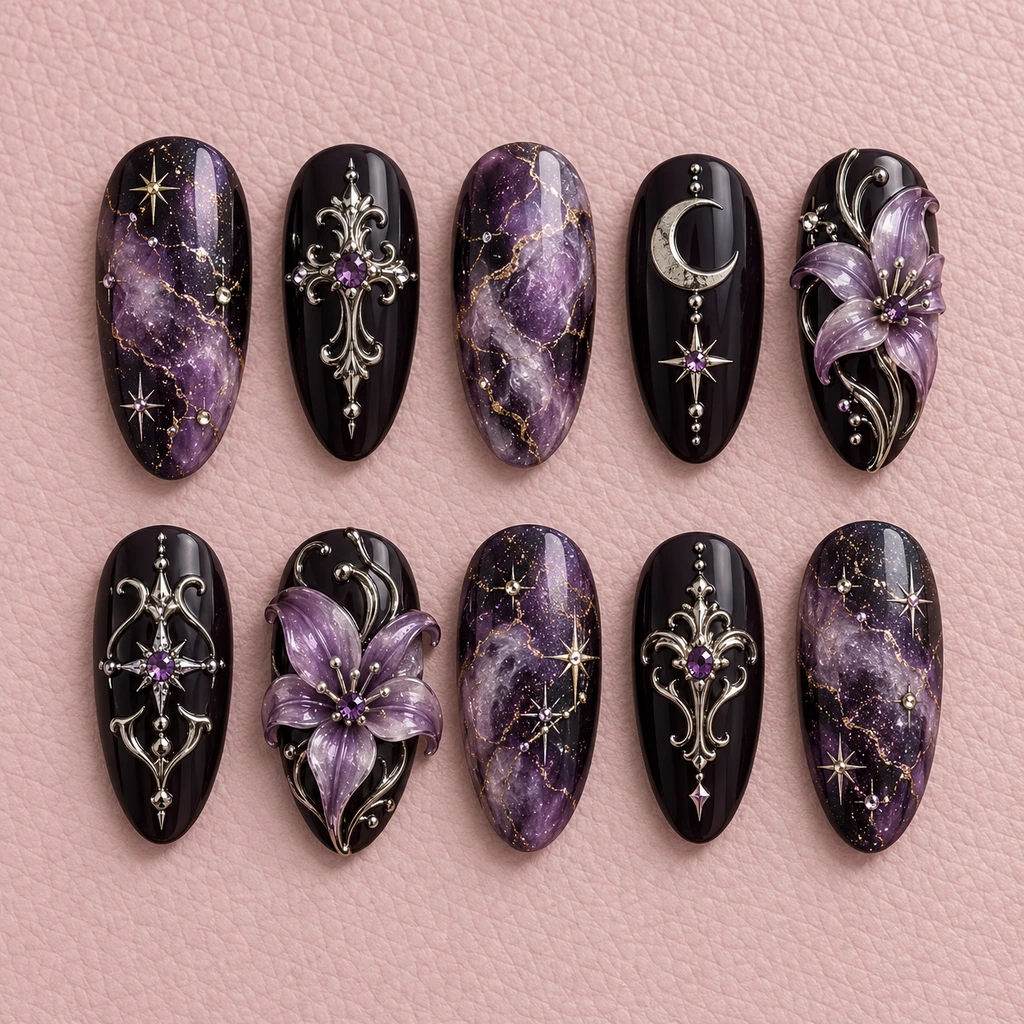
Purple Goth Nails
What to check
A real product chosen to look like the picture. The picture is a styling reference, not this exact product.
The gallery
19 goth & dark looks
Open a look to see its pieces.
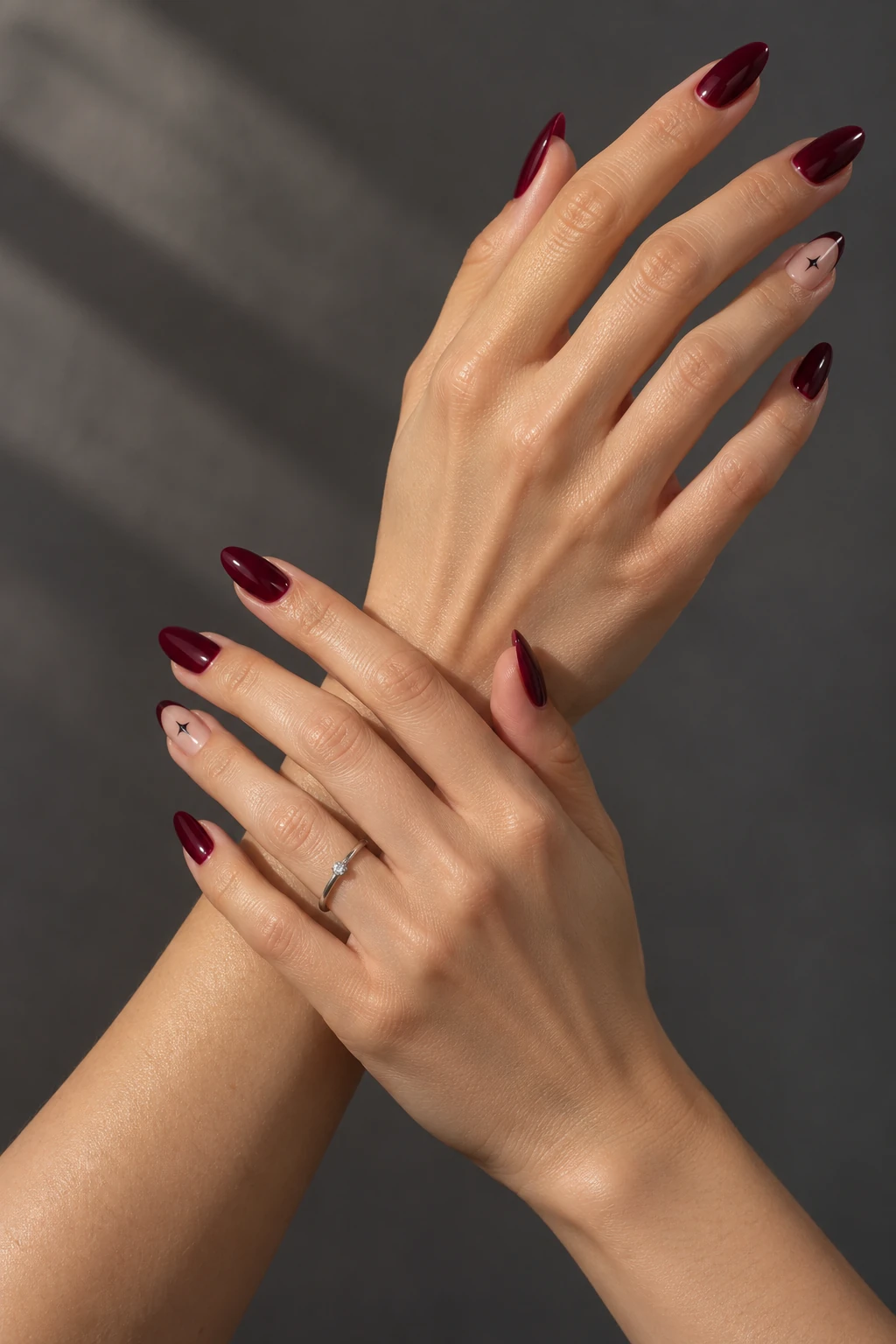 Burgundy star almond
 Matte-black coffin moon
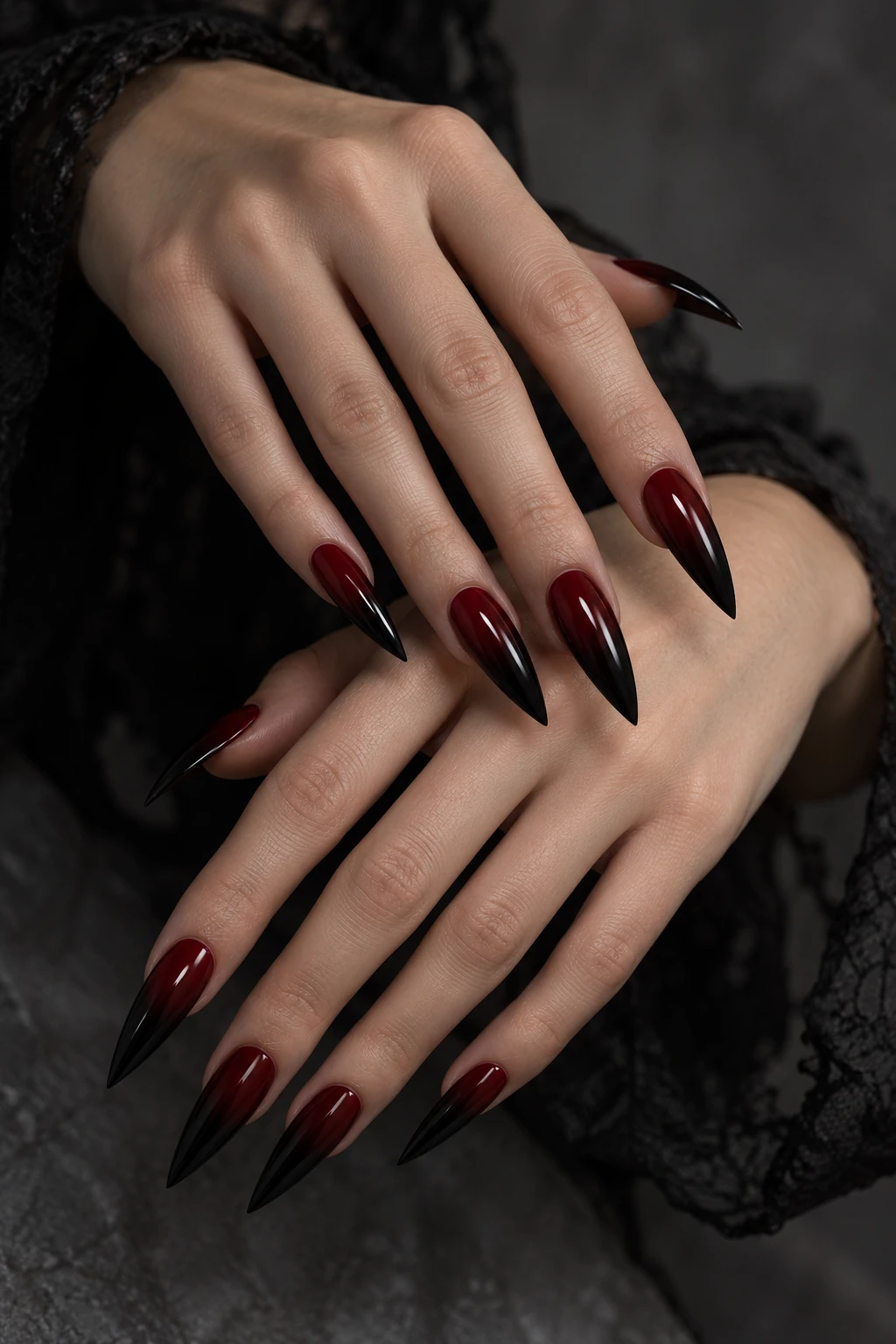 Black cherry ombré
 Oxblood velvet
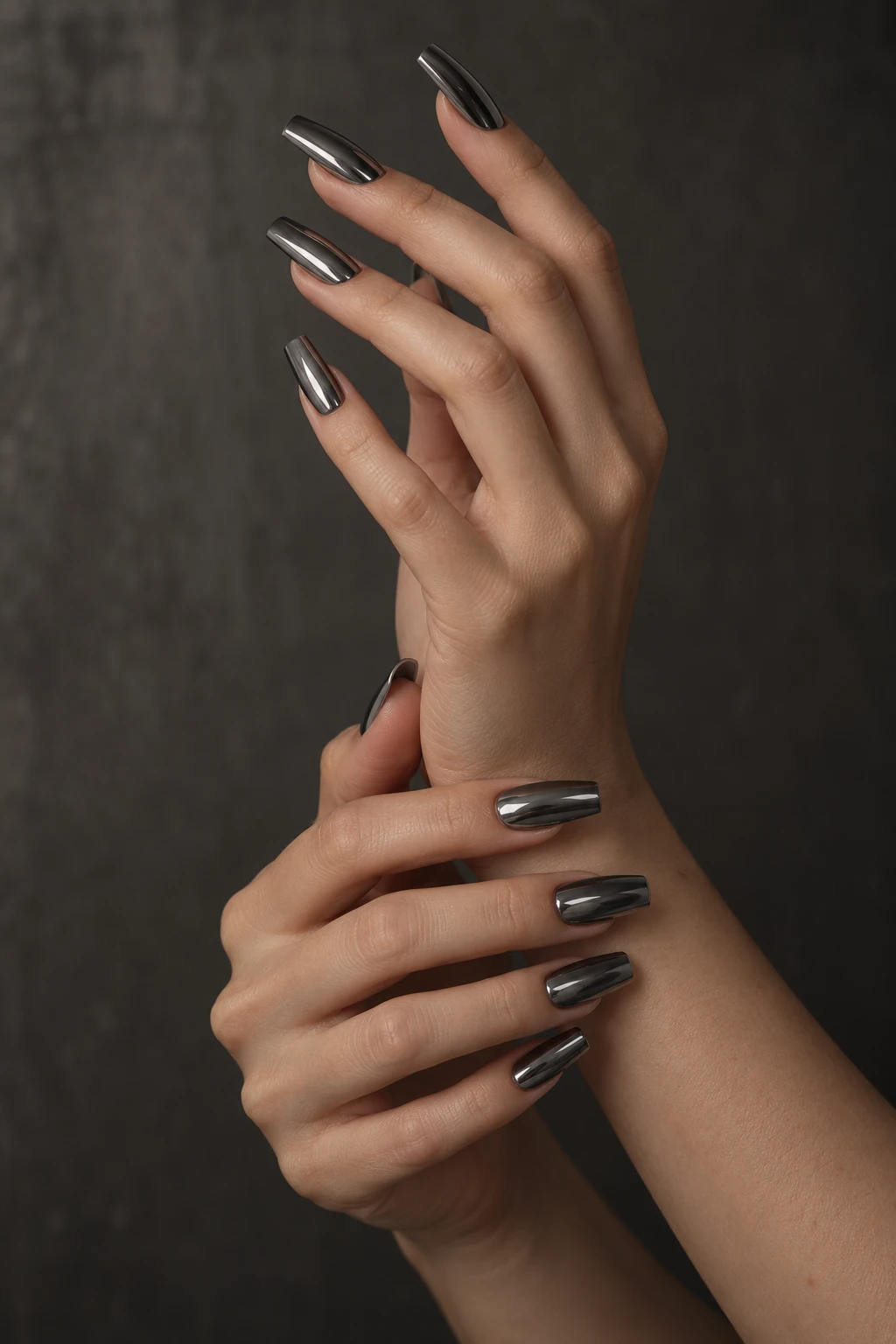 Graphite chrome
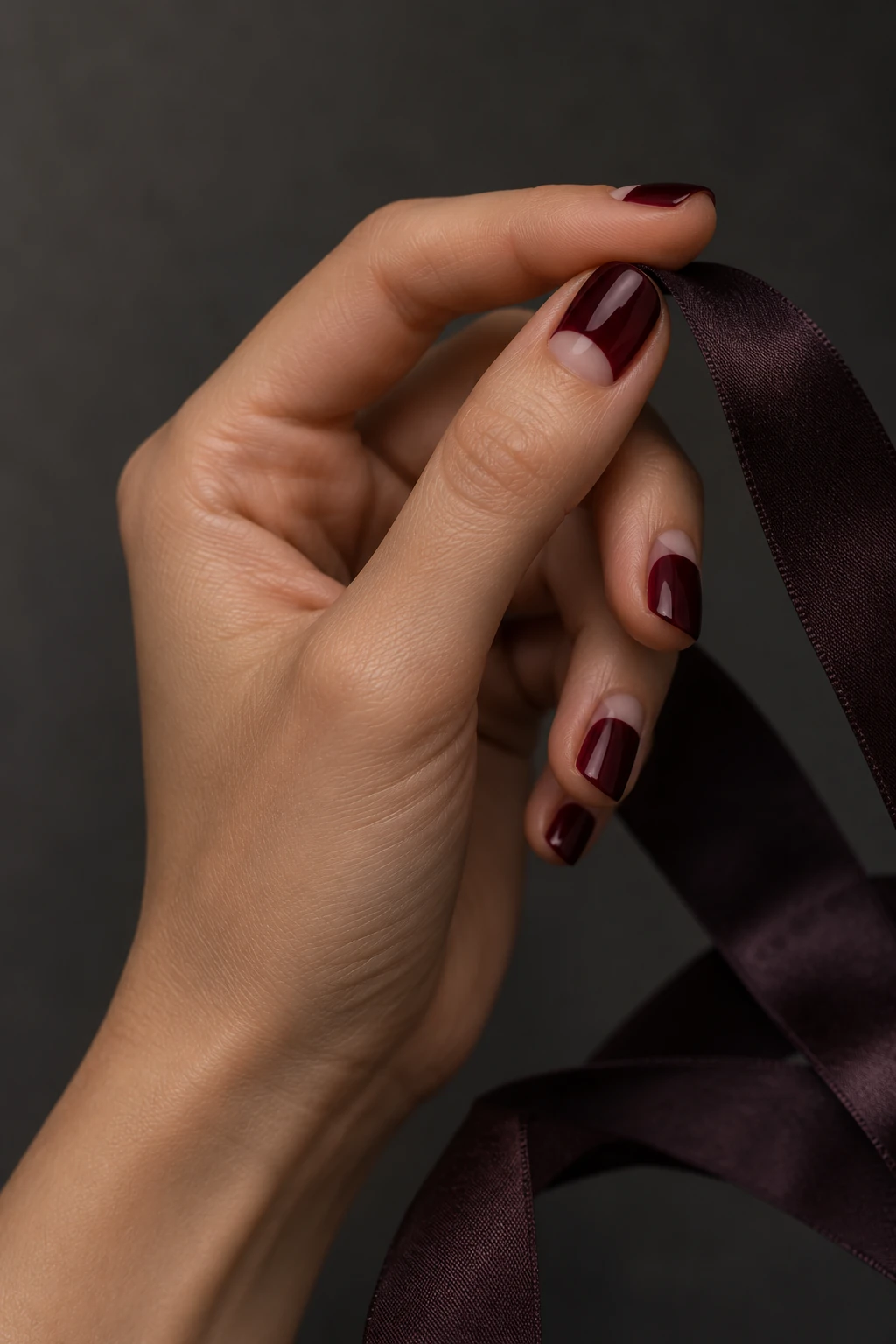 Burgundy half-moons
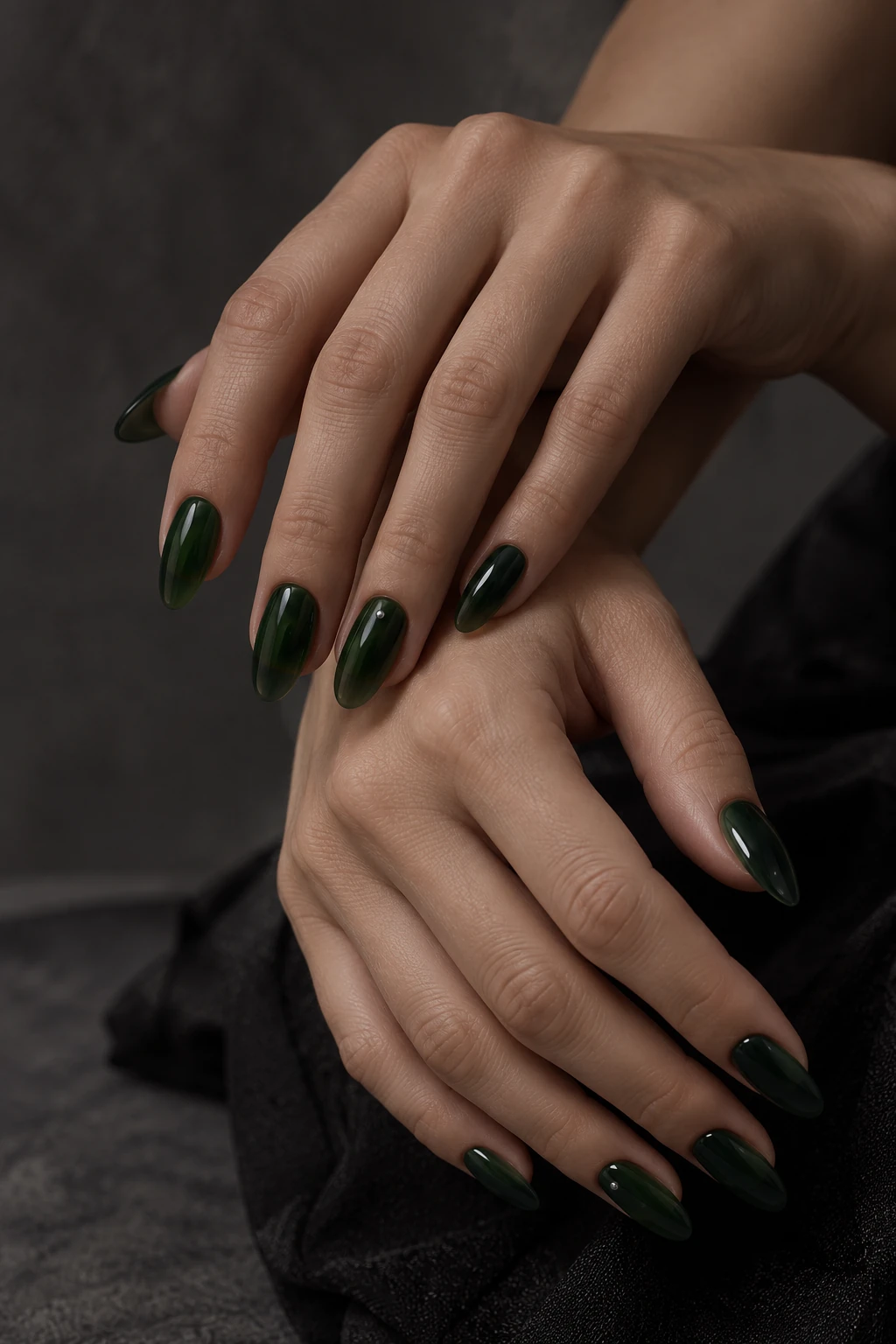 Forest-black jelly
 Black satin square
 Dark plum glow
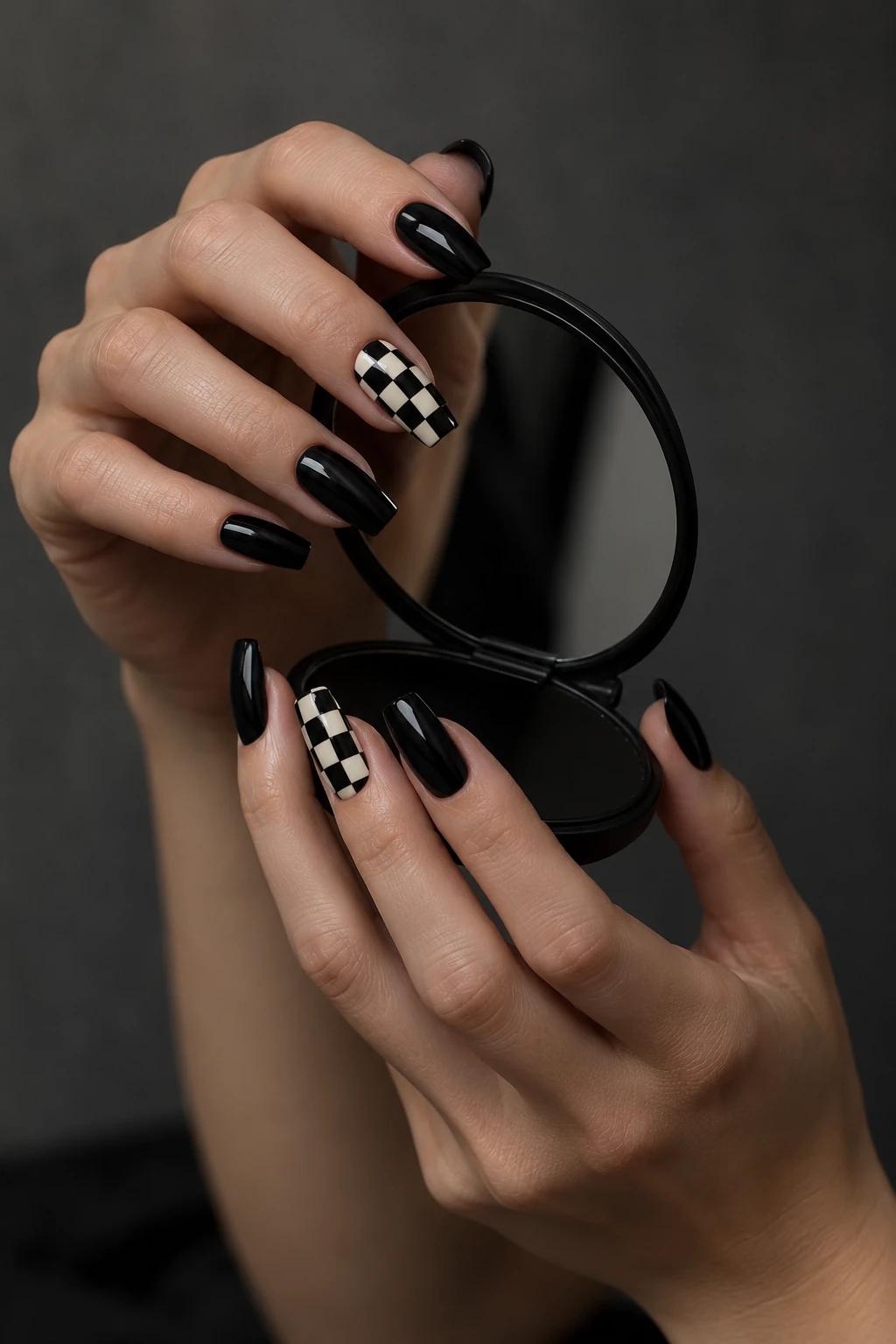 Black-and-ivory checker
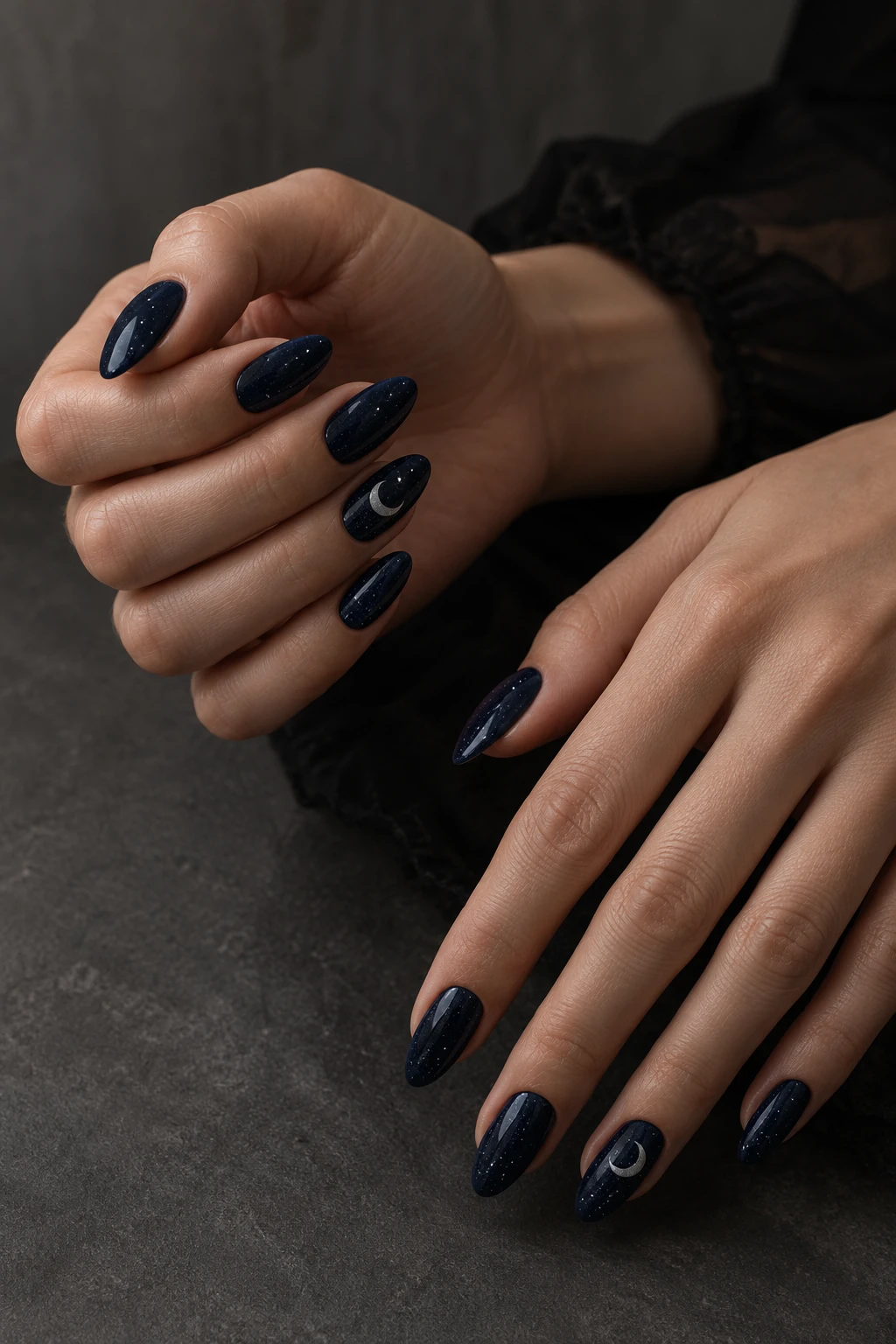 Moonlit navy
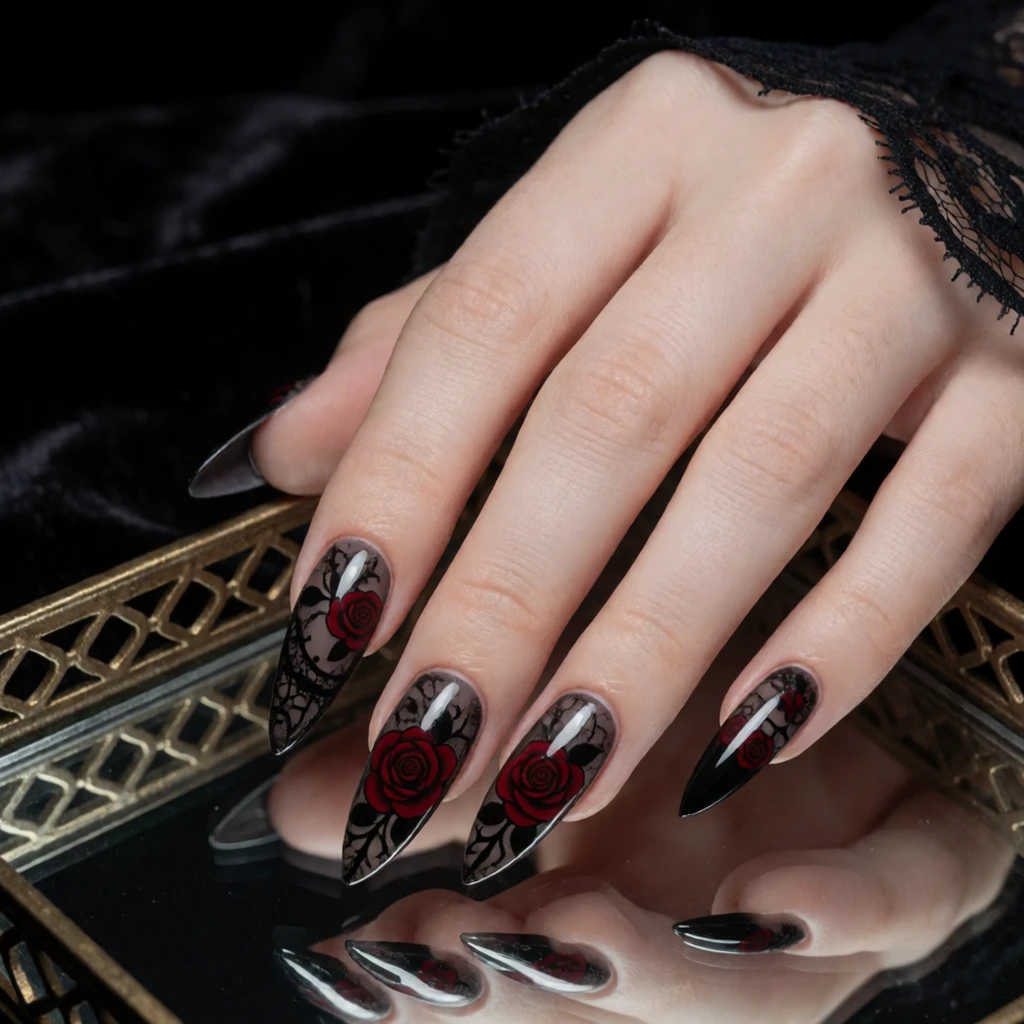 Romantic Goth Nails
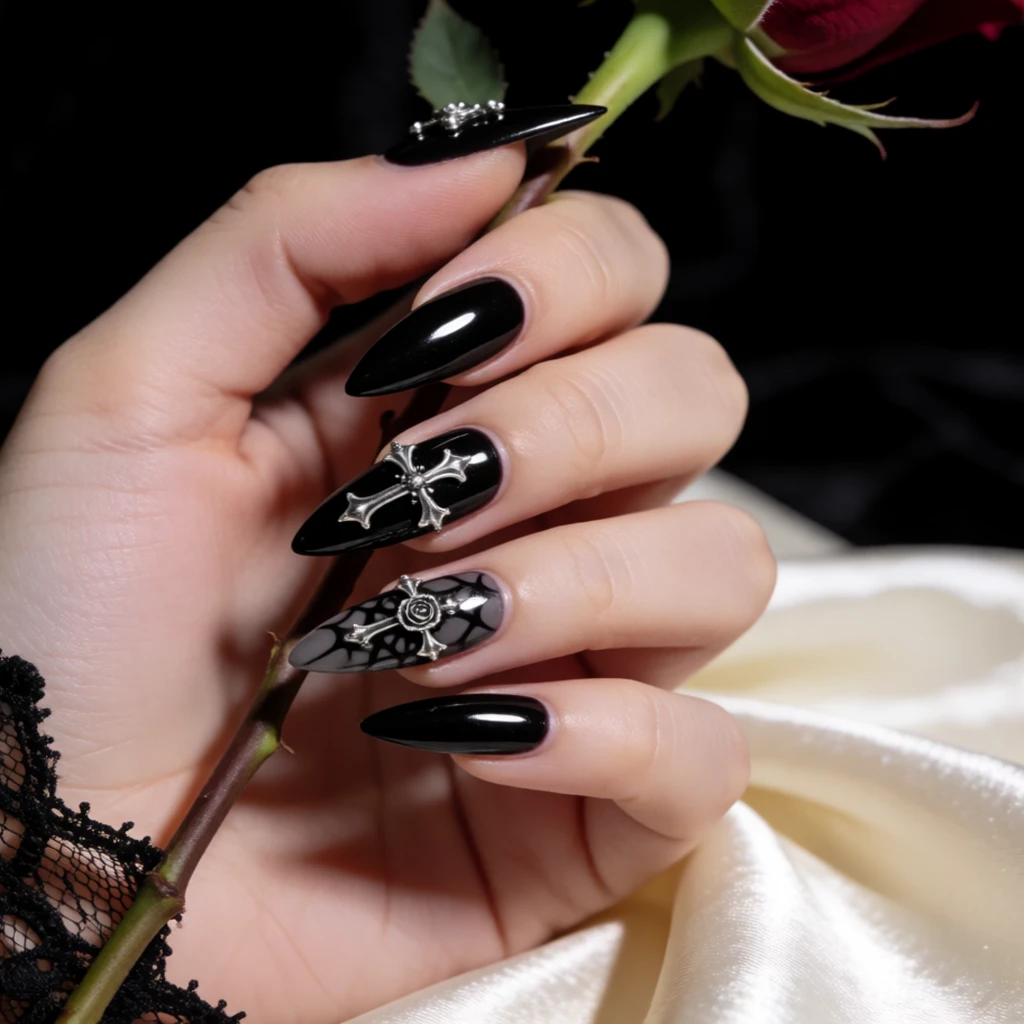 Dark Goth Nails
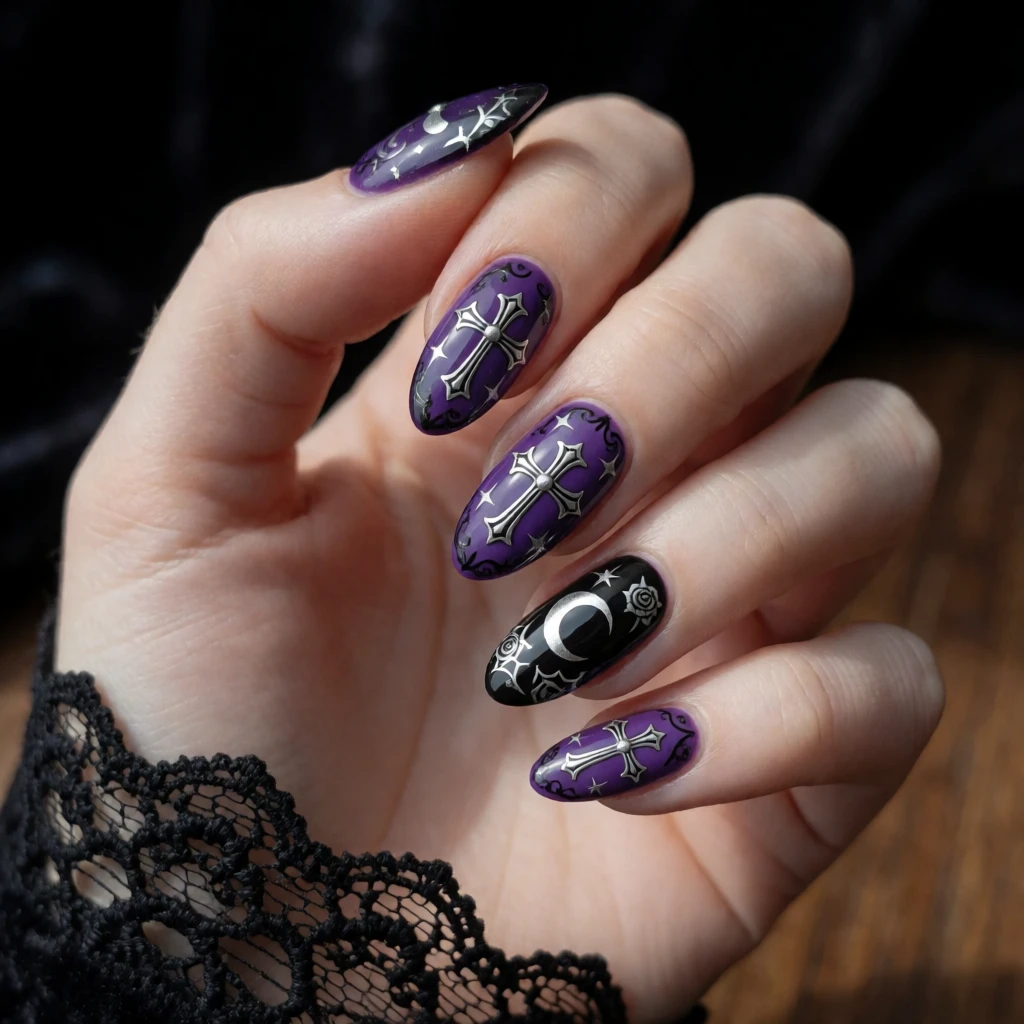 Purple Goth Nails
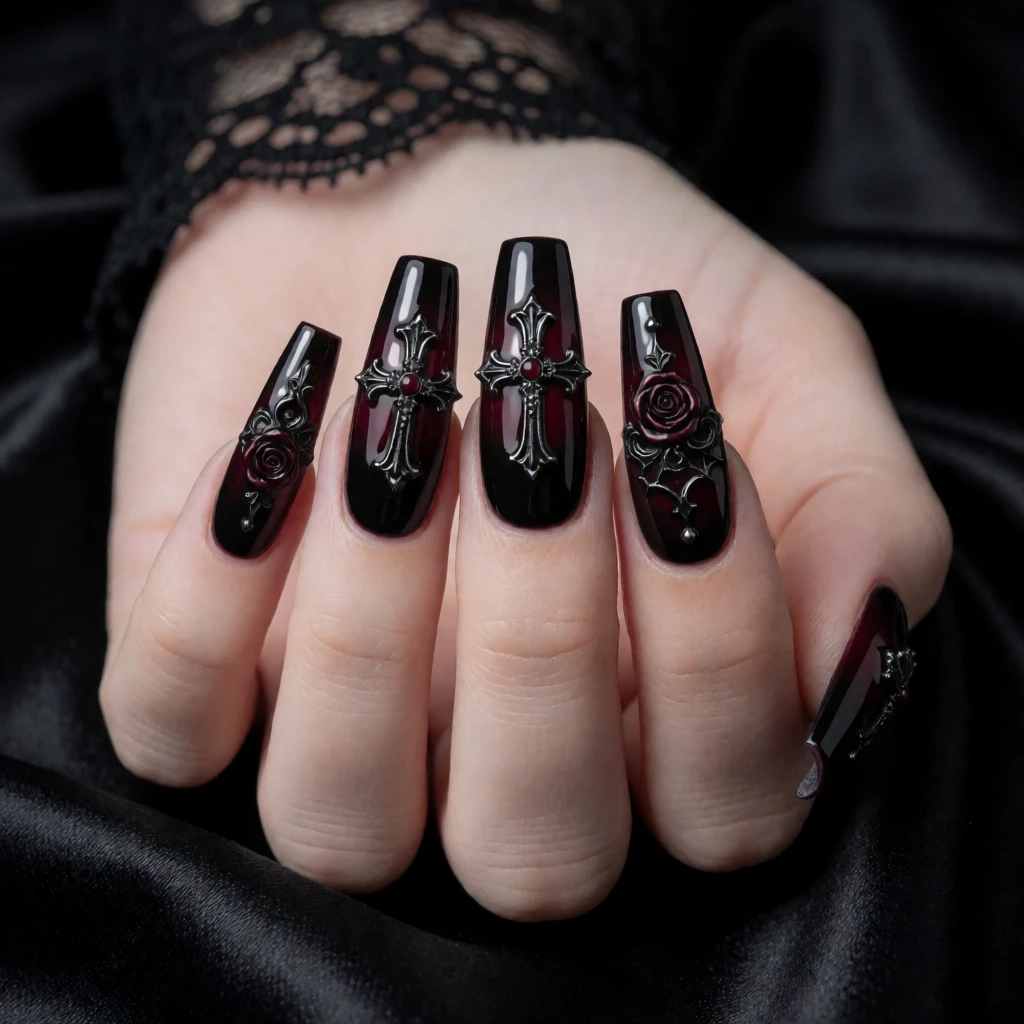 Goth Nails Acrylic
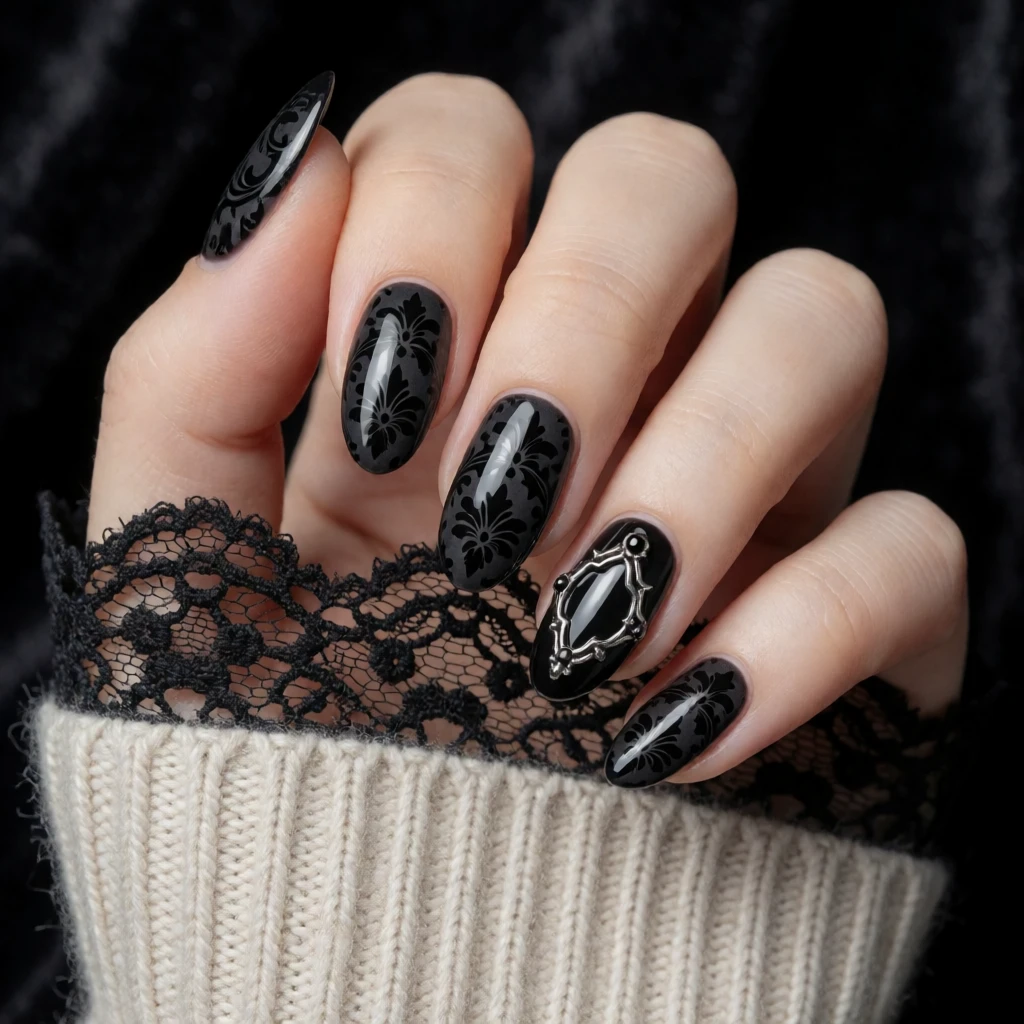 Black Goth Nails
 Blue Goth Nails
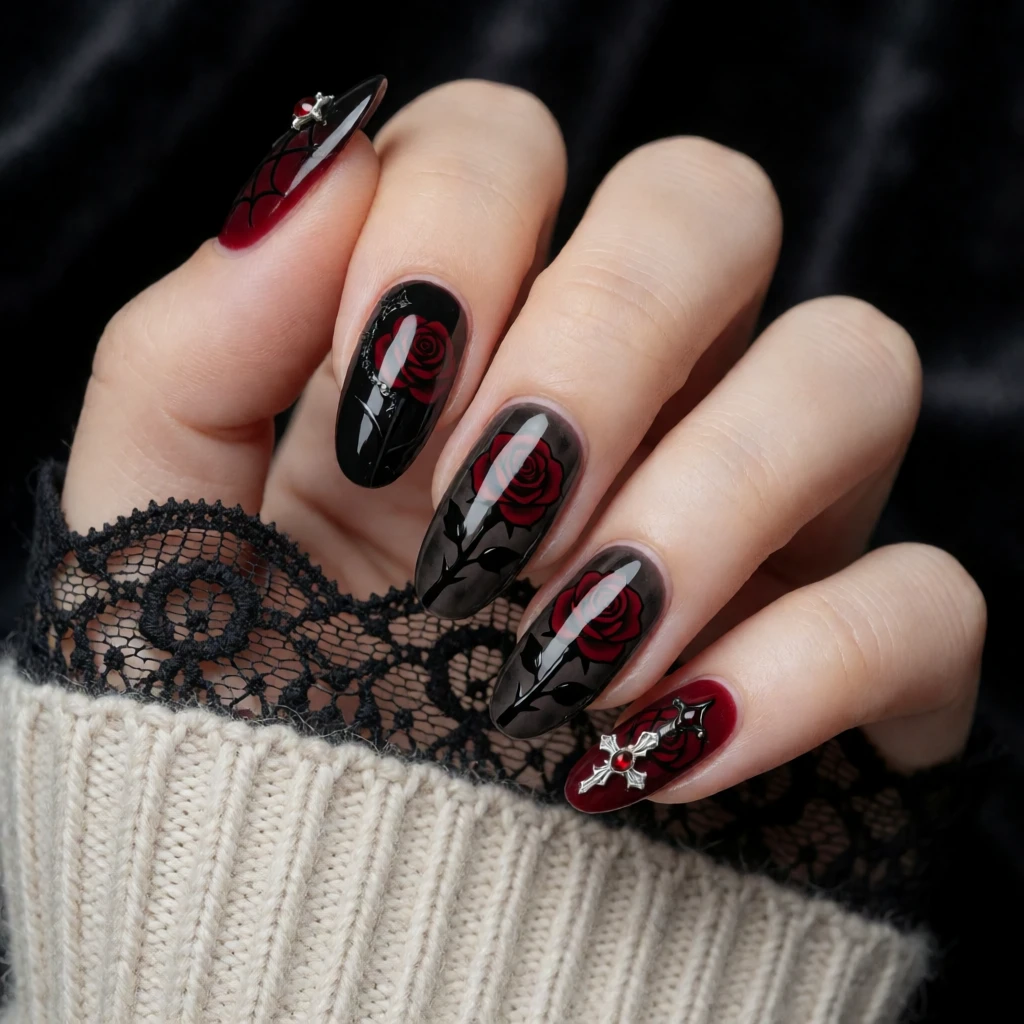 Red Goth Nails
Keep exploring
Related guides
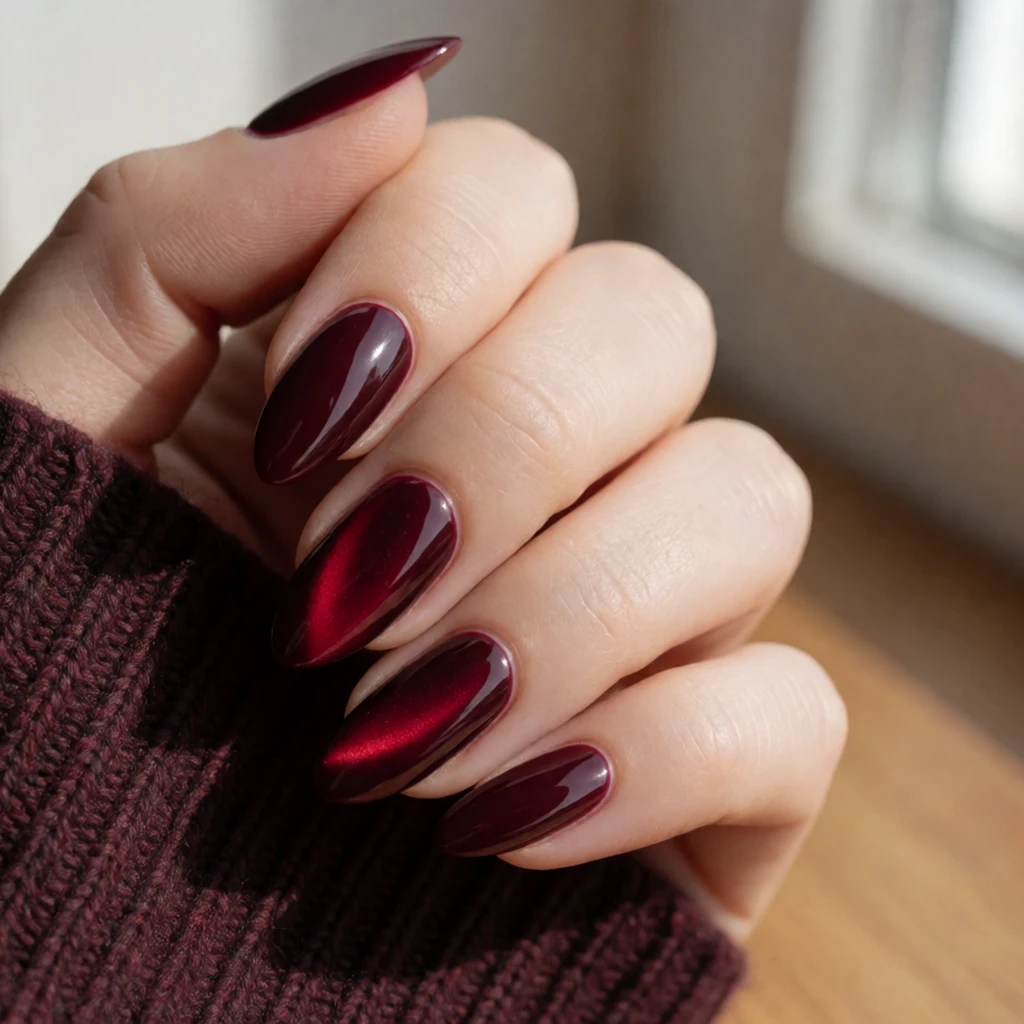 Dark accents
Dark accent nails use a single nail in a bold or contrasting shade, while black lace nails apply detailed texture motifs that work across a full set or distributed accent nails.
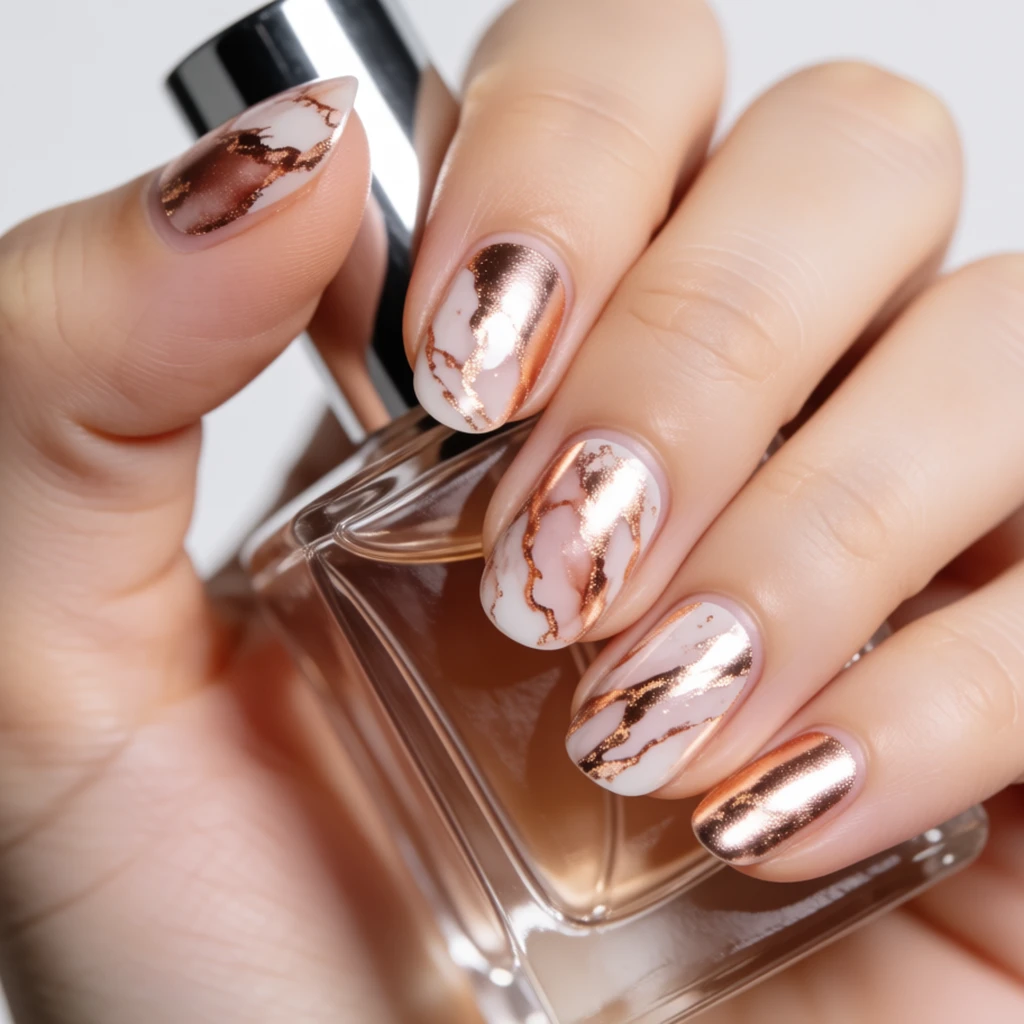 Art & themes
Art and themed nails often feature illustrated or painted imagery, while black lace nails focus specifically on repeating textile-inspired linework patterns rather than pictorial scenes.
Questions
What is the easiest black lace technique for beginners?
A stamping plate with a lace motif gives the most consistent results without freehand skill. Use a dedicated stamping polish for clean transfers on your first try.
Can black lace nails work on short nails?
Yes, but simplify the motif. A scallop border along the tip or a sheer black overlay works much better at short lengths than a complex interior pattern.
Does the base color change how lace looks?
Significantly. A white base gives maximum contrast and clarity. A colored or dark base creates a tonal, moody effect where the lace is visible only up close.
How do I make sheer black lace without mixing gel?
Look for a sheer black jelly polish or a black with a naturally translucent formula. One thin coat over a light base gives a veiled lace appearance without mixing.
Generated references, not tested products. How shopping links work.