Nail ideas / Dark accents
Dark accent nails: one bold nail against a lighter base
A dark accent nail uses contrast rather than an all-over colour to create visual interest. This guide covers how to choose the accent finger, balance the colour ratio, and move the look from casual to dressed-up.
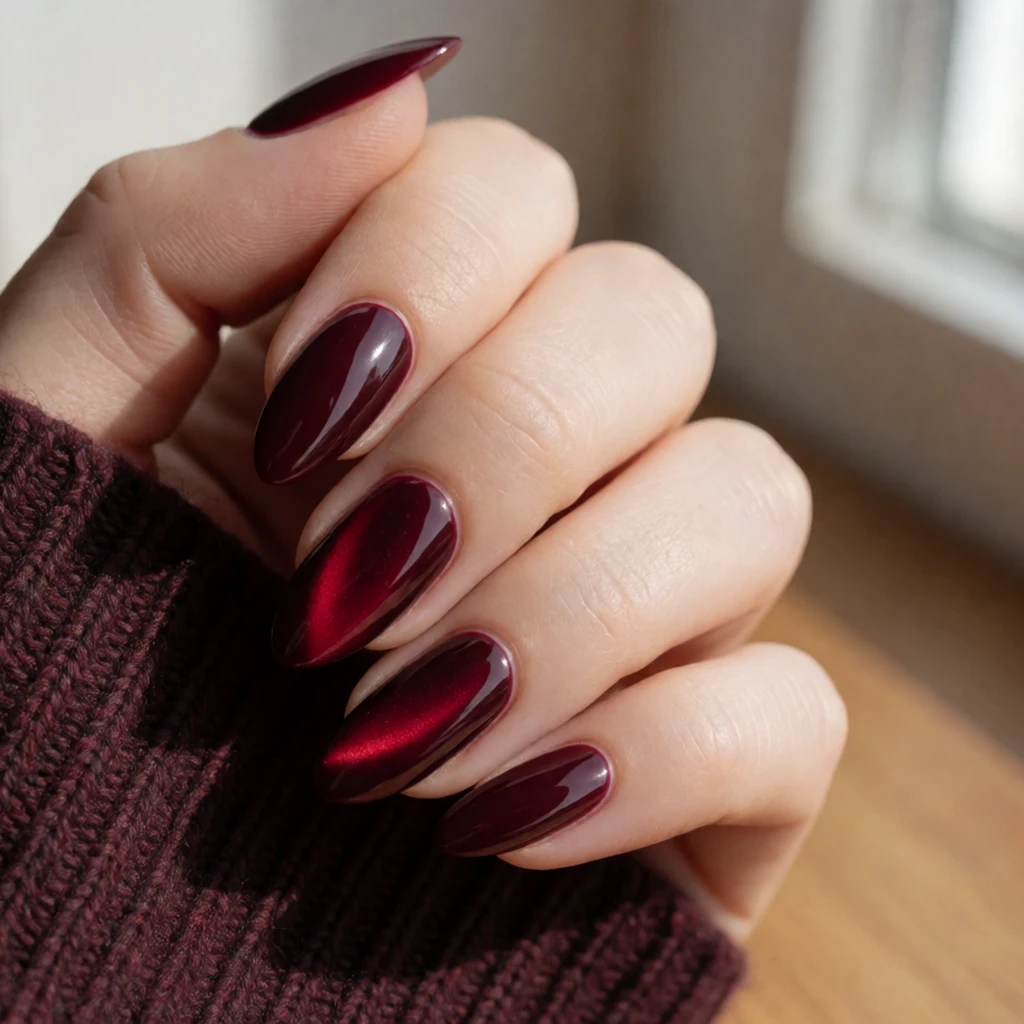
Three rules
Start here.
- Pick one accent finger per hand and keep it consistent — the ring finger is the most common choice because it's visible whether the hand is open or closed.
- The lighter base nails should be genuinely light: a mid-tone base reduces the contrast that makes the accent readable.
- Keep the finish the same across dark and light nails unless you intend the finish difference itself to be part of the design.
A styling reference, not a product photo.
What defines it
The basics
Dark accent nails follow a simple structural rule: one or two nails wear a noticeably darker shade while the remaining nails stay in a lighter, often neutral tone. The contrast is the design — no motifs or art are required, though they can be added. The dark shade might be a deep burgundy, matte black, navy, forest green, or deep plum; the lighter base nails are typically a nude, cream, sheer pink, or very pale tint. The dark and light elements exist on different nails rather than on the same nail surface.
What makes a look read as 'dark accent' rather than just a mixed manicure is intentionality in the contrast ratio. One dark nail on nine light nails is the most common version, but two dark nails — often the ring fingers — keeps symmetry and still preserves the accent logic. The pairing works because the eye moves between the light nails and the dark one, creating a focal point without the full commitment of an all-over dark manicure. Finishes can match across the hand — all matte, or all glossy — or the accent nail can use a different finish, like a satin dark against a glossy nude.
Dark accent nails are distinct from a fully dark manicure like goth nails, where the darkness applies across all fingers and often includes specific motifs or textures. They are also different from French tips, where the contrast sits within each individual nail rather than between nails. The closest neighbouring look is a statement nail in an art or foil design, which shares the single-nail focus but uses pattern or texture rather than a deep solid colour as the point of interest.
Repeatable combinations
Formulas to try
- Nude base + single dark burgundy accent
- A creamy nude on eight nails with one deep burgundy on each ring finger suits work, weekend, and dressy-casual occasions without reading as costume. Swap the burgundy for a deep plum to move the colour slightly cooler without changing the structure.
- Milky sheer + matte black accent
- A sheer milky base with a single matte black accent on the ring or middle finger creates the highest contrast version of this look, suited to evenings or settings where a strong visual statement fits. Using the same matte topcoat on the sheer nails as on the black reduces the finish contrast if you want a more unified look.
- Cool taupe base + navy accent
- A grey-leaning taupe with a navy accent shares enough undertone that the look reads coordinated rather than jarring, making it easier to wear on days when a strong contrast feels like too much. This combination suits autumn and winter office and casual settings.
- Cream base + dark forest green accent
- A warm cream base with a forest green accent works well across seasons and reads as considered rather than seasonal. Use a glossy topcoat on both so the green's depth comes through without the darkness reading as heavy against the cream.
- Pale pink base + deep plum accent
- Pink and plum share a red family undertone, which makes this pairing feel connected rather than mismatched. This formula suits dressed-up casual, weddings as a guest, and evening dinners where a full dark manicure isn't the right register.
Your needs, your plans
Before you buy
- Shape and accent finger
- The accent nail doesn't need to be the ring finger — on shorter nails, the middle finger gets more visibility when the hand is resting flat. Choose the finger that faces outward most in the gestures you make regularly.
- Colour and undertone balance
- Contrast is strongest when base and accent are far apart in value and temperature — warm nude with cool navy, pale sheer with flat black. If the base is already medium-toned, the dark accent may not read as a clear focal point.
- Occasion and dress code
- One dark accent on a nude base sits within most professional and formal dress codes that allow colour at all — it's a quieter signal than an all-dark manicure. For creative or evening settings, pushing the accent to a more unusual tone like forest green or deep plum shifts the look.
- Budget and re-wearing
- Because only one or two nails use the darker shade, accent applications use significantly less product per session and take less time to touch up if a non-accent nail chips. You can build this look from one neutral you own and a single dark shade added to your collection.
From what you own
Build it and repeat it
If you have any neutral or light-toned polish, you already have the base for this look. Paint everything but the accent finger in that neutral, then choose the darkest shade you own for the accent nail. The structure works even if your darkest shade is a deep berry or a plum rather than a true black — the contrast between light and dark is what you're building, not a specific colour. If the shades you own are all similar in depth, a matte topcoat on one nail while the rest stay glossy creates a finish-based accent without needing a new colour.
To expand the look across different occasions, prioritise buying one genuinely dark shade if you don't own one — a matte or satin black, a deep navy, or an oxblood. Any of those three pairs with most neutrals already in a collection. A single shade purchase gives you five different accent looks just by changing which neutral you pair it with. From there, a clear matte topcoat is the most useful second purchase, because it lets you vary the finish on the accent nail independently from the rest of the hand.
Shop the pieces
16 dark accents pieces
Links open similar items, not the pictured ones.
-
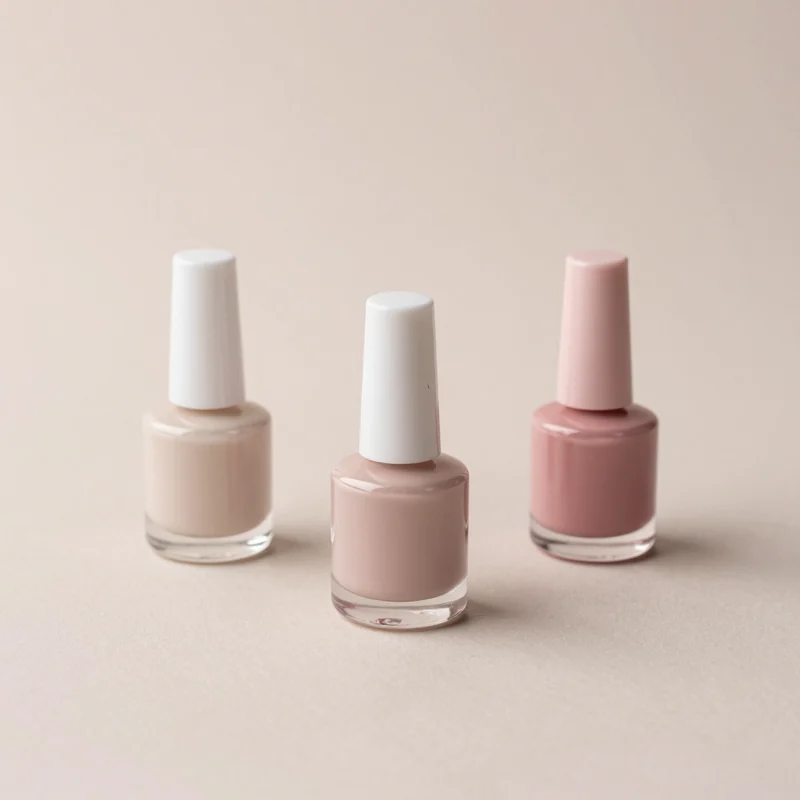
Nude pink nail polish set
What to check
A real product chosen to look like the picture. The picture is a styling reference, not this exact product.
-
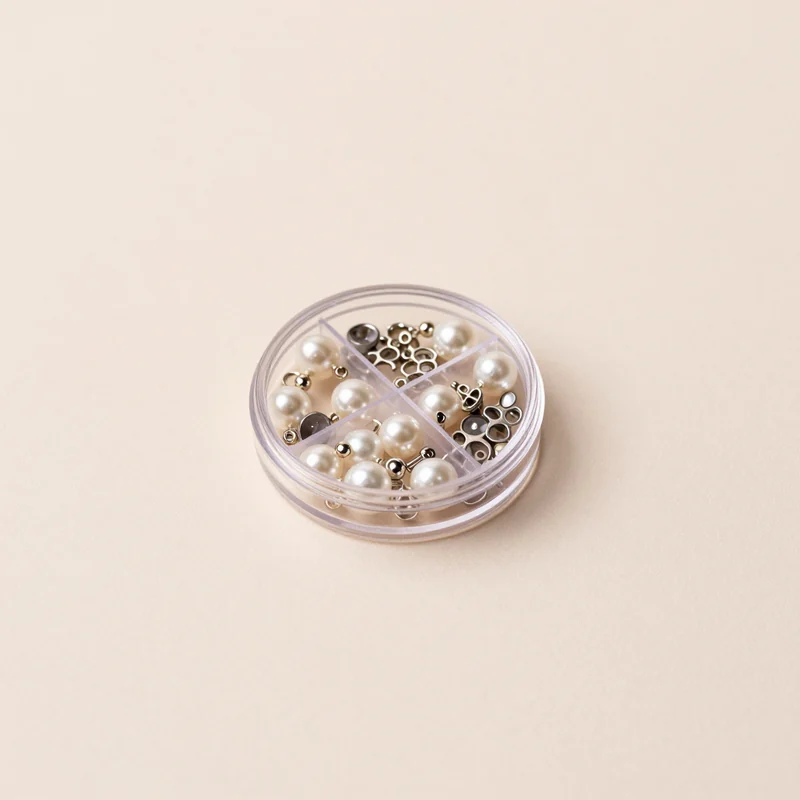
Charms
What to check
A real product chosen to look like the picture. The picture is a styling reference, not this exact product.
-
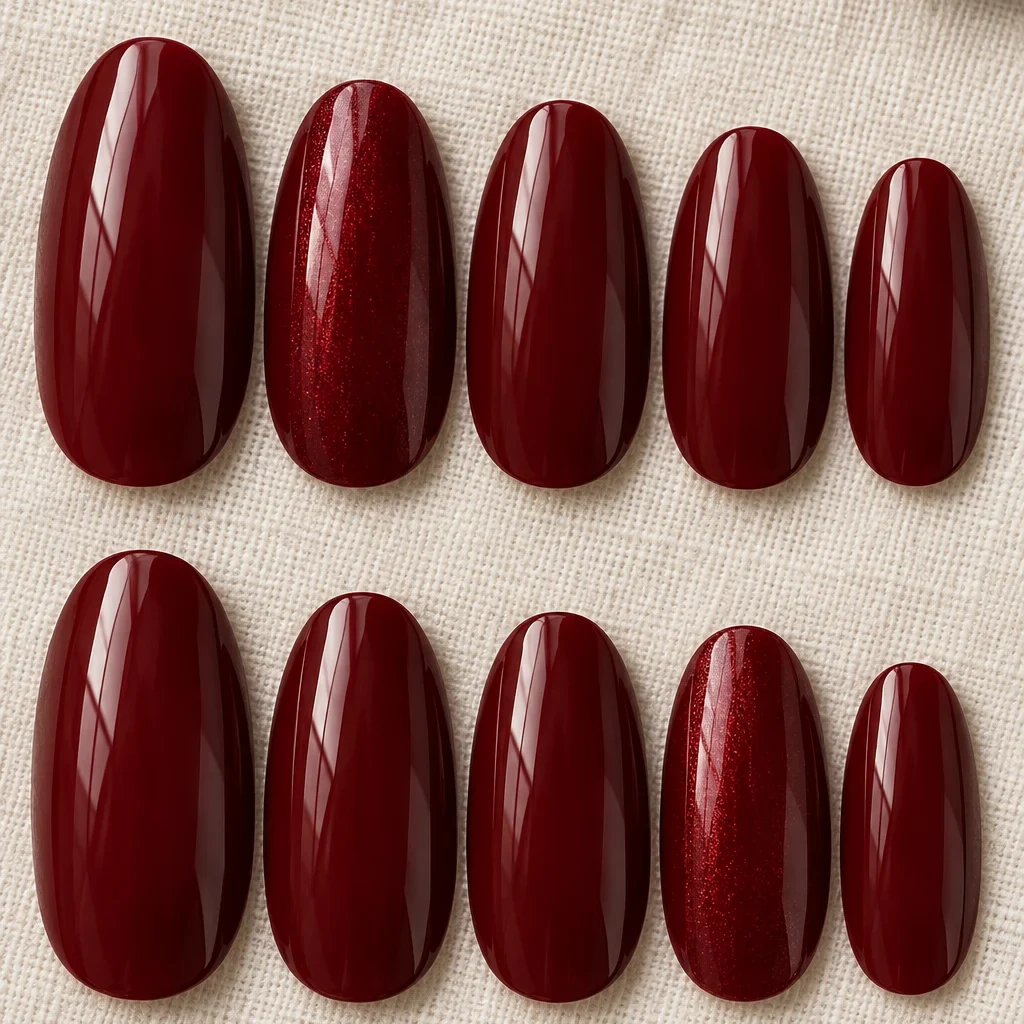
Dark Red Almond Nails
What to check
A real product chosen to look like the picture. The picture is a styling reference, not this exact product.
-
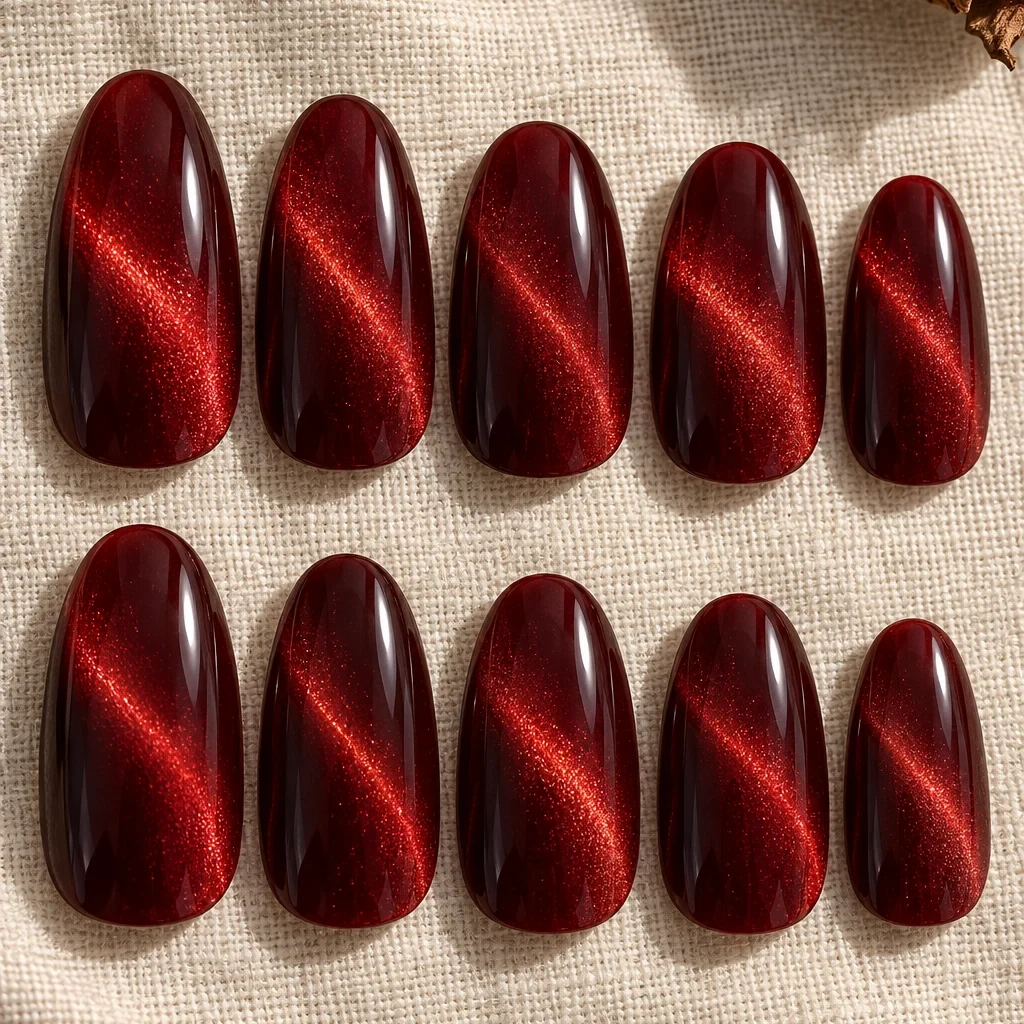
Dark Red Cat Eye Nails
What to check
A real product chosen to look like the picture. The picture is a styling reference, not this exact product.
-
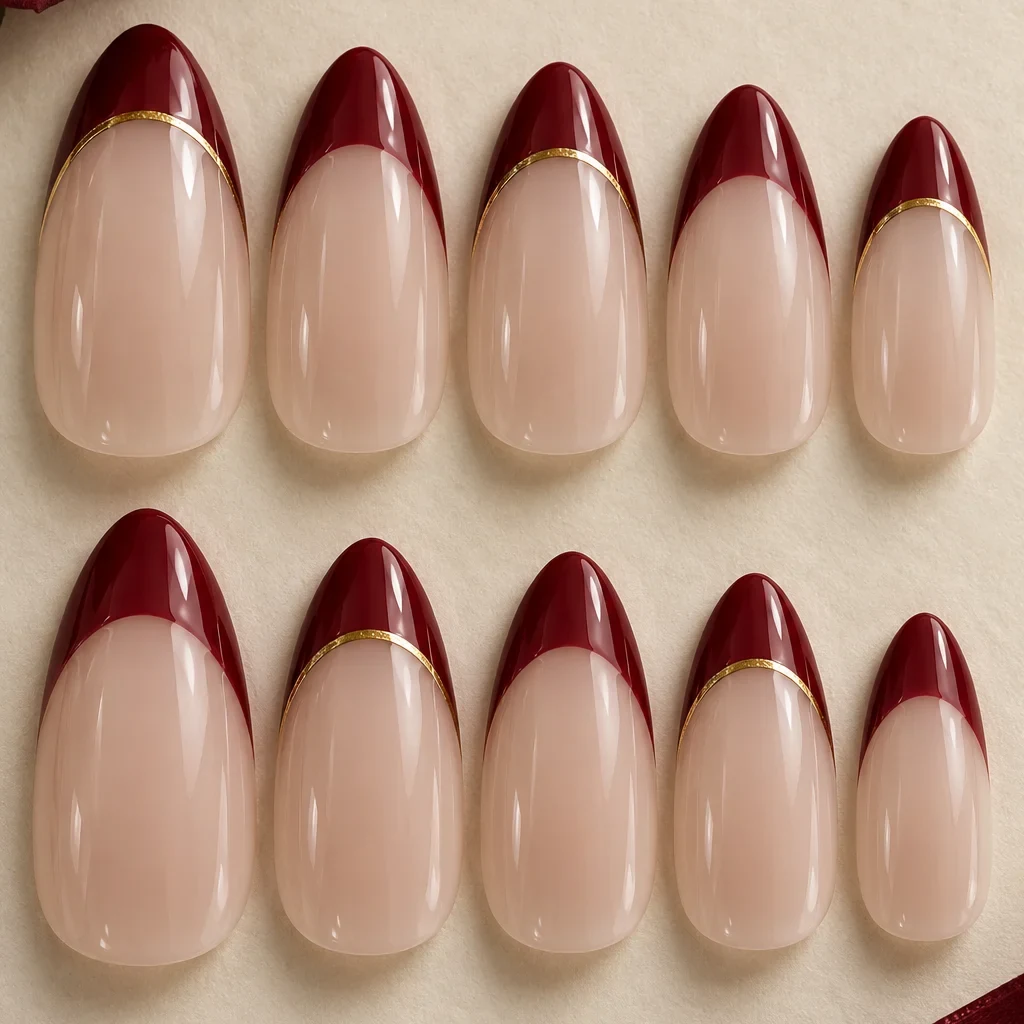
Wine Red French Tip Nails
What to check
A real product chosen to look like the picture. The picture is a styling reference, not this exact product.
-
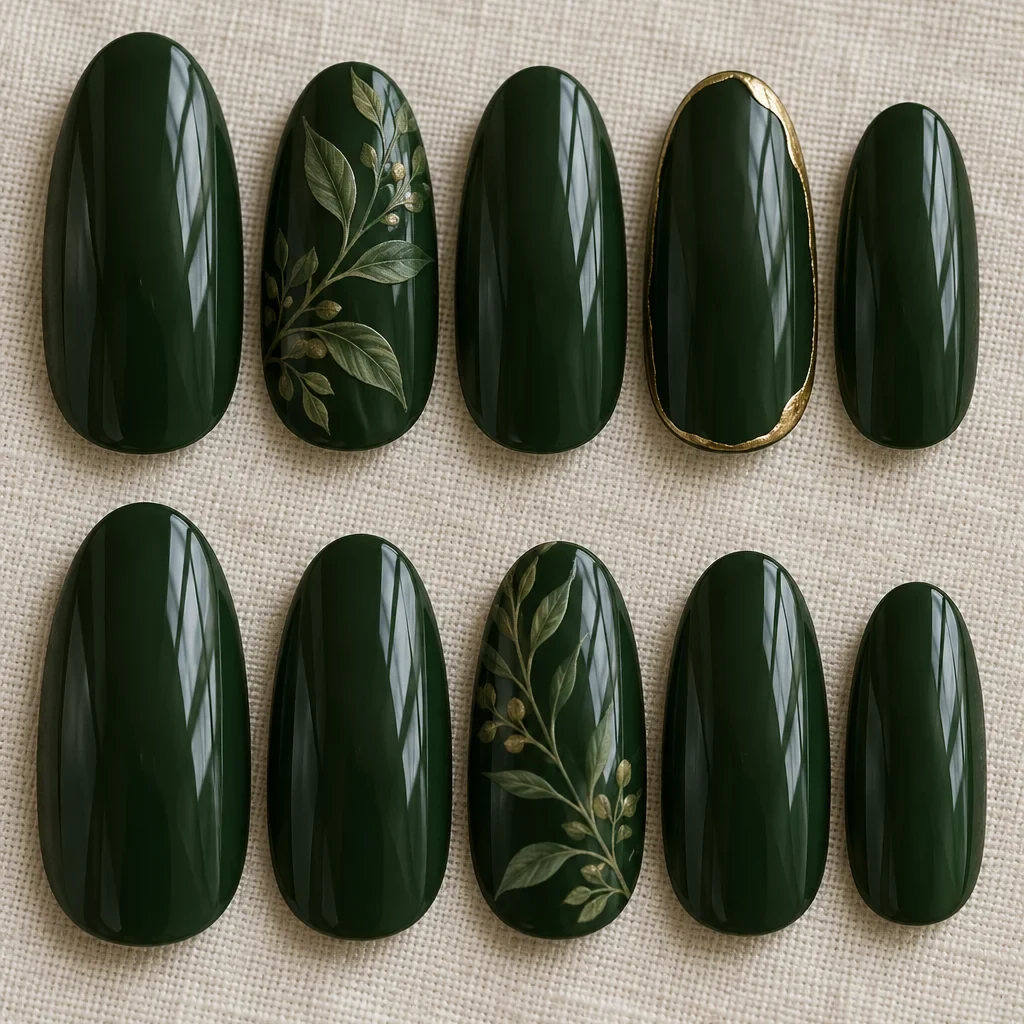
Dark Green Nails
What to check
A real product chosen to look like the picture. The picture is a styling reference, not this exact product.
-
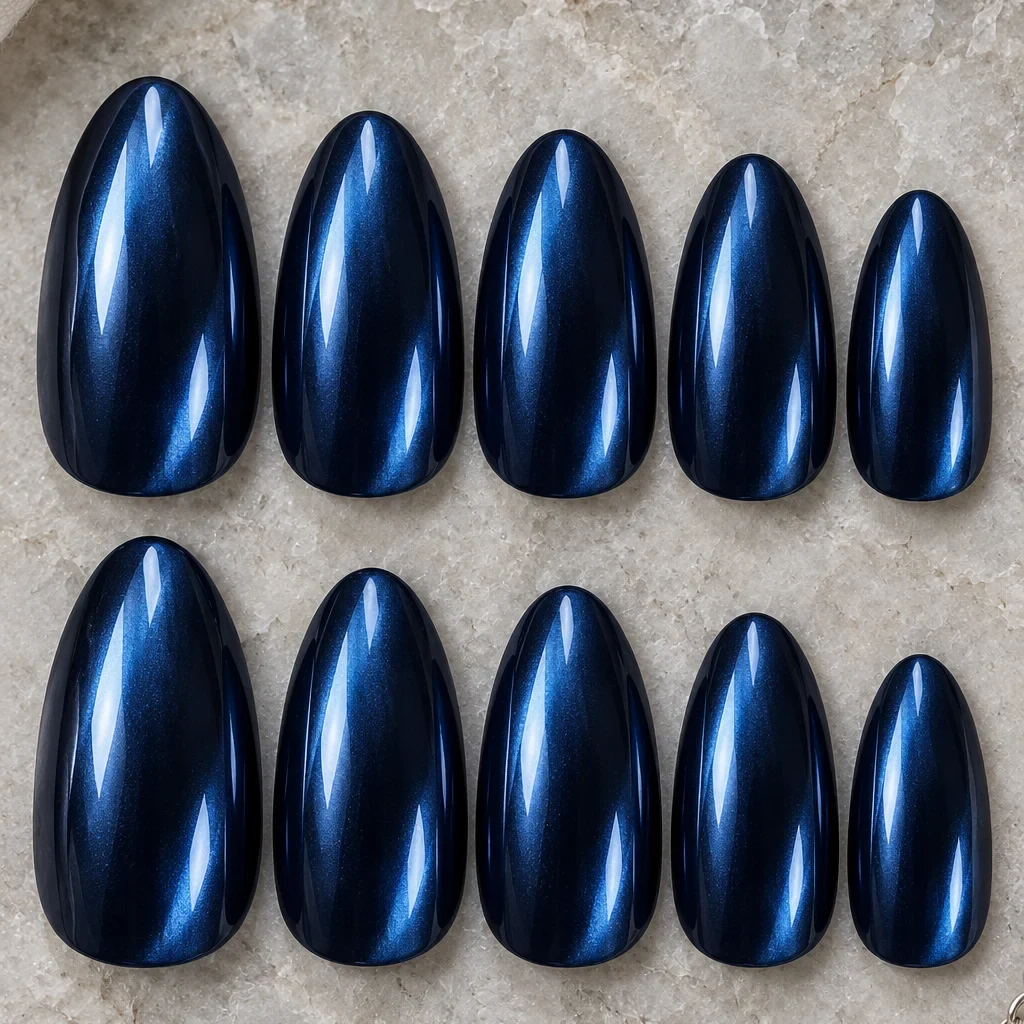
Dark Navy Chrome Nails
What to check
A real product chosen to look like the picture. The picture is a styling reference, not this exact product.
-
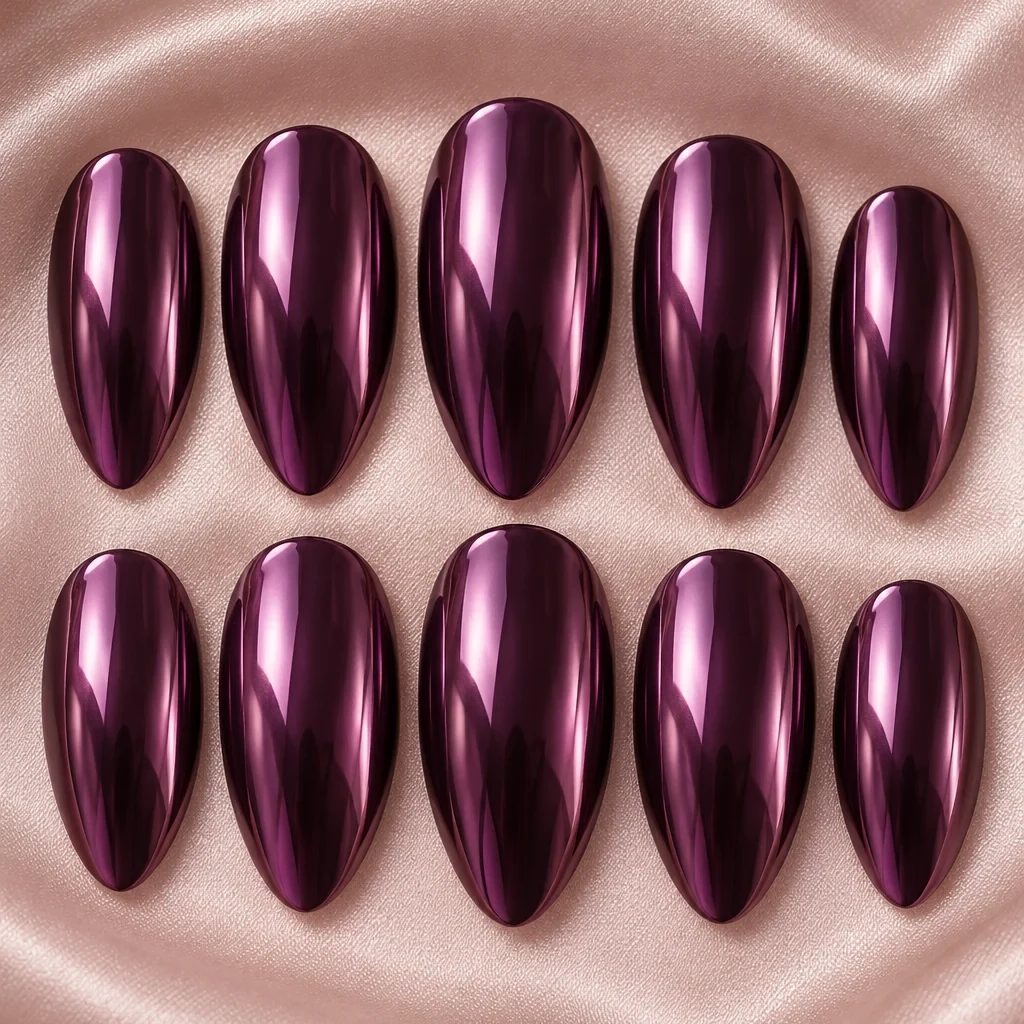
Dark Plum Chrome Nails
What to check
A real product chosen to look like the picture. The picture is a styling reference, not this exact product.
Show all 16 pieces
-
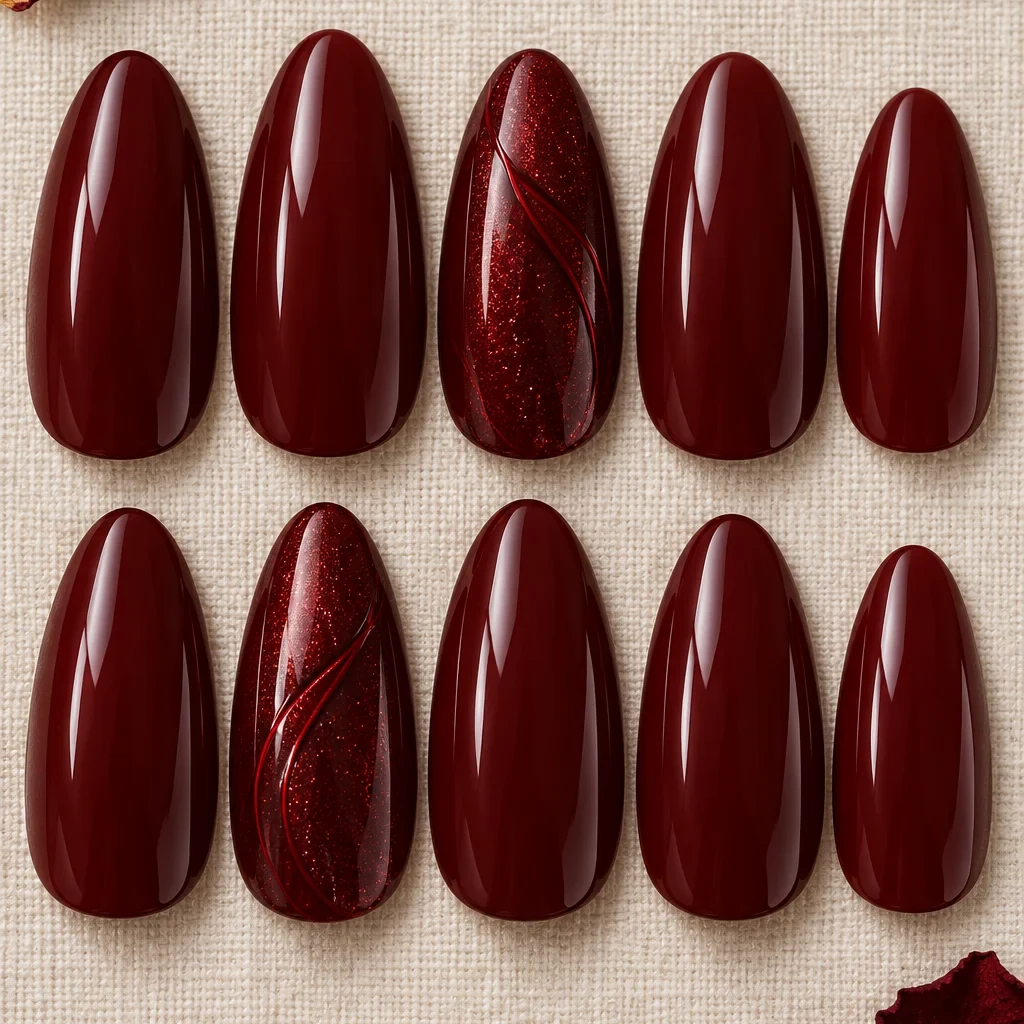
Dark Red Nails
What to check
A real product chosen to look like the picture. The picture is a styling reference, not this exact product.
-
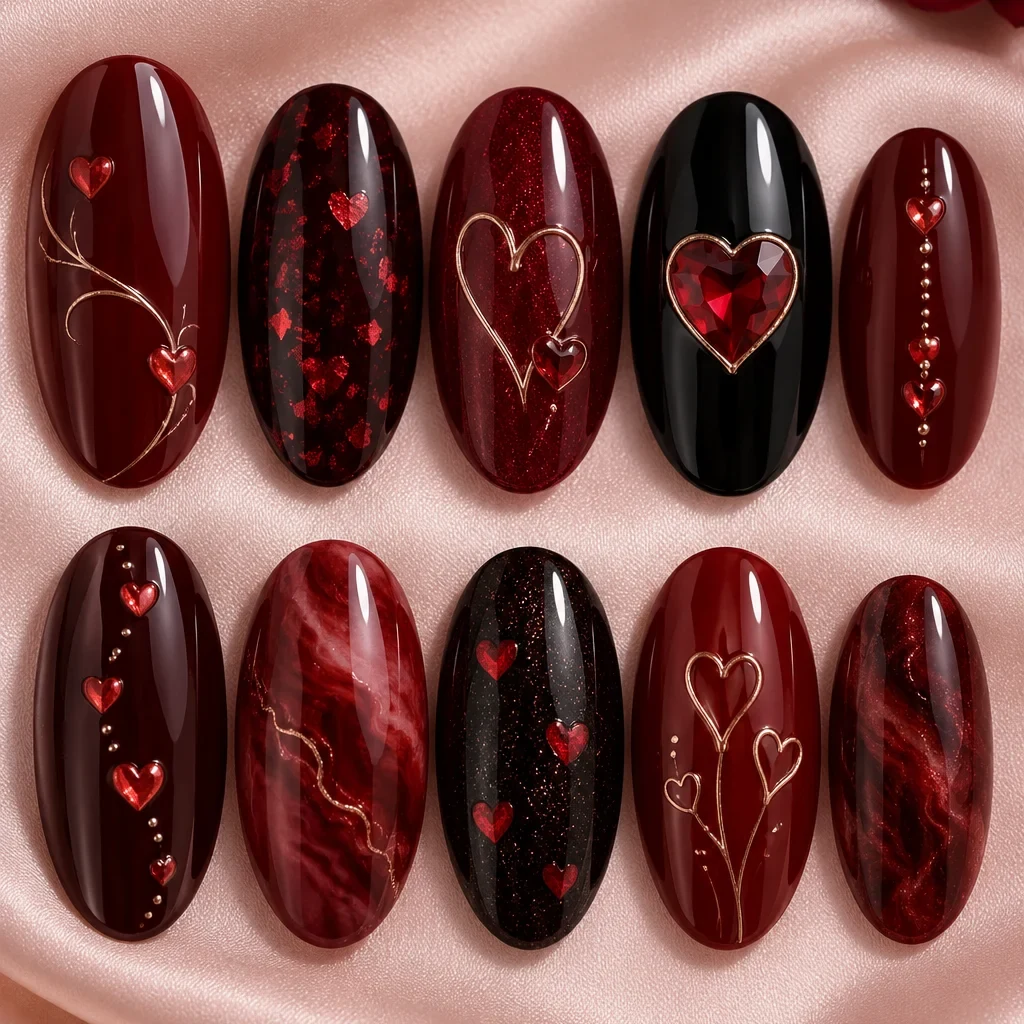
Dark Valentines Day Nails
What to check
A real product chosen to look like the picture. The picture is a styling reference, not this exact product.
-
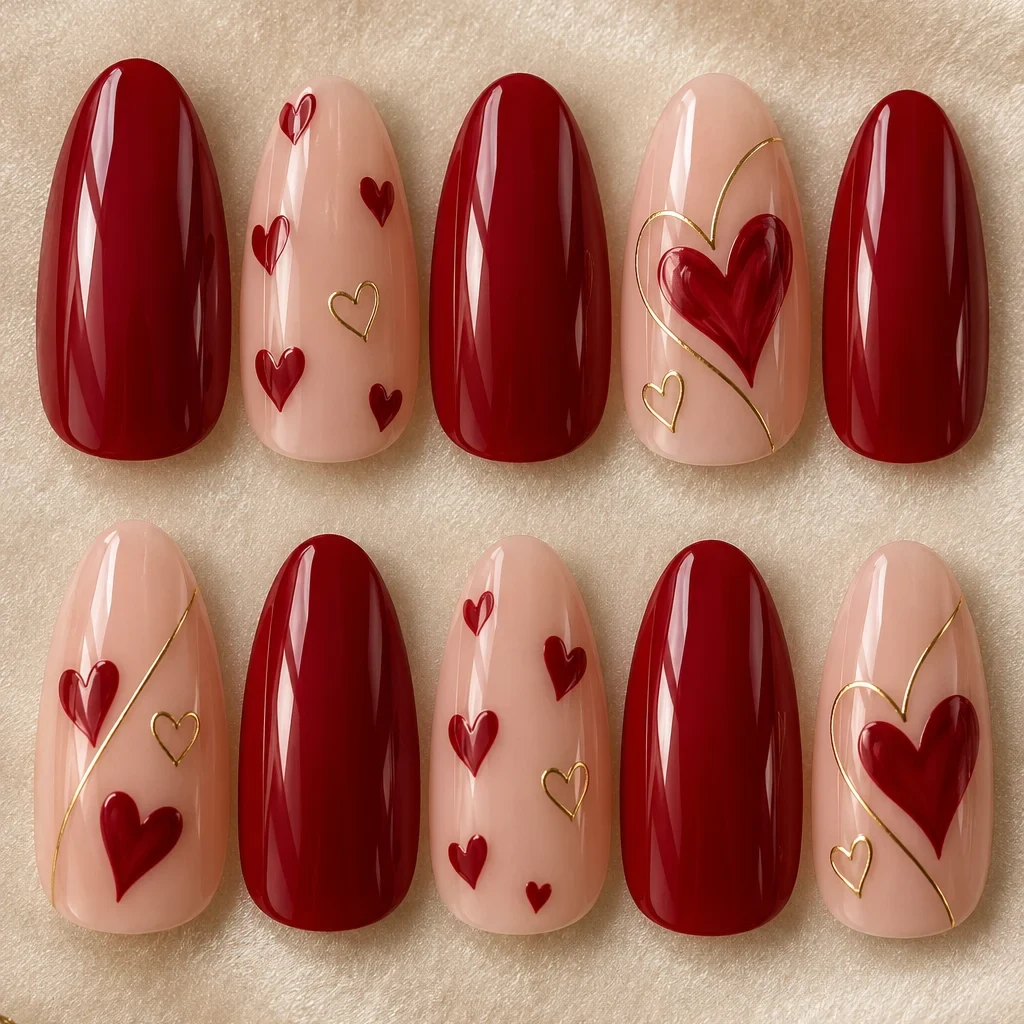
Deep Red Heart Nails
What to check
A real product chosen to look like the picture. The picture is a styling reference, not this exact product.
-
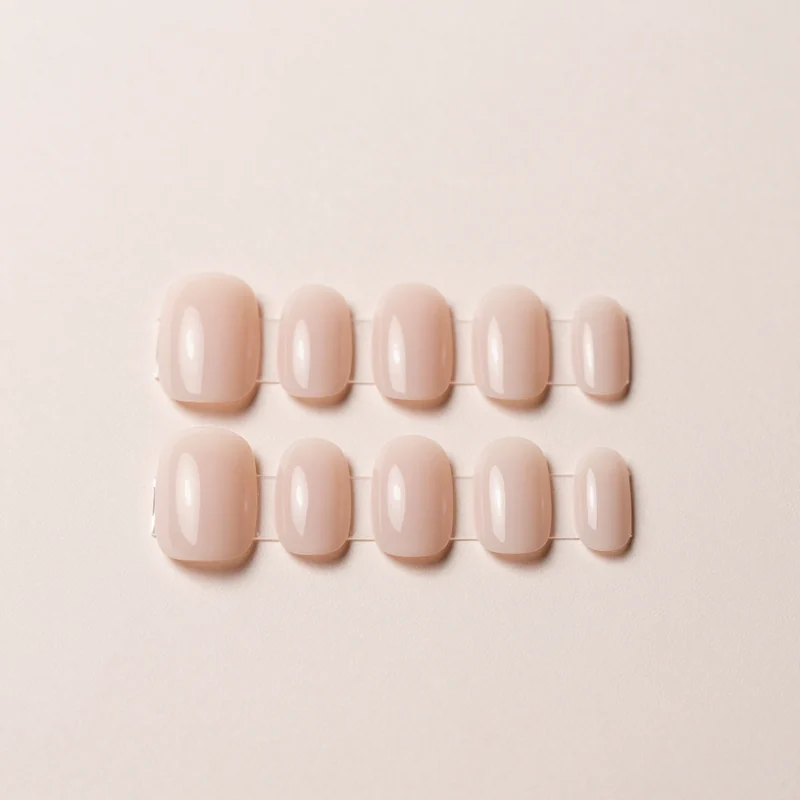
Short almond press-on nails
What to check
A real product chosen to look like the picture. The picture is a styling reference, not this exact product.
-
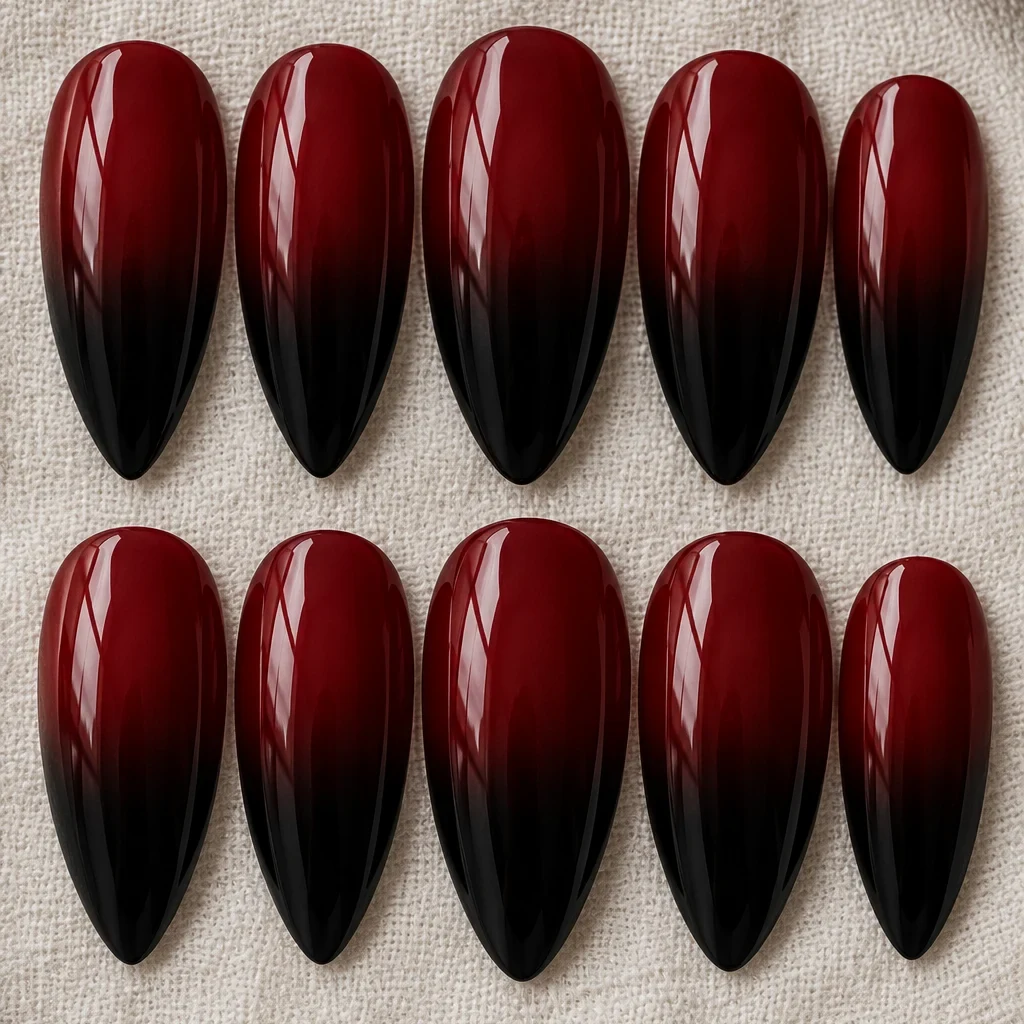
Vampy Red Black Ombre Nails
What to check
A real product chosen to look like the picture. The picture is a styling reference, not this exact product.
-
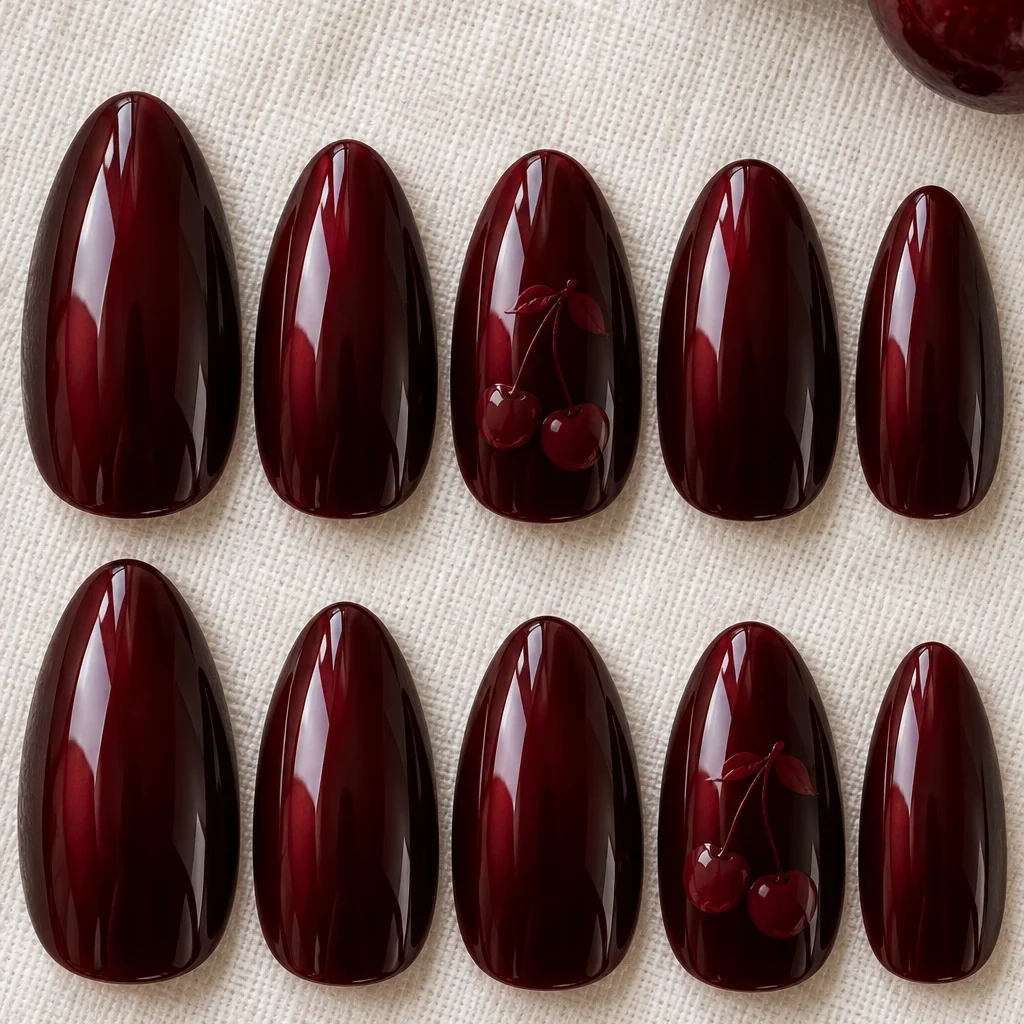
Black Cherry Nails
What to check
A real product chosen to look like the picture. The picture is a styling reference, not this exact product.
-
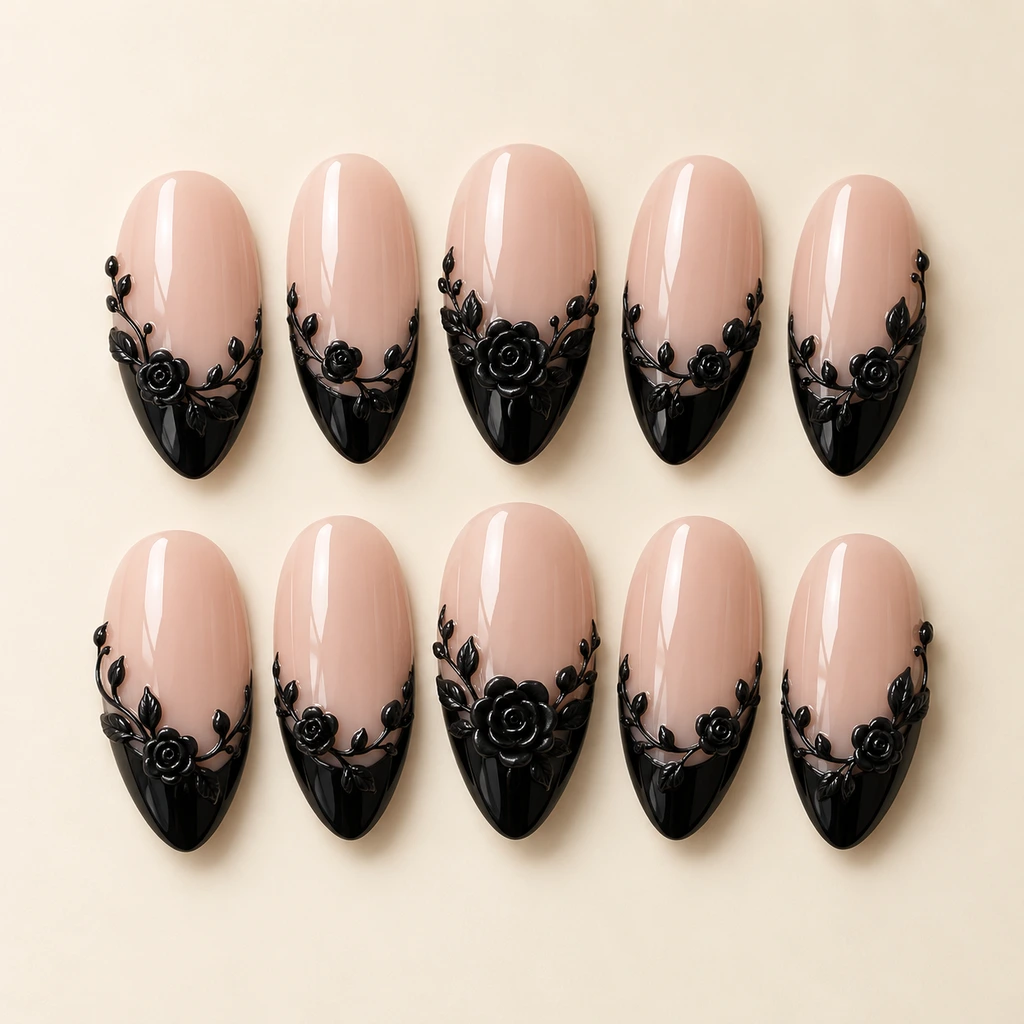
Black floral French
What to check
A real product chosen to look like the picture. The picture is a styling reference, not this exact product.
-
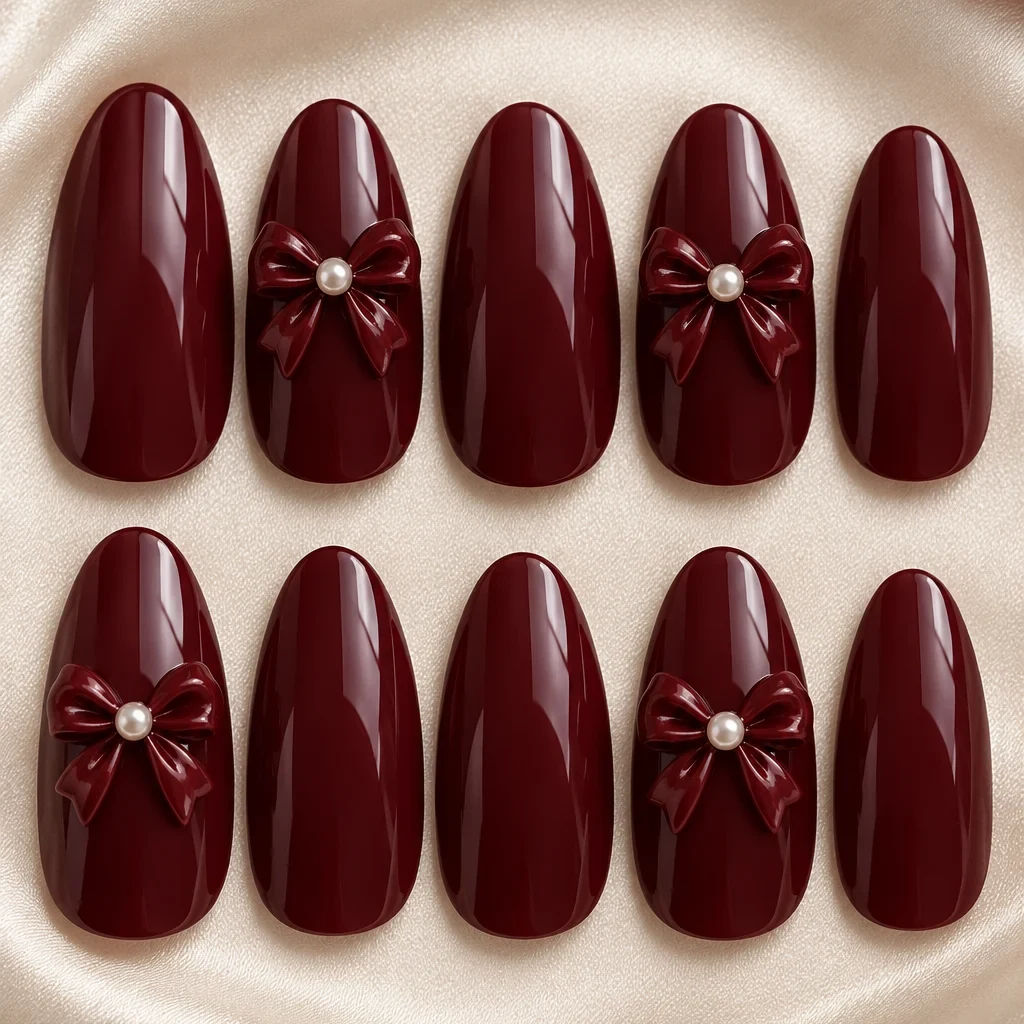
Burgundy Bow Nails
What to check
A real product chosen to look like the picture. The picture is a styling reference, not this exact product.
The gallery
26 dark accents looks
Open a look to see its pieces.
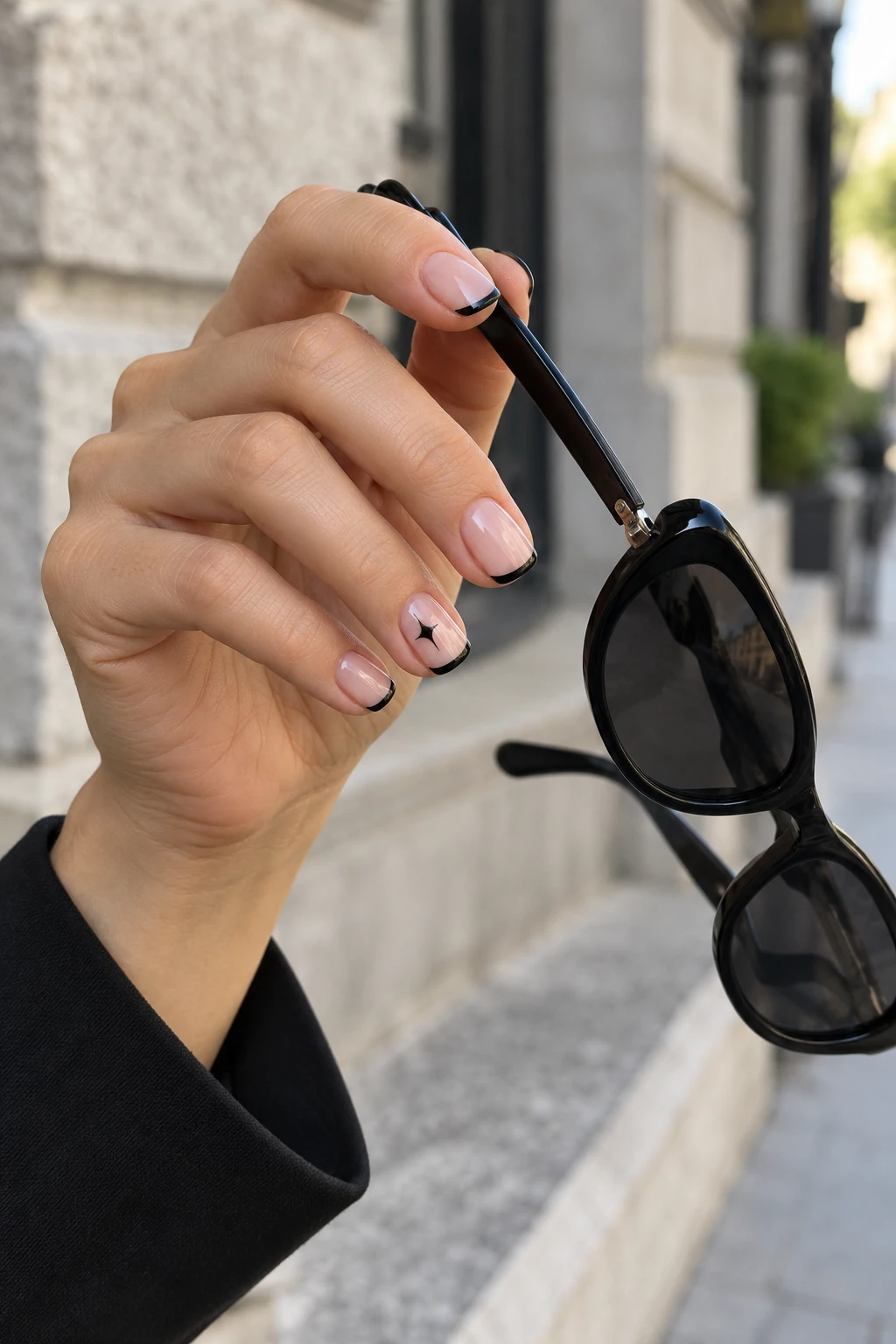 Soft-goth micro French
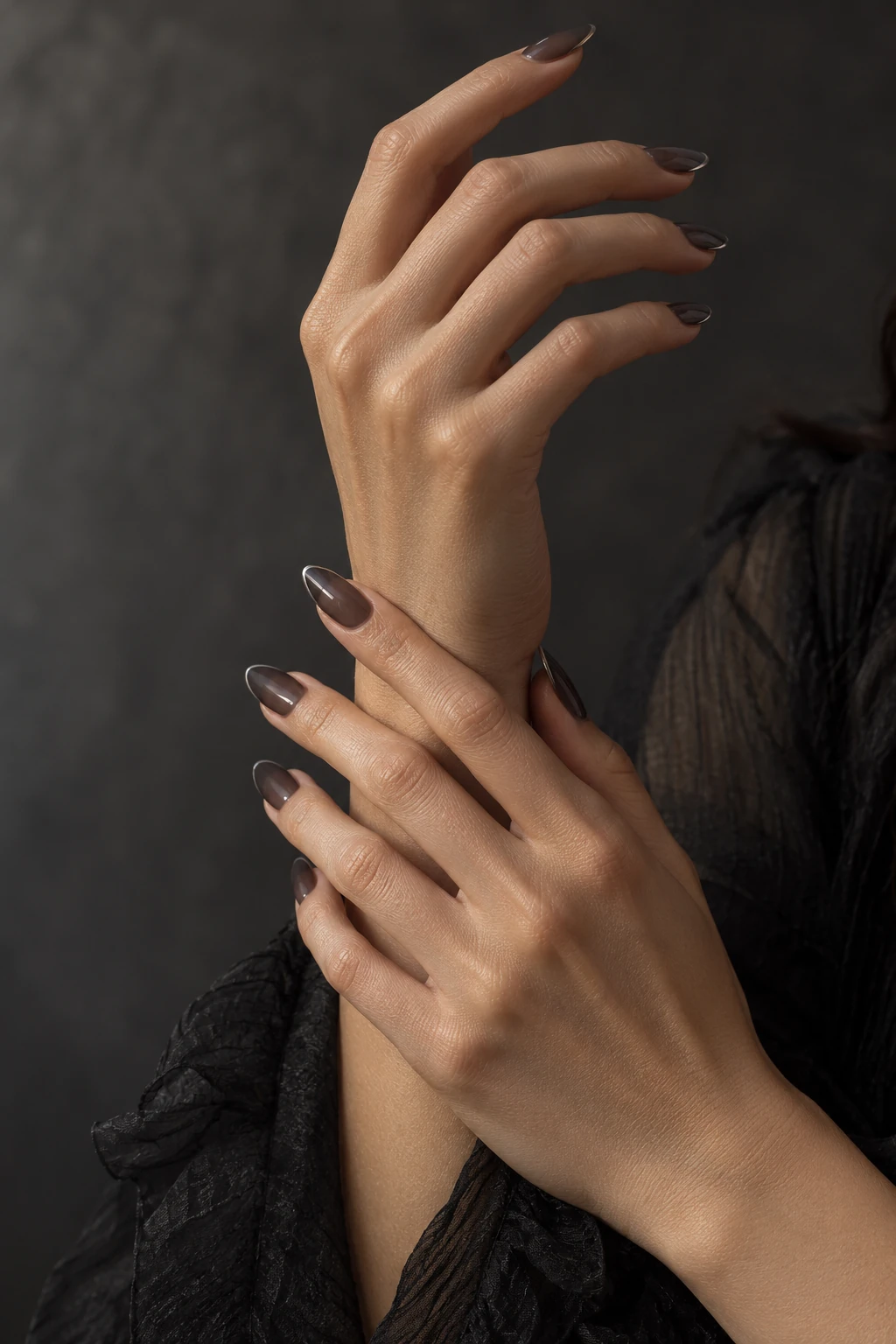 Silver-edged smoke
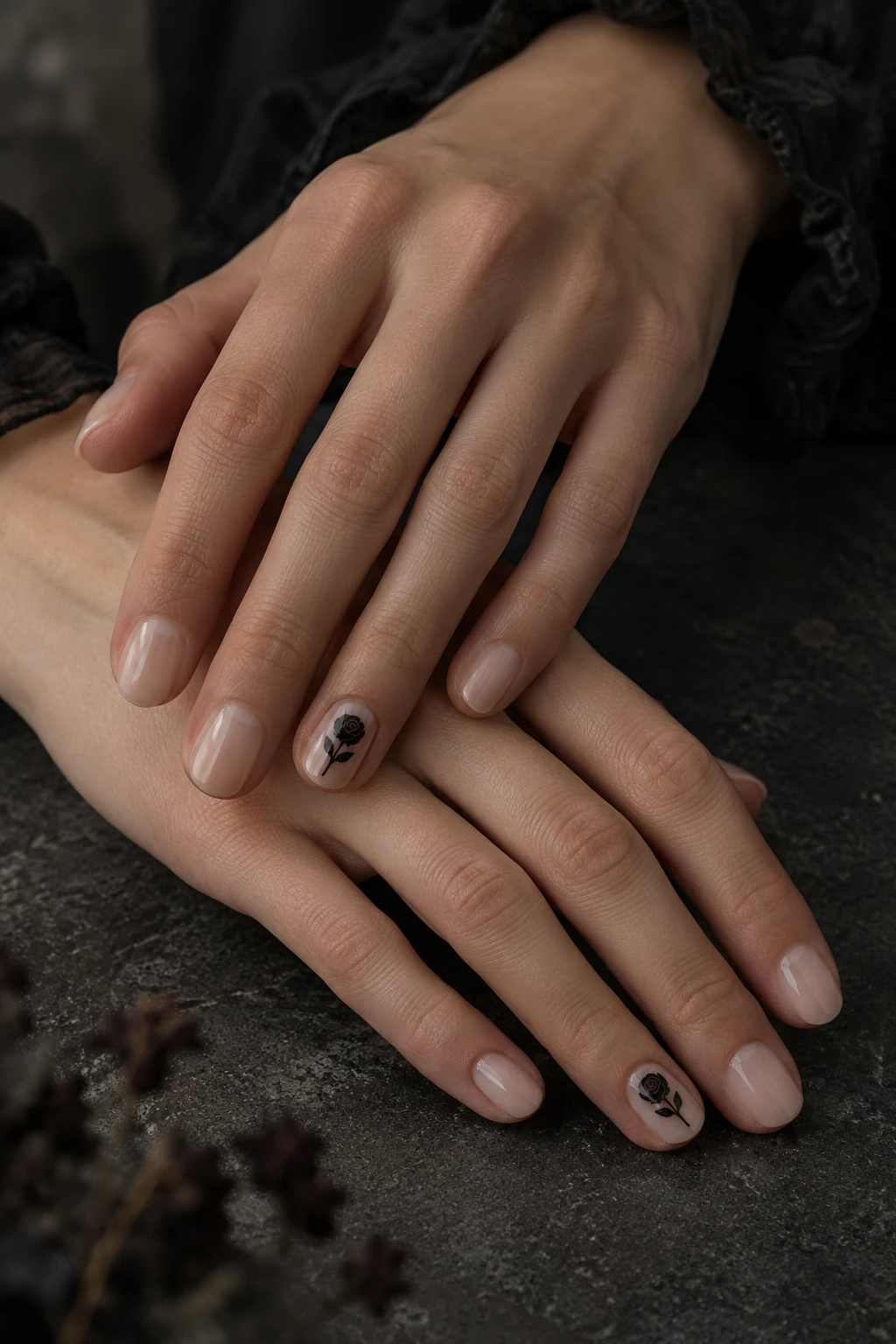 Tiny black roses
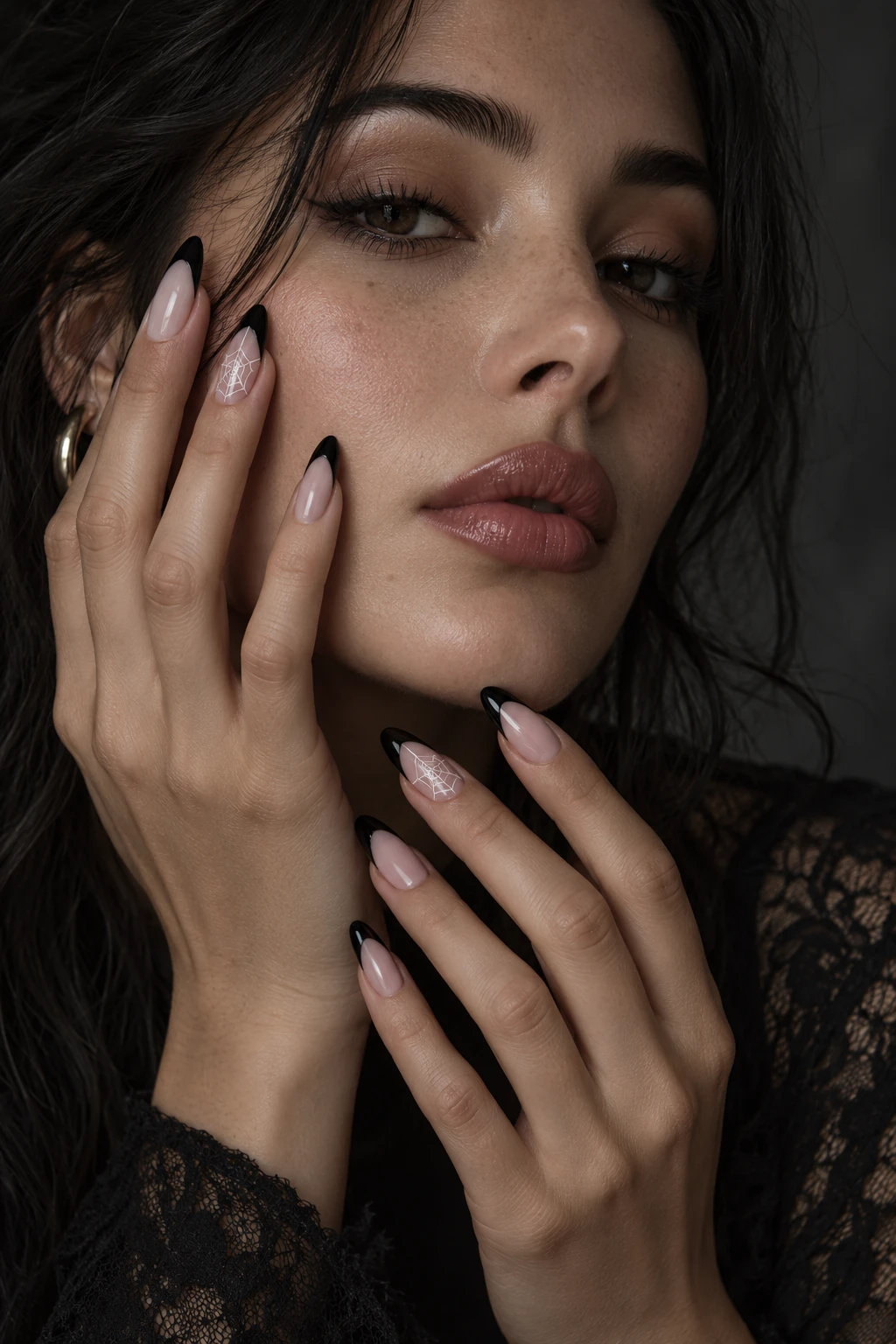 Fine spiderweb French
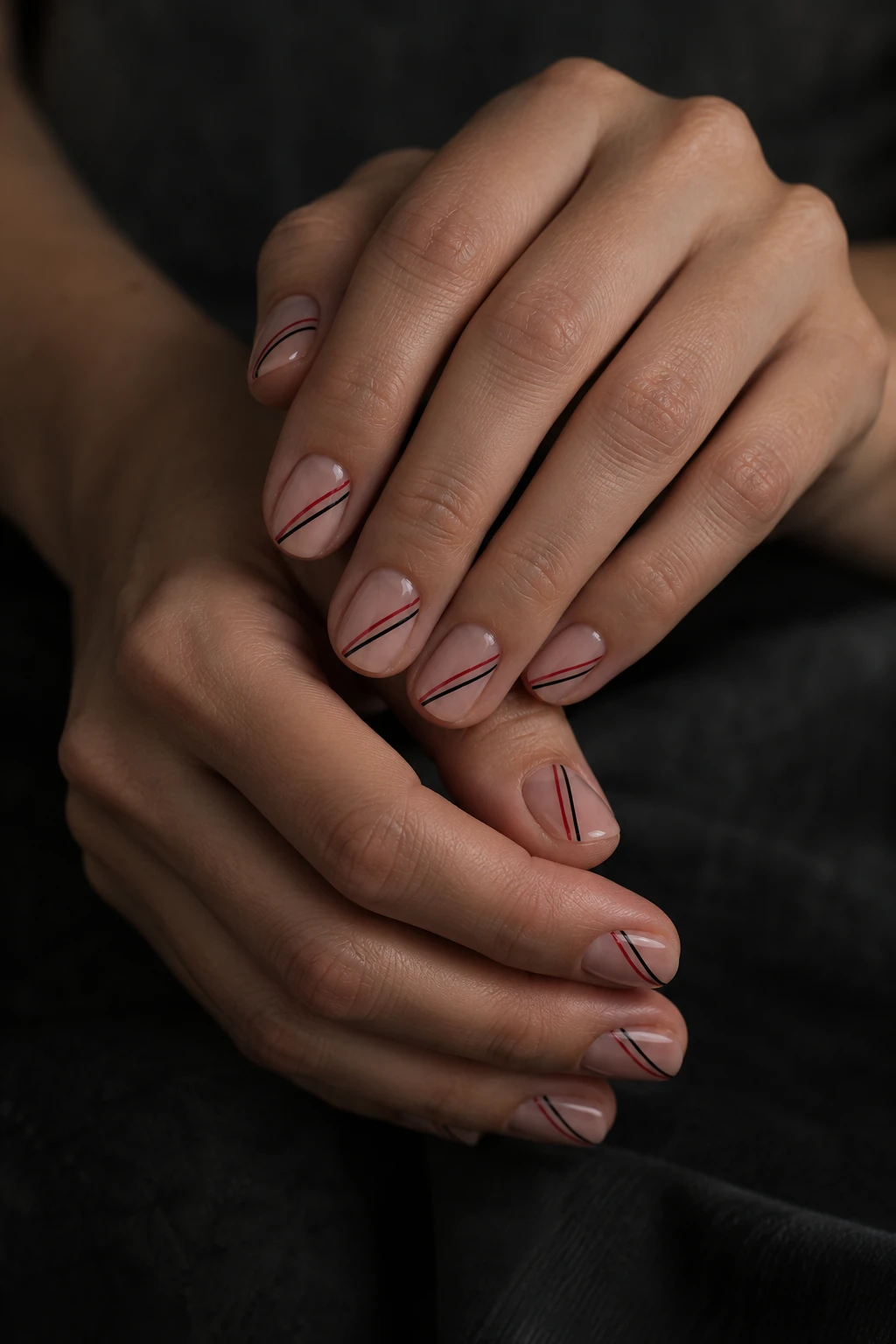 Fine crimson lines
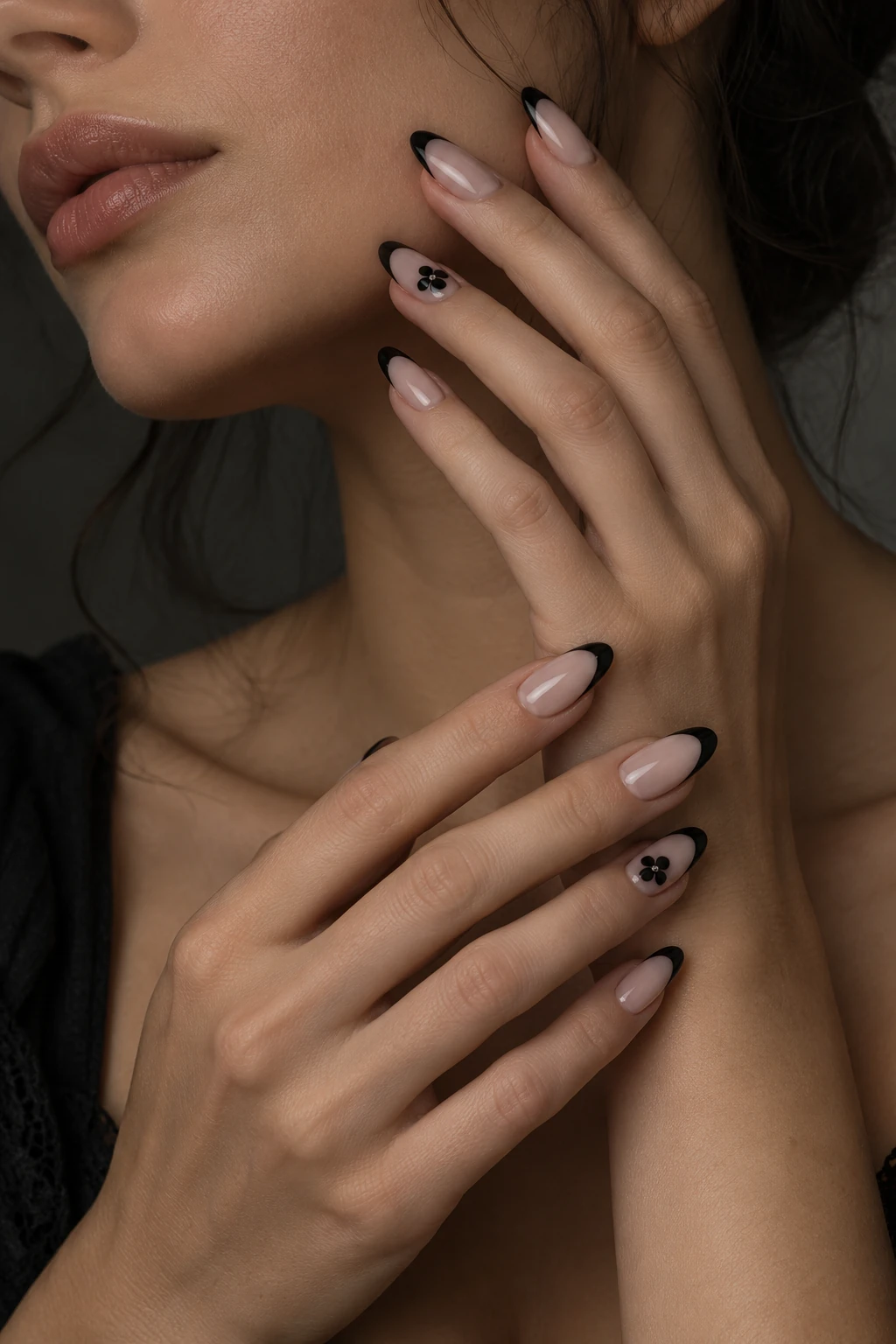 Black floral French
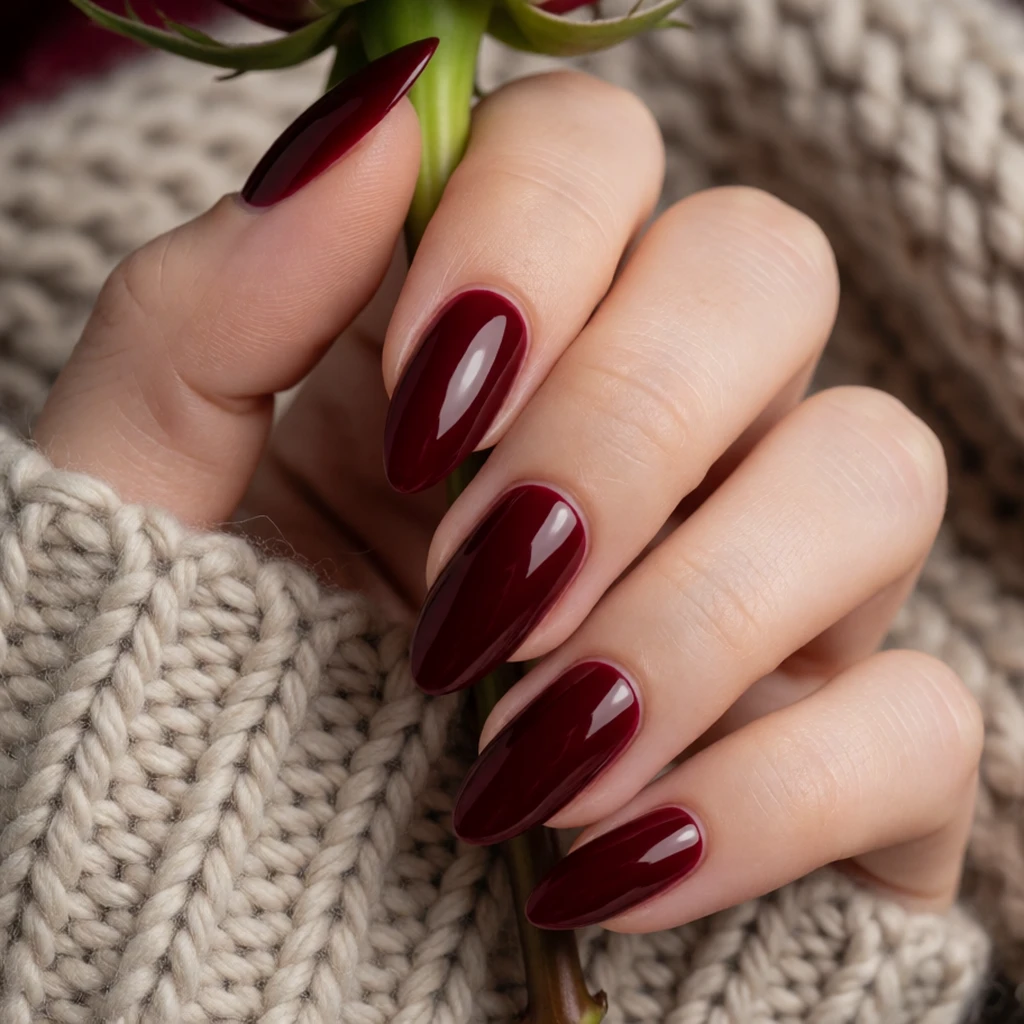 Dark Red Nails
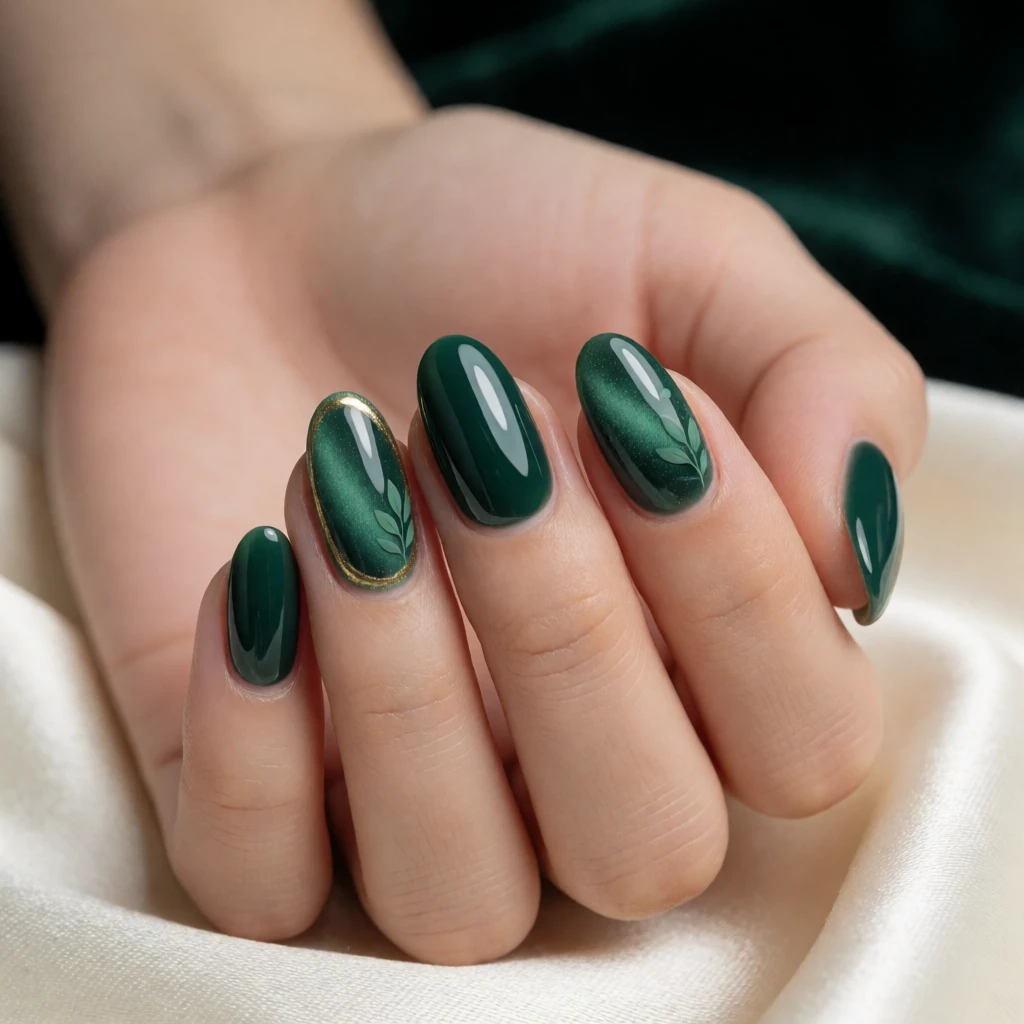 Dark Green Nails
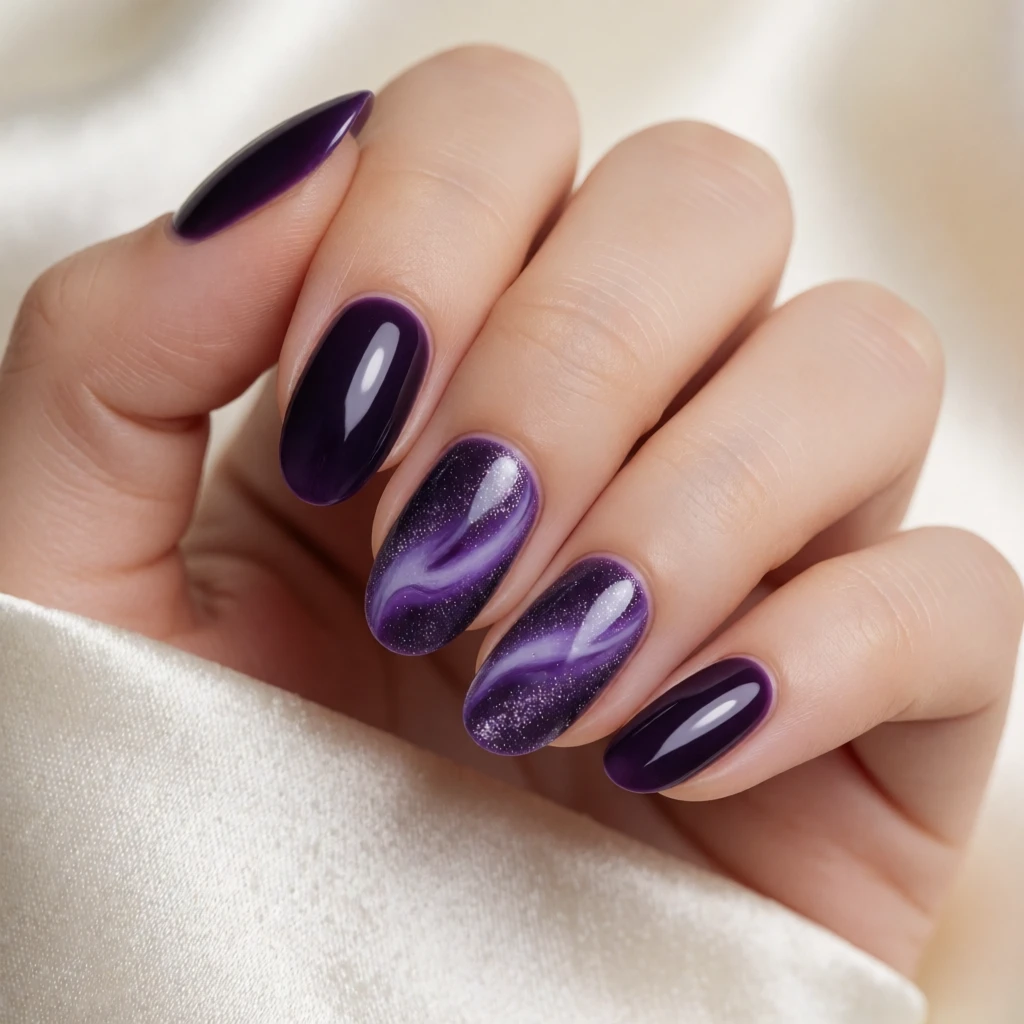 Dark Purple Nails
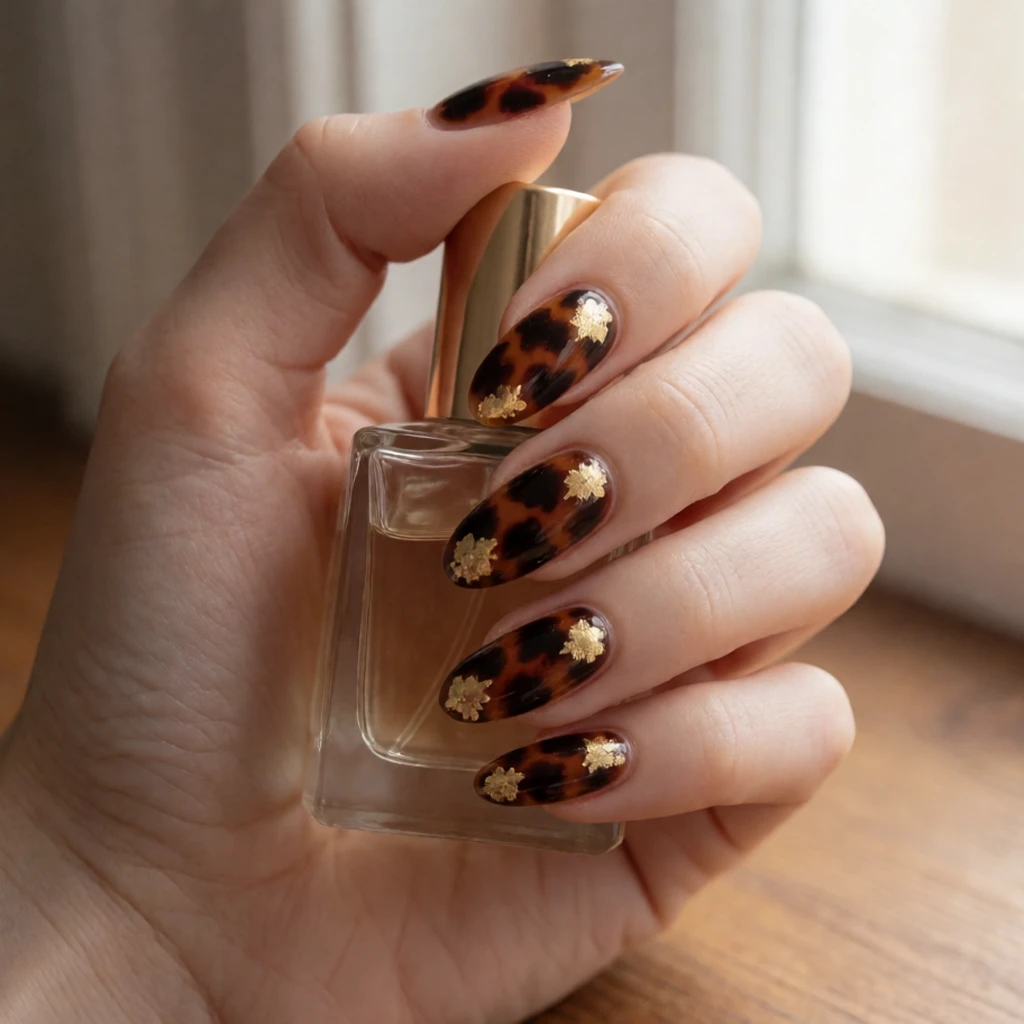 Dark Brown Nails
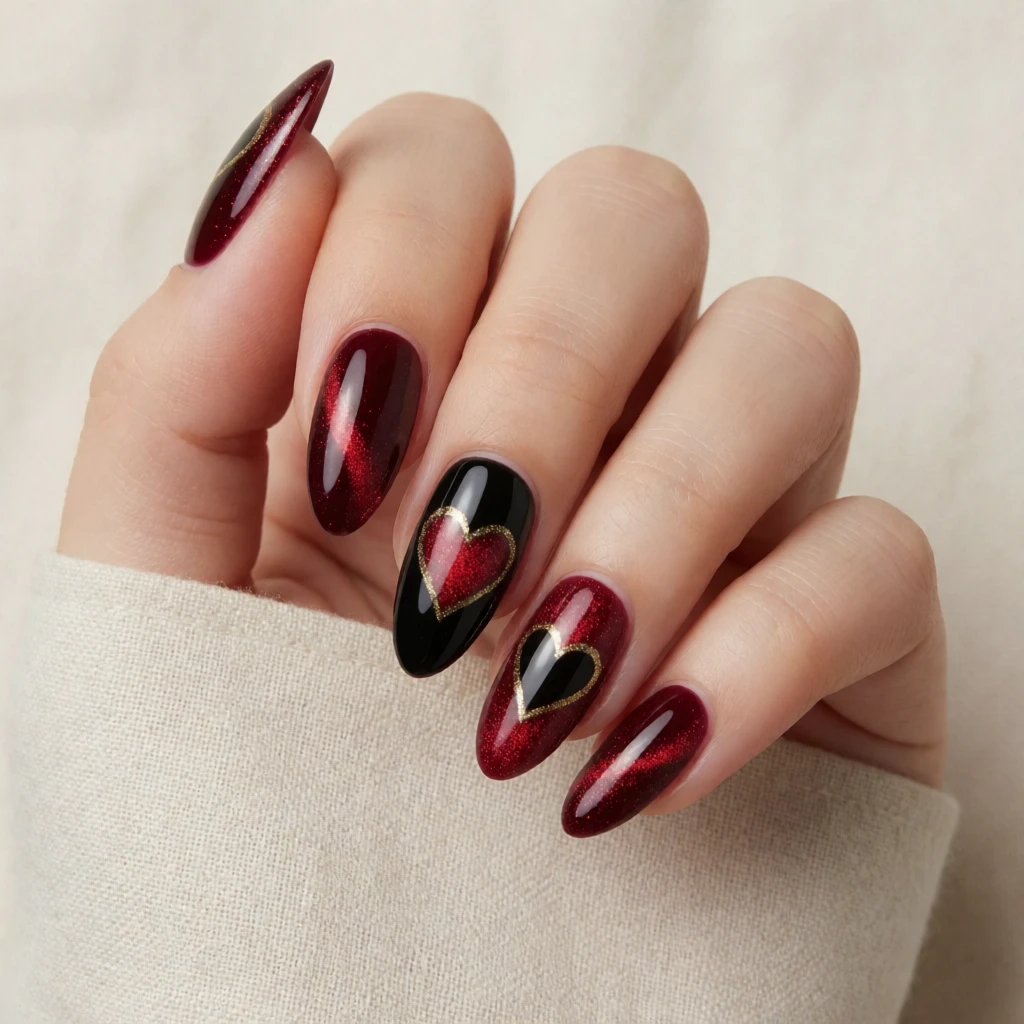 Dark Valentines Day Nails
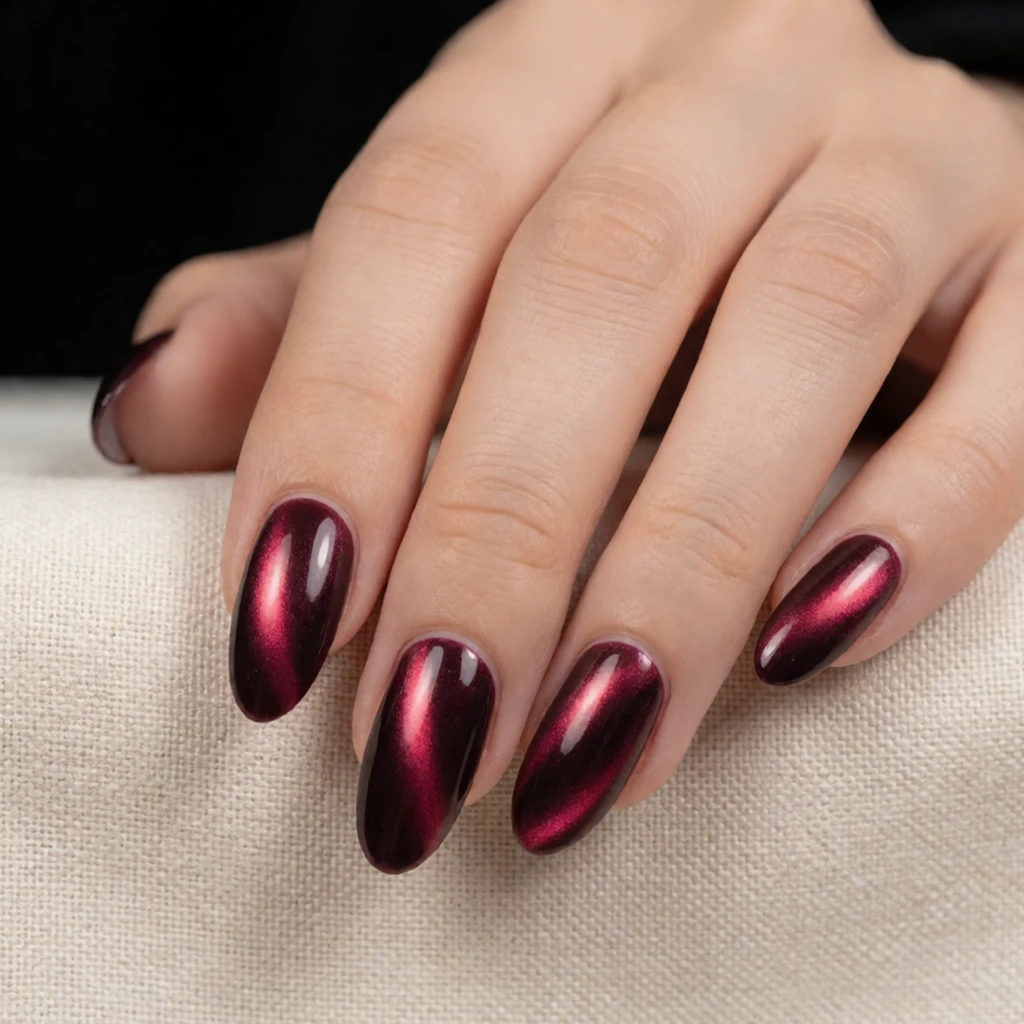 Burgundy Chrome Nails
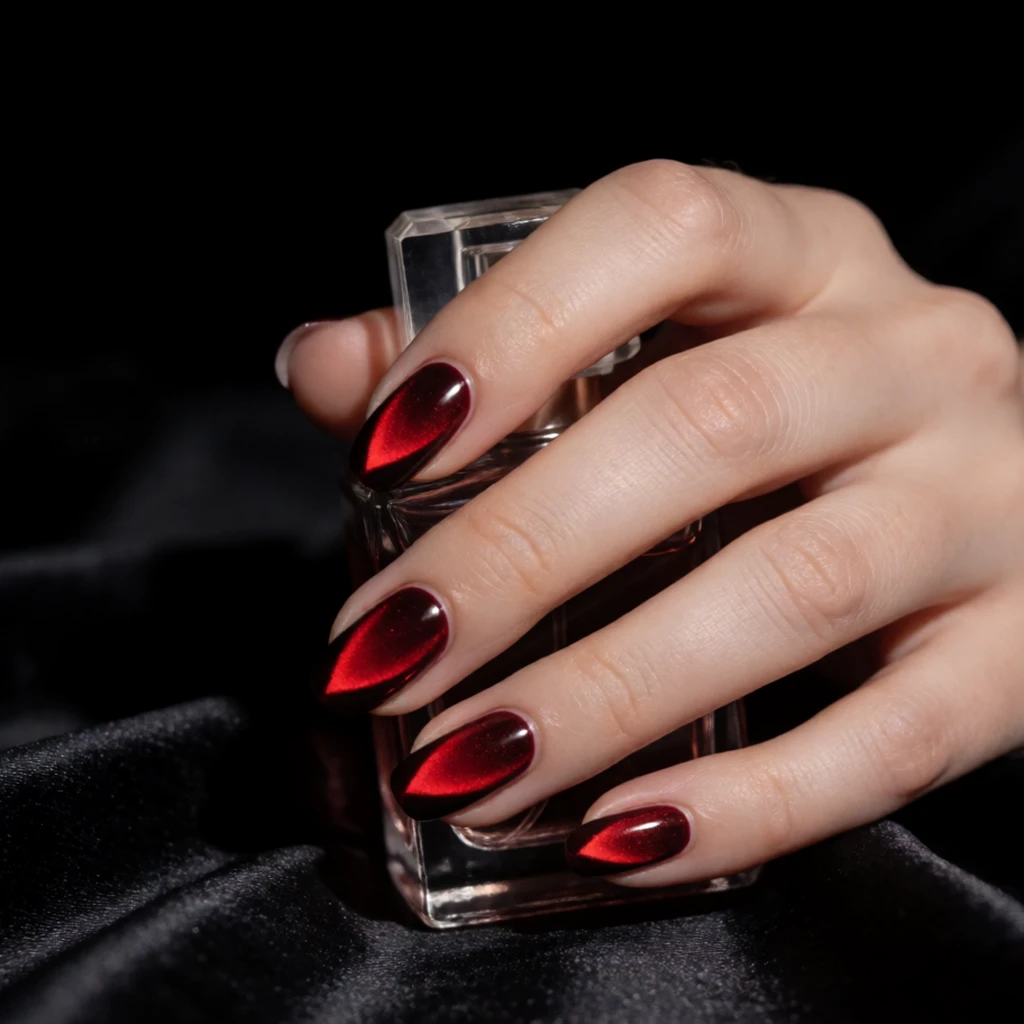 Dark Red Cat Eye Nails
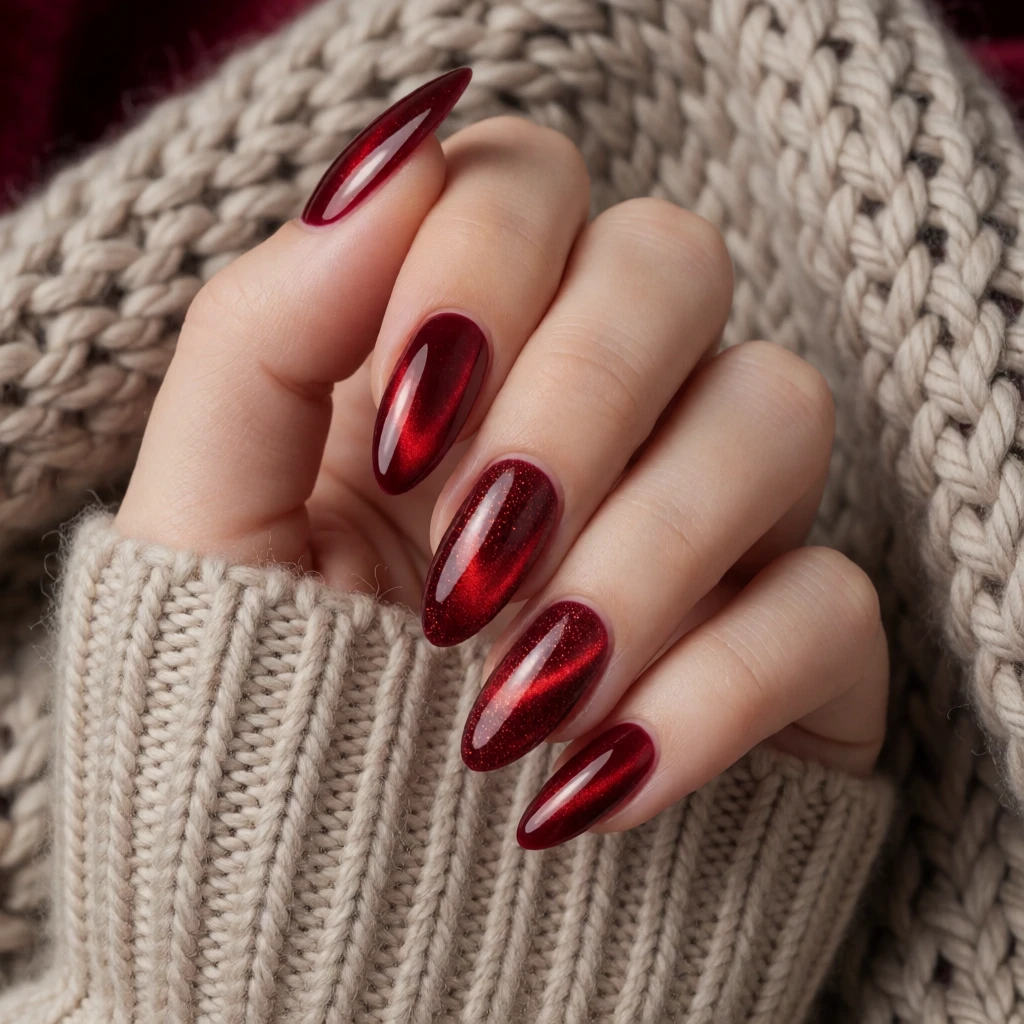 Dark Red Almond Nails
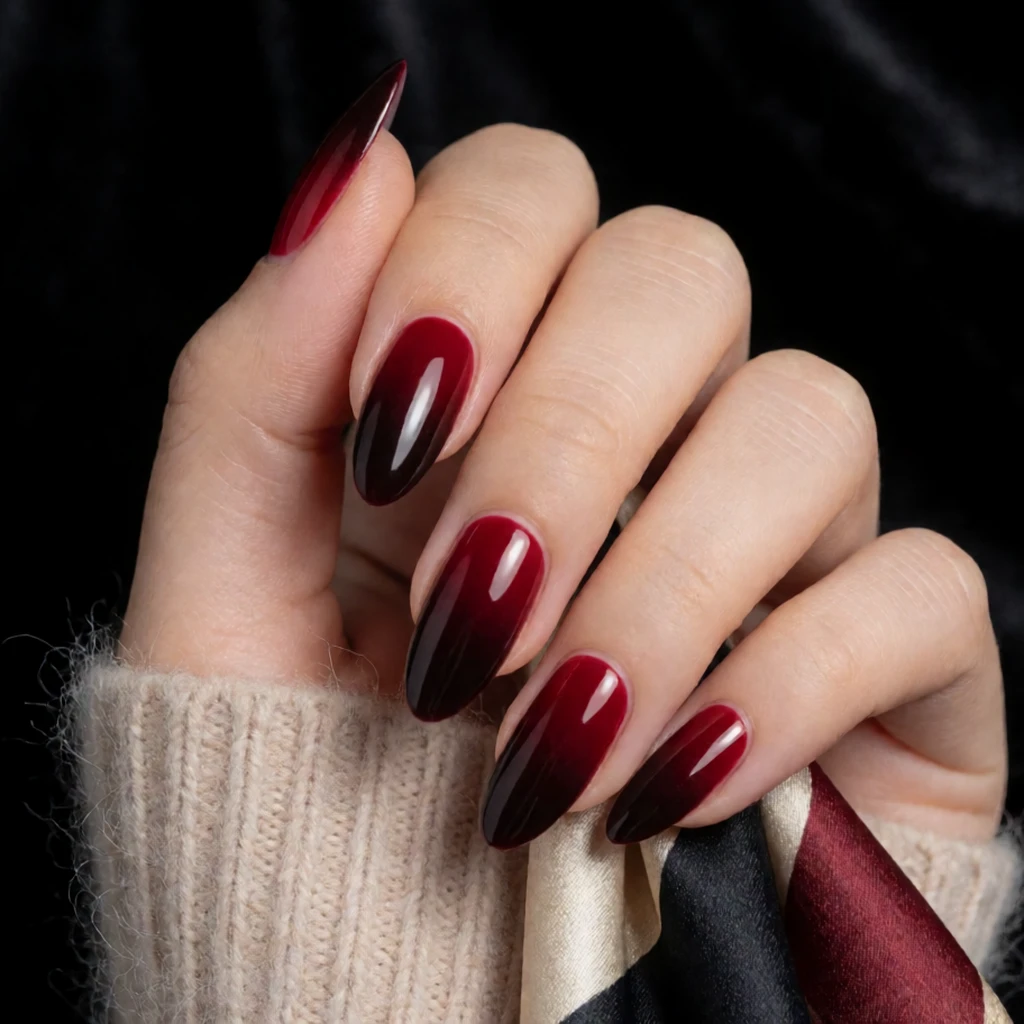 Vampy Red Black Ombre Nails
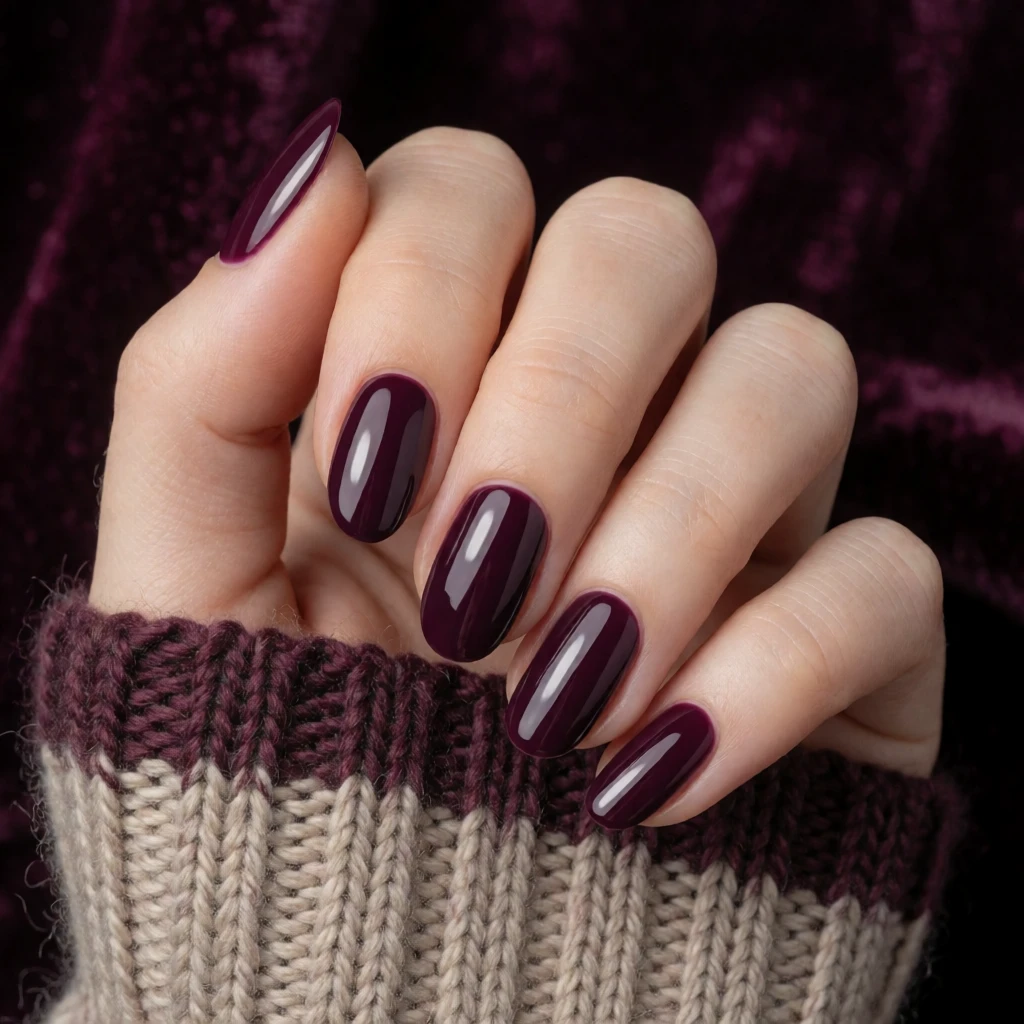 Dark Plum Chrome Nails
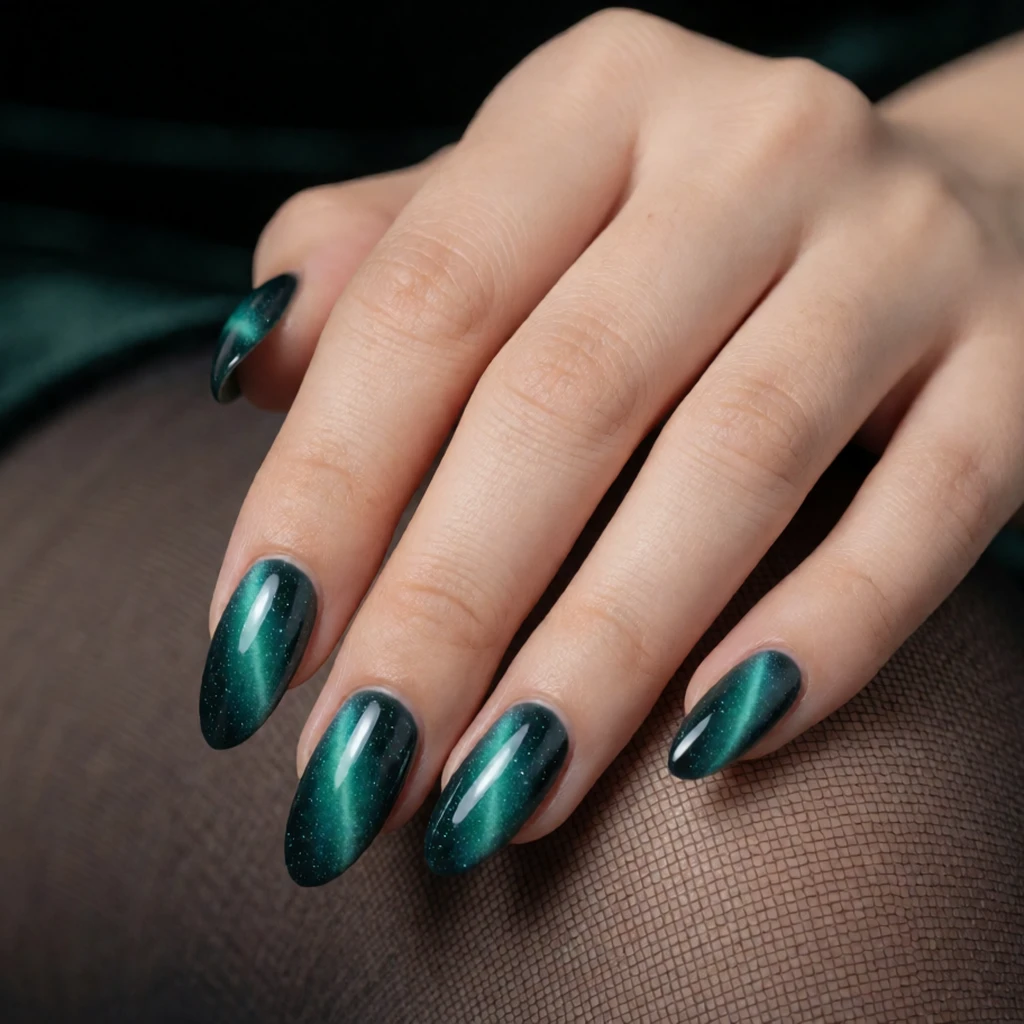 Emerald Cat Eye Nails
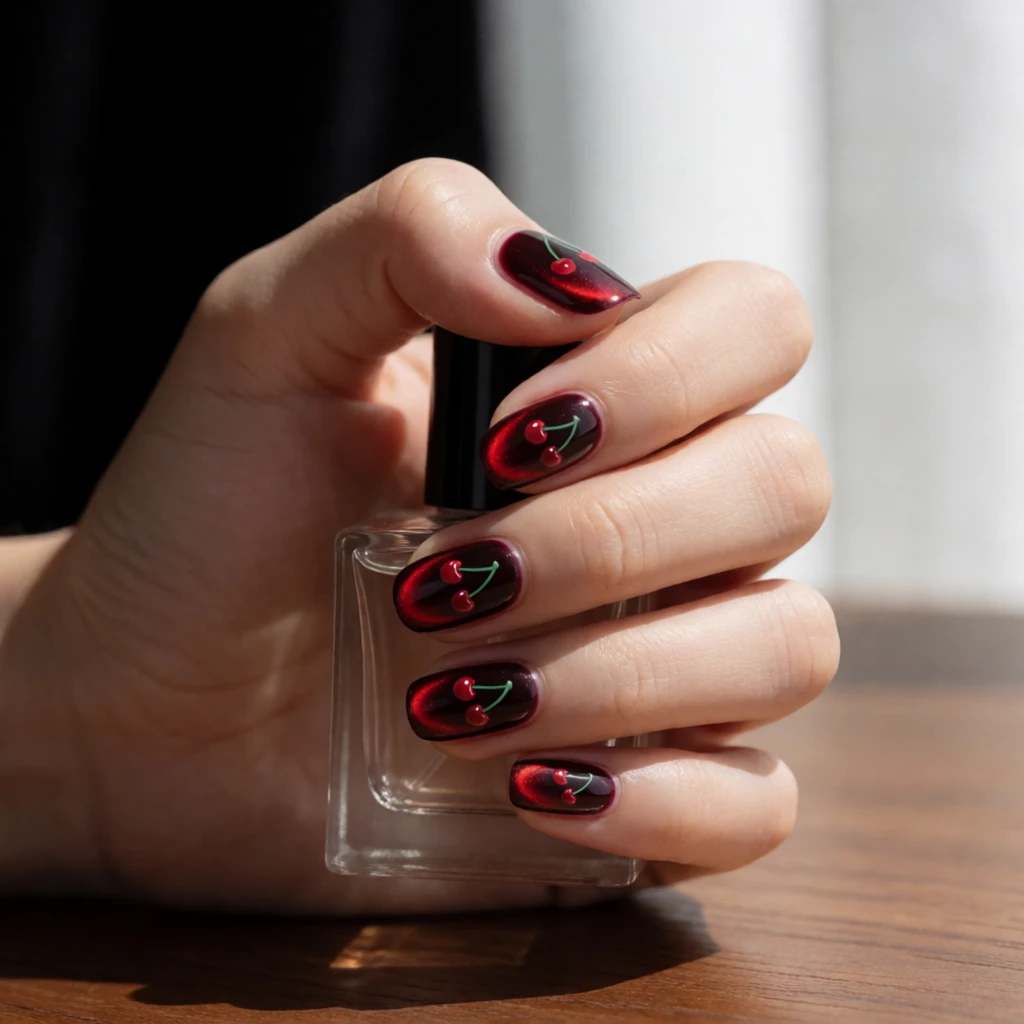 Black Cherry Nails
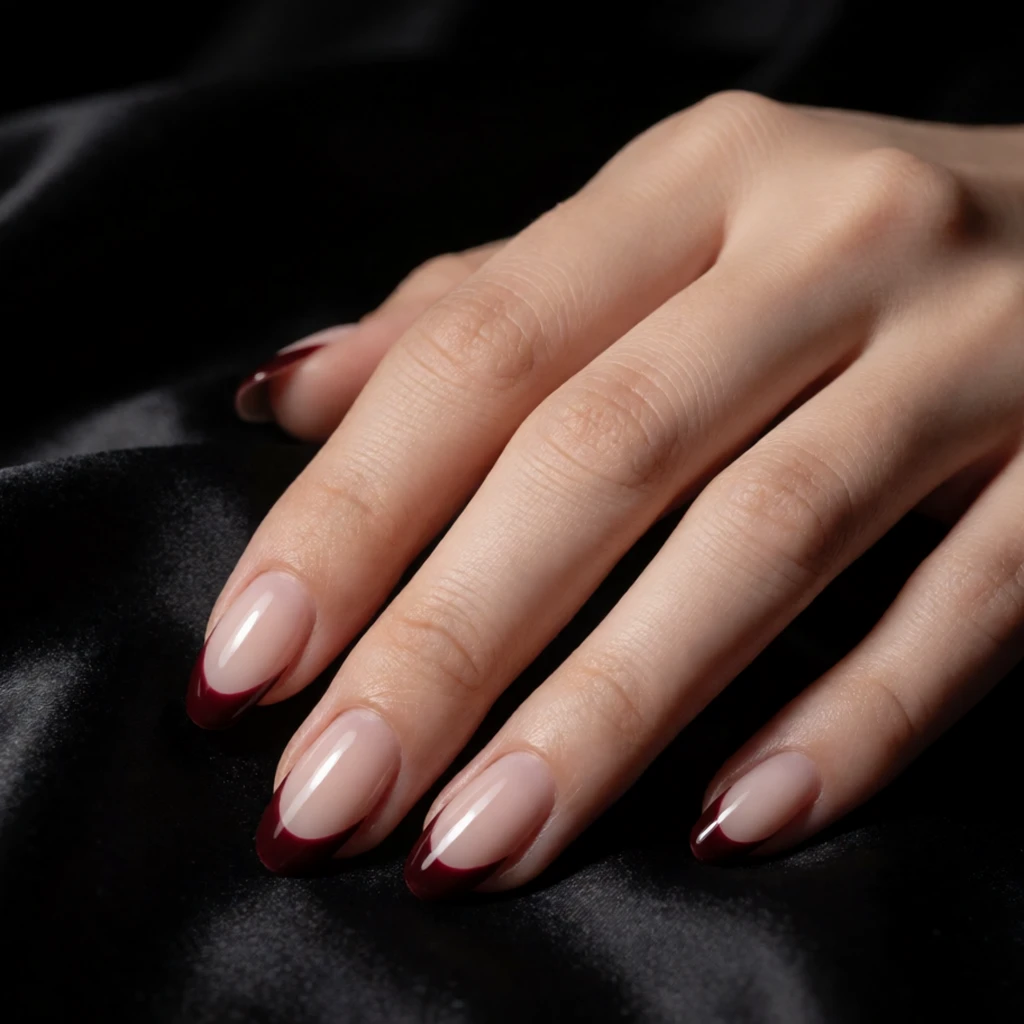 Wine Red French Tip Nails
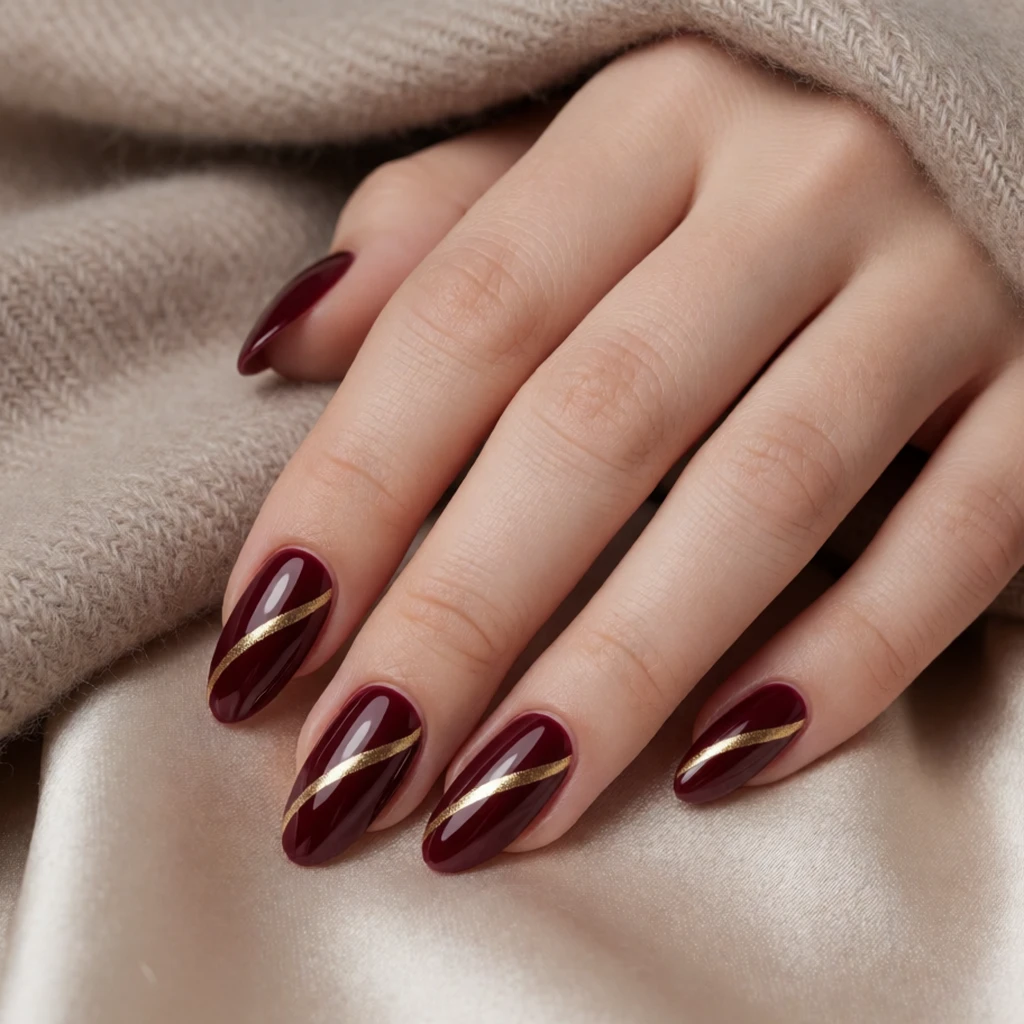 Burgundy Gold Line Nails
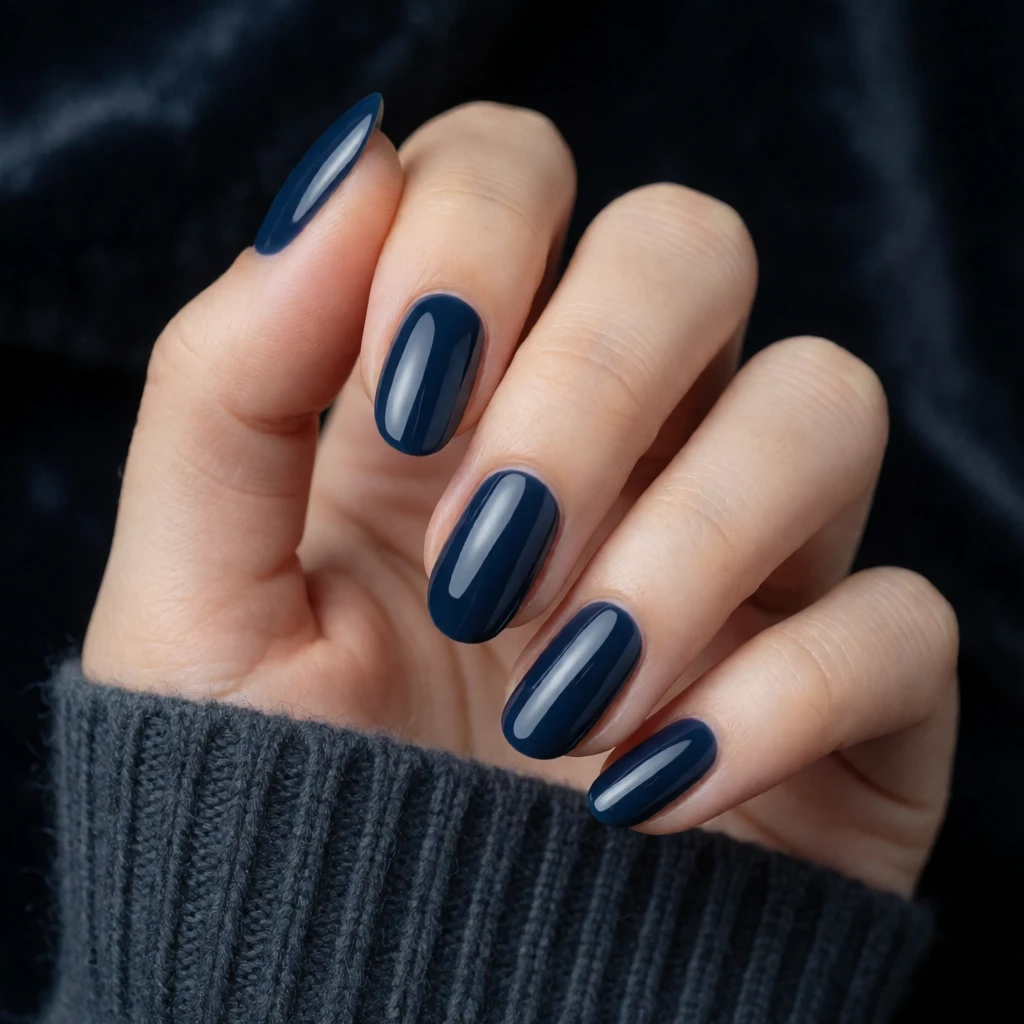 Dark Navy Chrome Nails
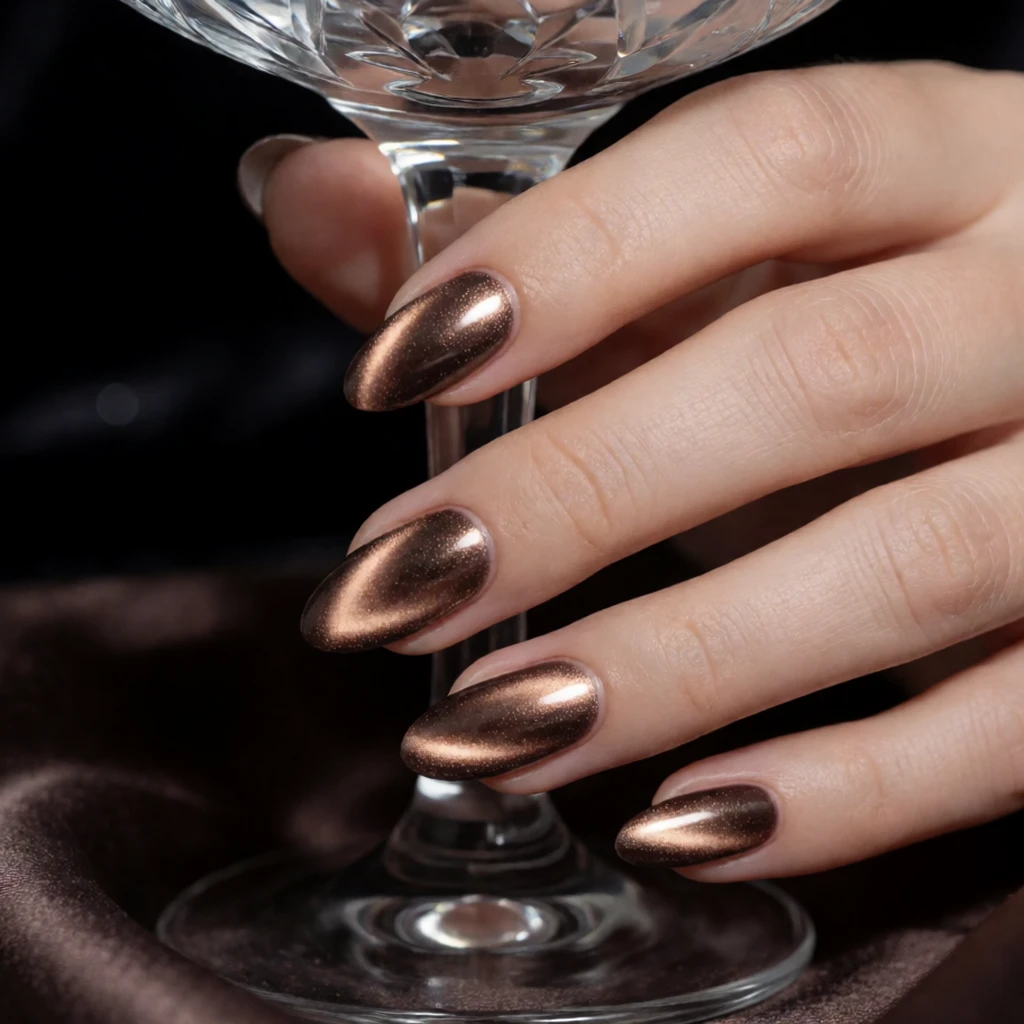 Espresso Glazed Nails
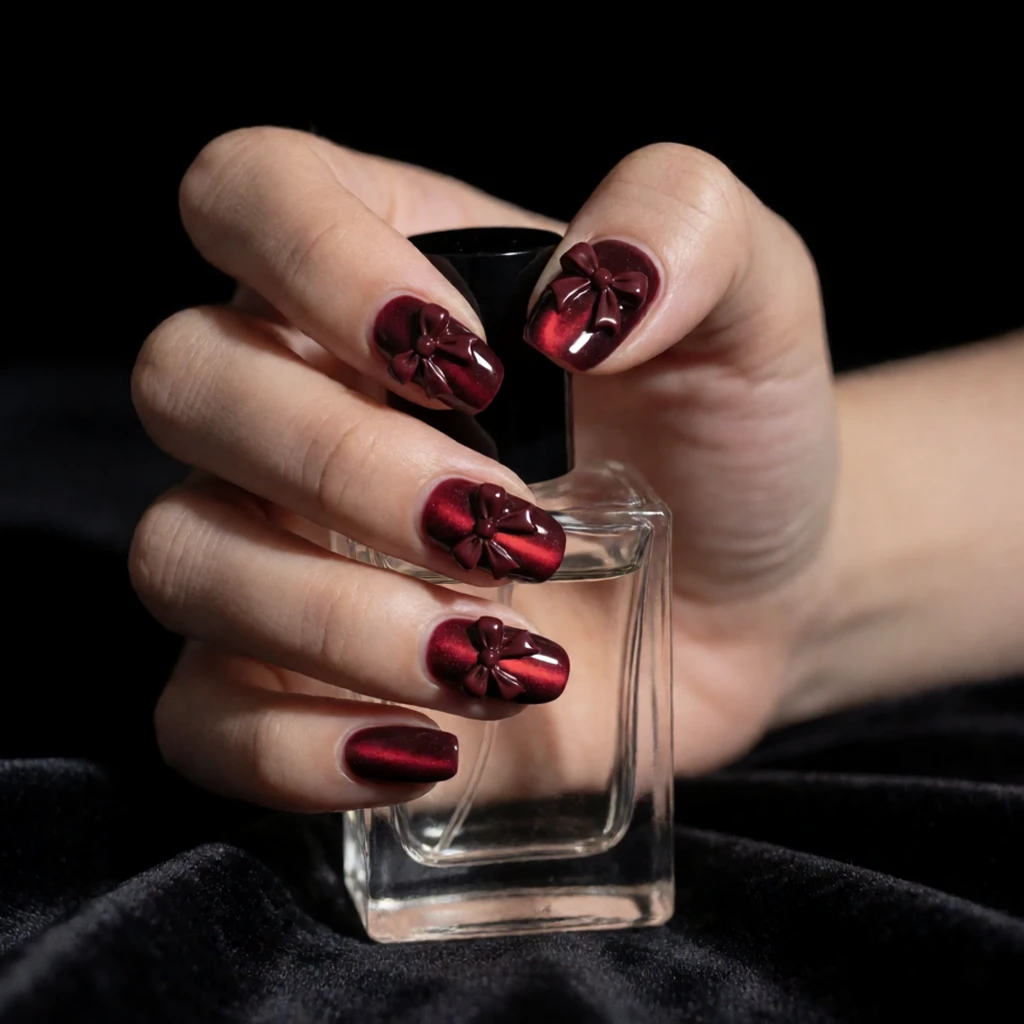 Burgundy Bow Nails
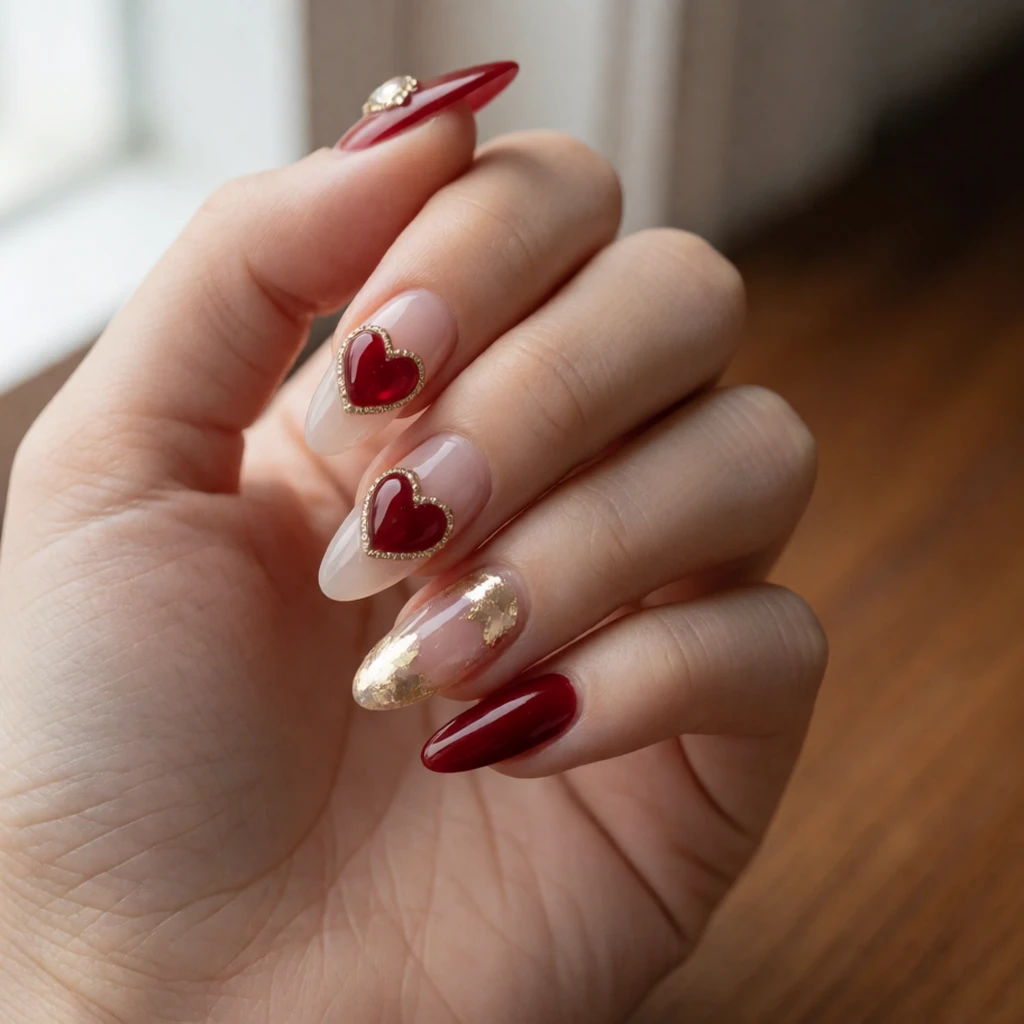 Deep Red Heart Nails
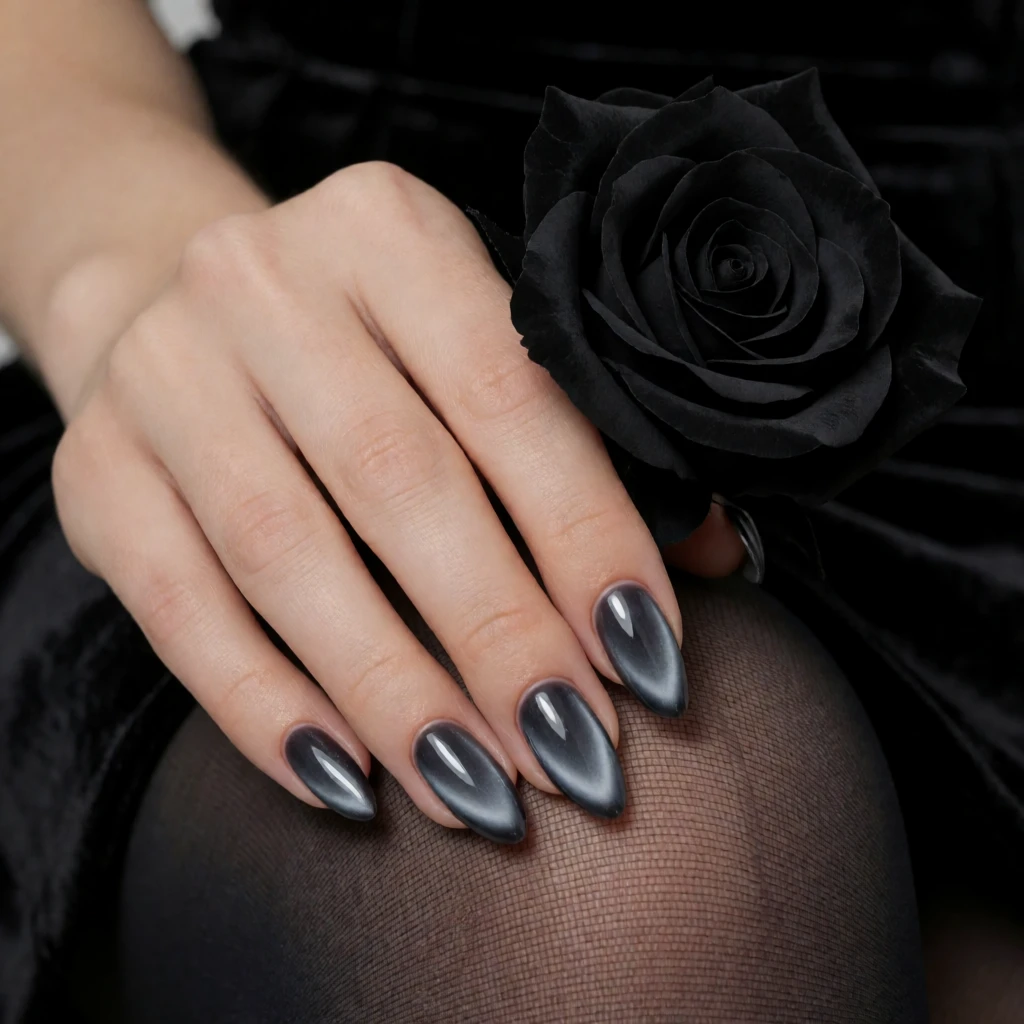 Smoky Grey Chrome Nails
Keep exploring
Related guides
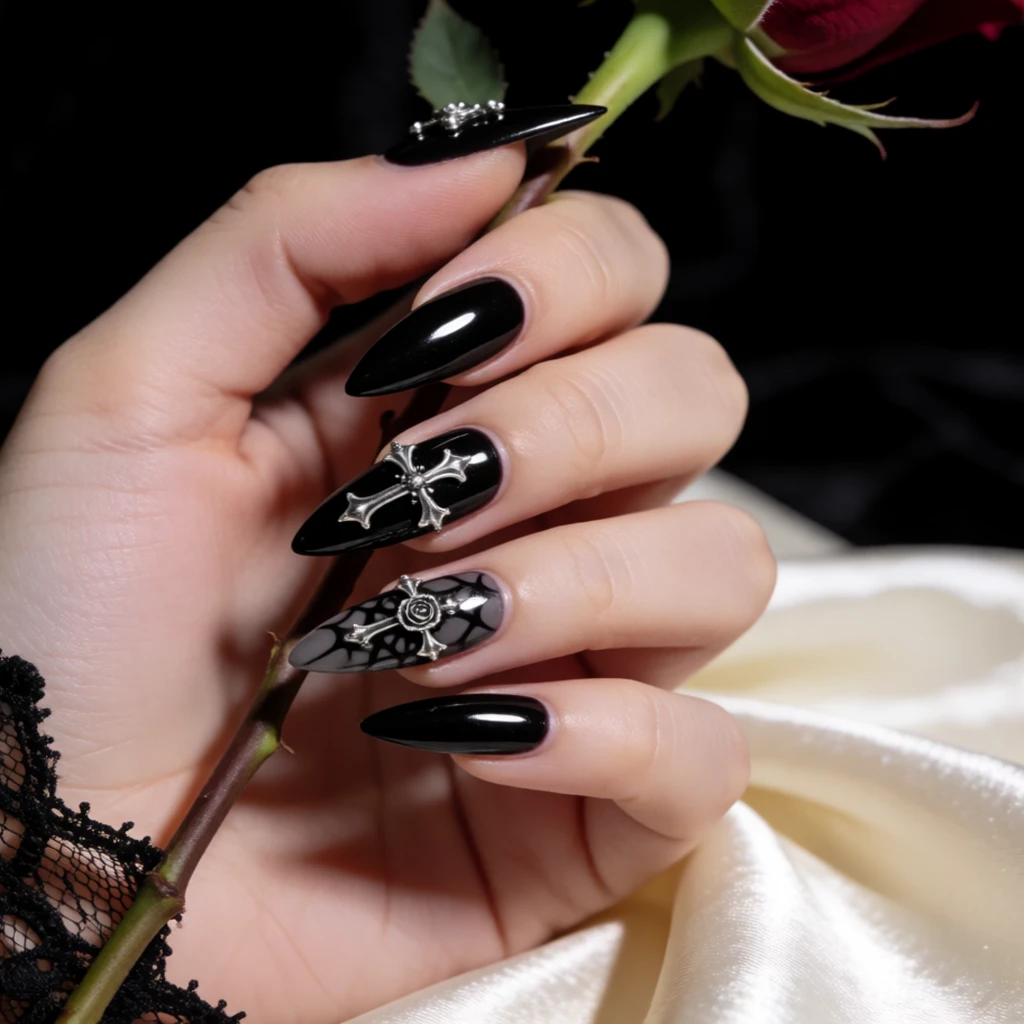 Goth & dark
Goth nails bring dark palette and deliberate motifs across all nails at once, while dark accent nails place the dark shade on just one or two fingers against a light base.
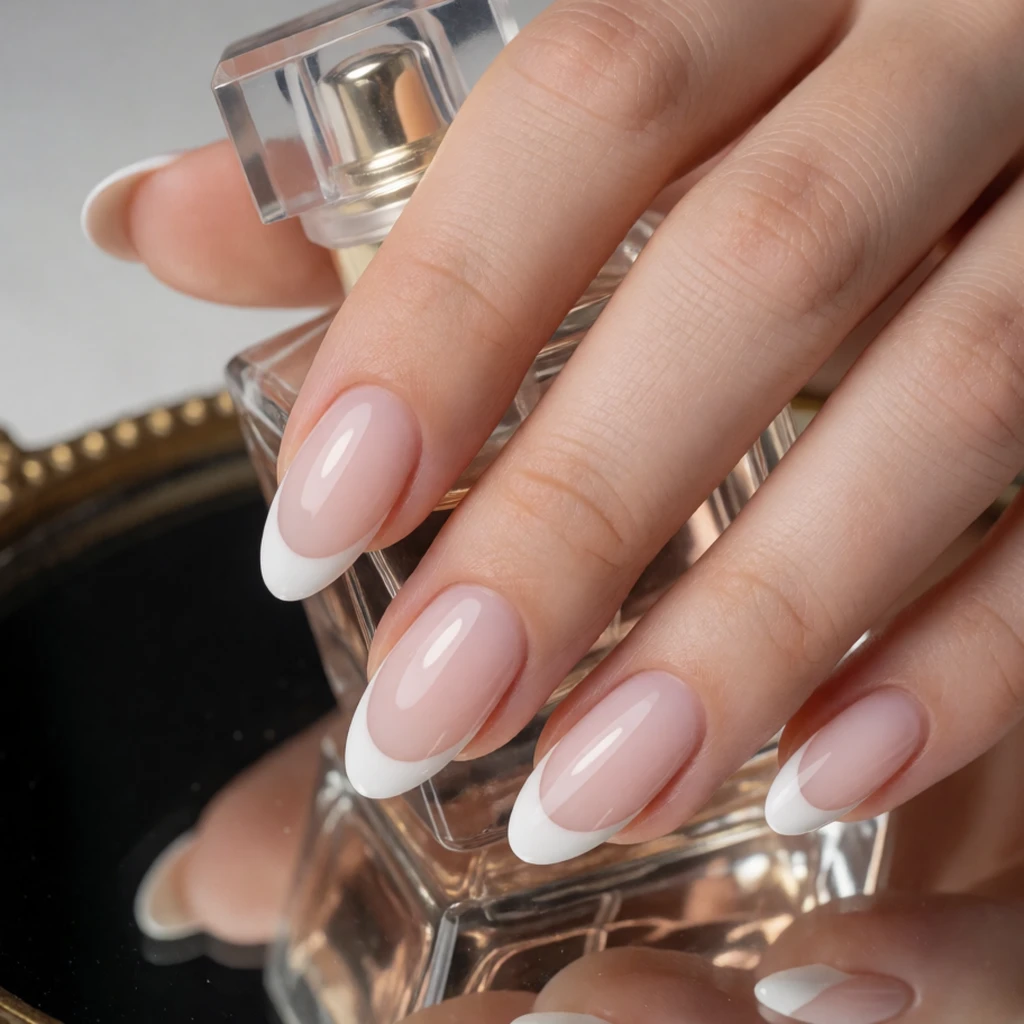 French tips
 create contrast within each nail between the base and tip, while a dark accent nail creates contrast between nails — the structural logic is different even when similar colours appear in both.
 Short & almond
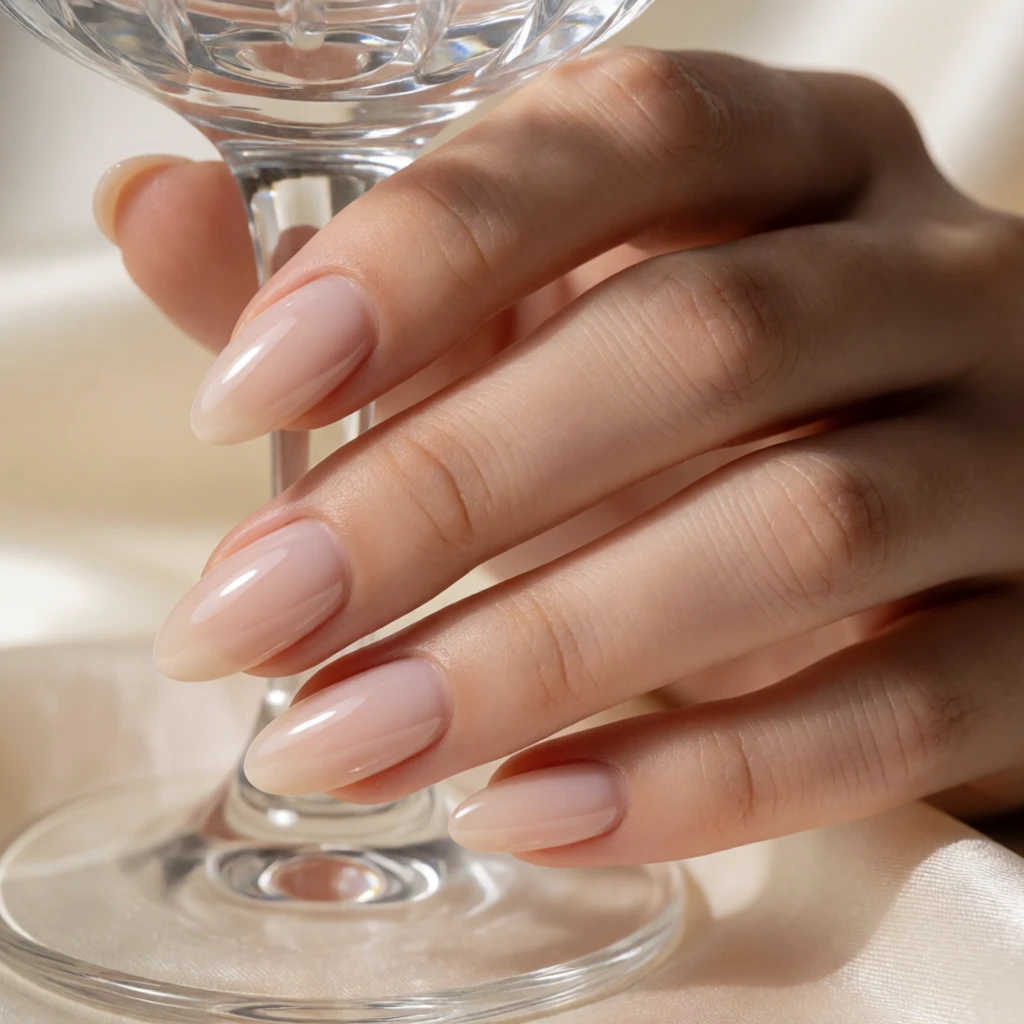
Short almond references typically use a single consistent colour across all nails; switching one nail to a significantly darker shade moves the look into accent territory rather than a tonal all-over look.
Questions
Which finger should the accent nail go on?
The ring finger is most common because it's visible at rest, but the middle finger gets more attention when the hand is open or gesturing. Try both and notice which sits more naturally in how you use your hands day to day.
Can I use two accent nails instead of one?
Yes — both ring fingers is a common variation that creates symmetry without overloading the hand with dark. More than two accent nails begins to shift toward a mixed manicure rather than an accent look.
Does the accent nail have to be a dark colour?
For this category, the contrast comes from the accent being noticeably darker than the base nails. A pop of a bright or metallic colour on one nail uses the same single-nail structure but sits in a different visual category.
How do I prevent the dark accent nail from looking like a mistake?
Repeating the accent on both ring fingers signals intention rather than a forgotten second coat. Keeping the finish consistent across the whole hand — all glossy or all matte — also makes the contrast read as planned.
Generated references, not tested products. How shopping links work.