A French tip is a small design area with room for different colors and outlines. Compare these twenty concepts by tip width, edge direction, base shade and accent placement. The references include short oval, round and squoval shapes.
Choose the details you want to discuss with your nail artist: a thin white edge, a pastel tip, one metallic line or a small accent. These are design concepts, not product tests or a step-by-step manicure tutorial. Match the reference to your own starting length and preferred shape.
1. Classic white curved tips

The curved white edge is the main detail. Compare the tip width with the amount of visible base so the design still reads clearly at a short length.
2. Vanilla cream round

A warm cream tip gives a softer color direction than bright white. Keep the base and edge distinct enough to see the boundary.
3. Rose-pink tips
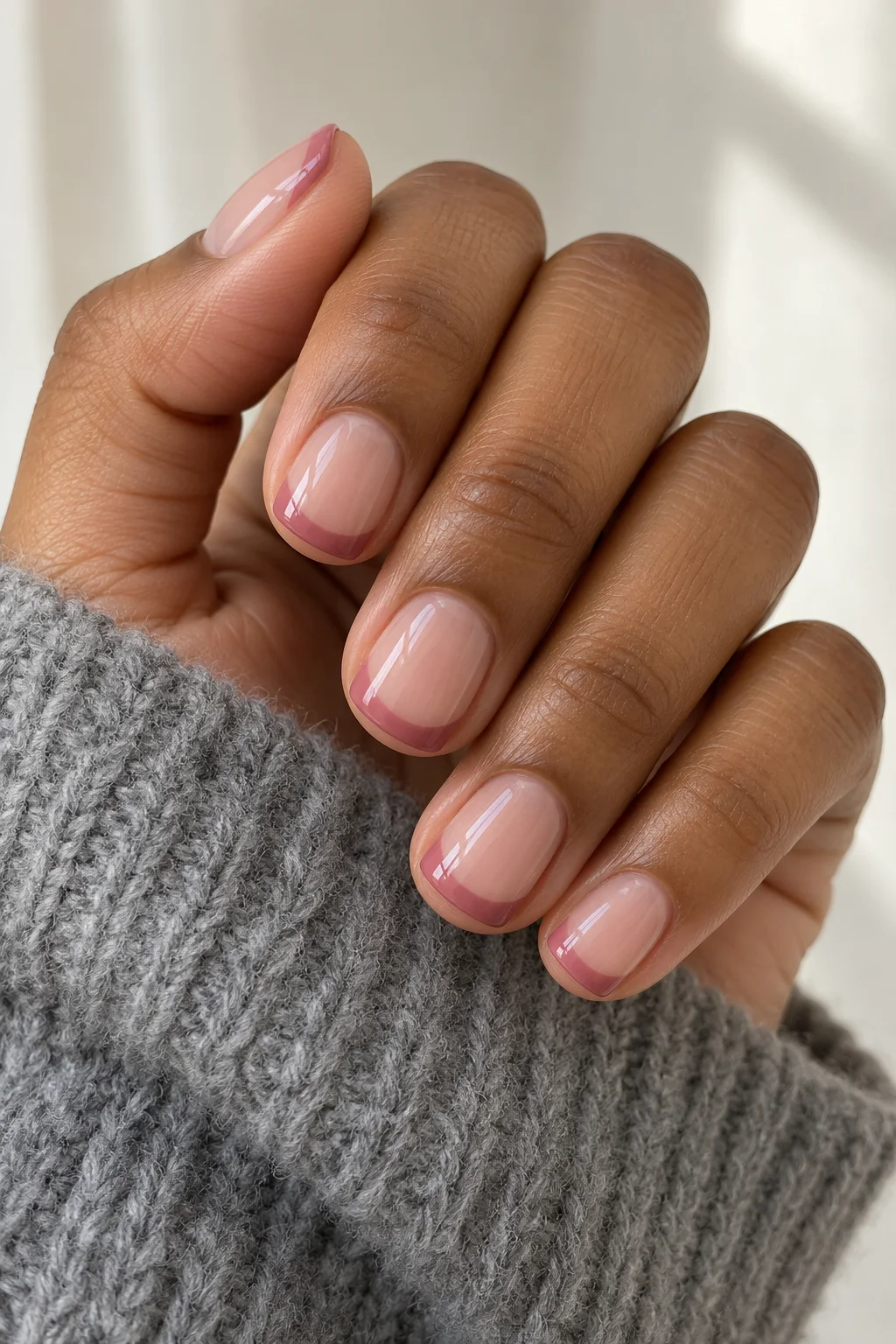
The pink is confined to the edge rather than covering the whole nail. Use a clear reference to distinguish a pink tip from a pink base.
4. Espresso tips
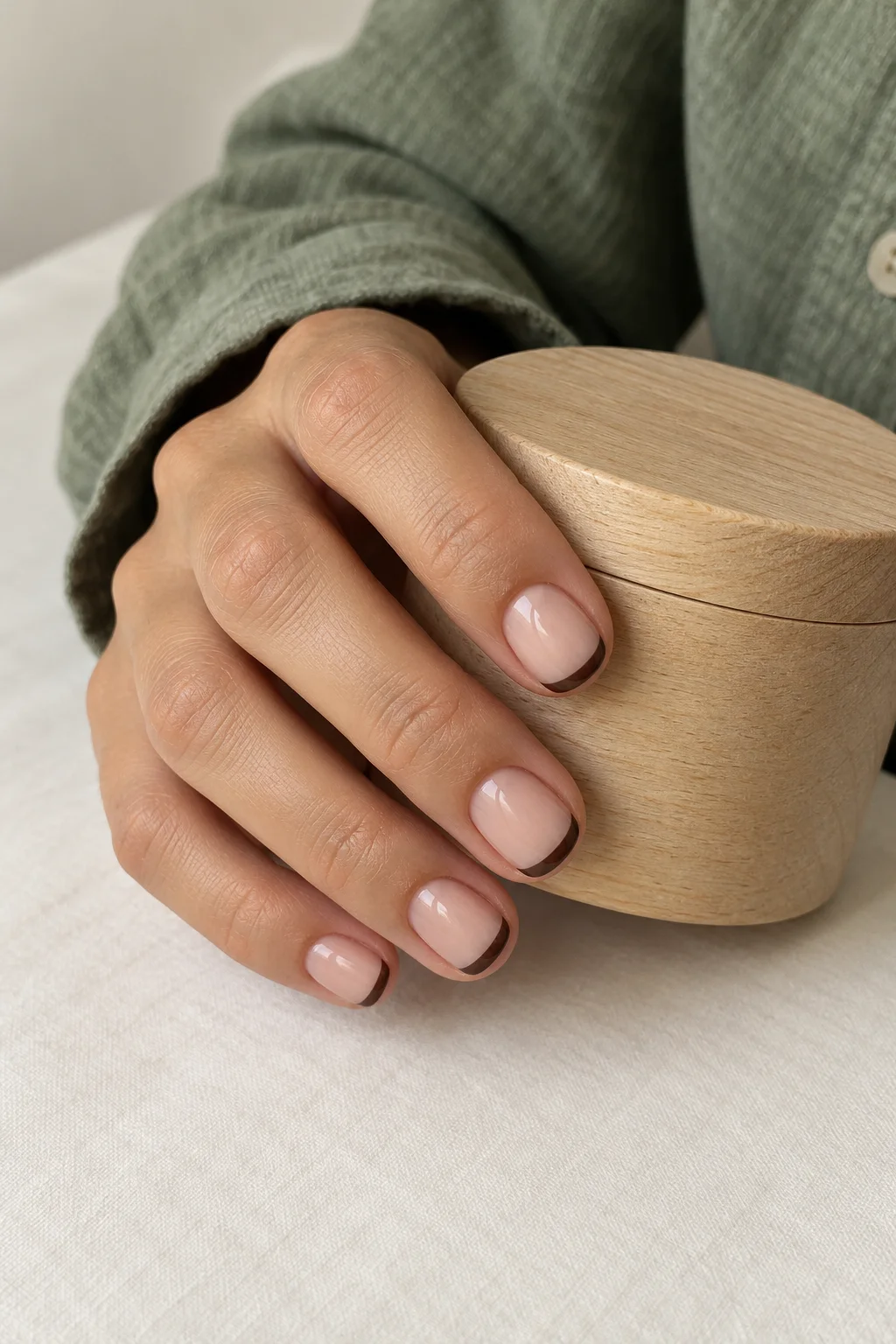
Espresso creates a dark edge with a brown tone. Compare it in natural light with black if the warmth is the part you want to preserve.
5. Cherry-red tips

A narrow red edge adds a small amount of strong color. Keep the width consistent across the visible nails for a deliberate repeated detail.
6. Burgundy squoval tips
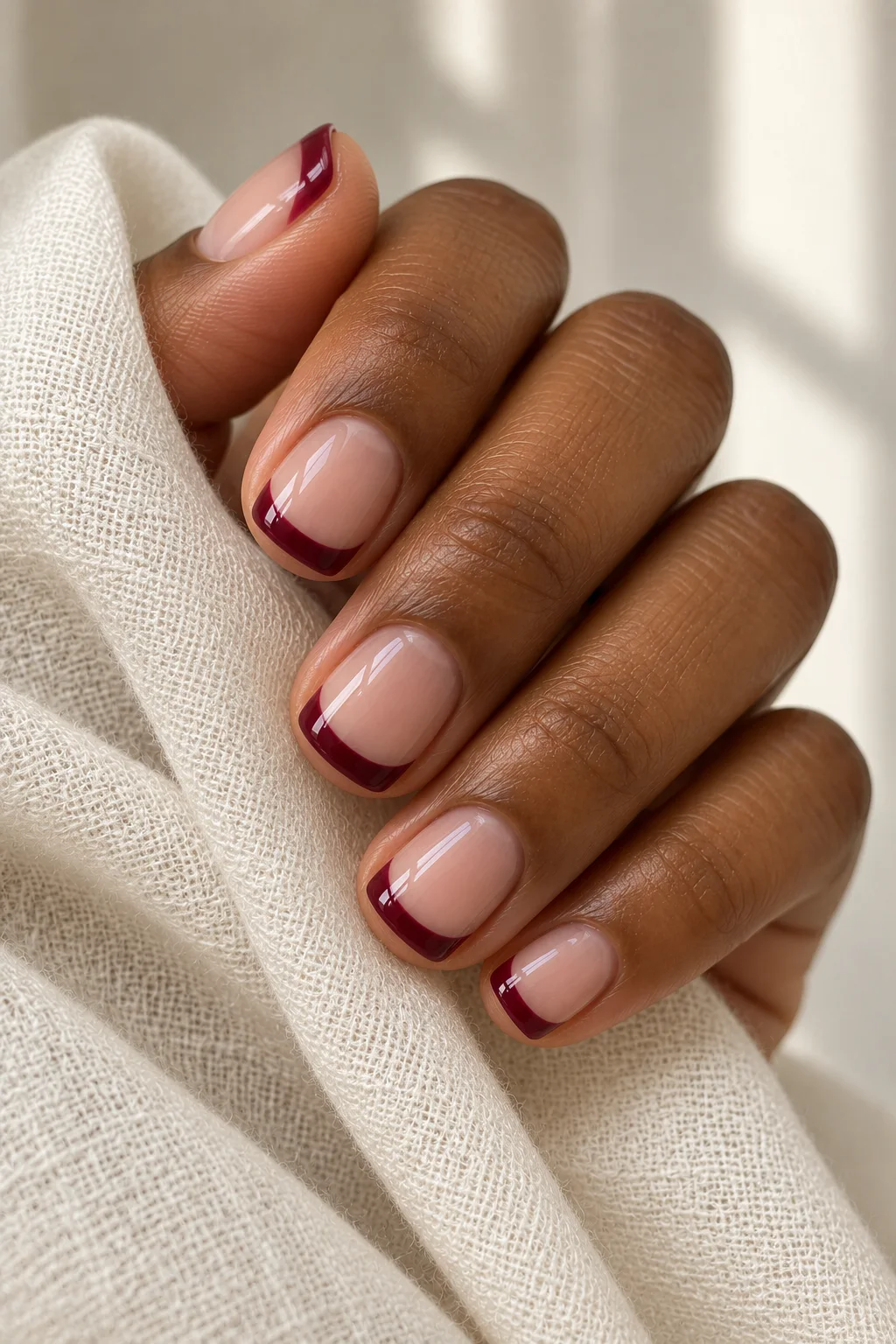
A squoval outline gives the dark wine edge a slightly straighter shape. Choose this reference for its edge and corners rather than assuming an oval version will look identical.
7. Navy oval tips

Navy is a dark-color option with a visible blue undertone. The photograph should show enough light to make the color legible.
8. Olive-green tips

Olive brings an earthy green to the edge. Keep it separate from the paler sage option when choosing a reference shade.
9. Sage-green tips
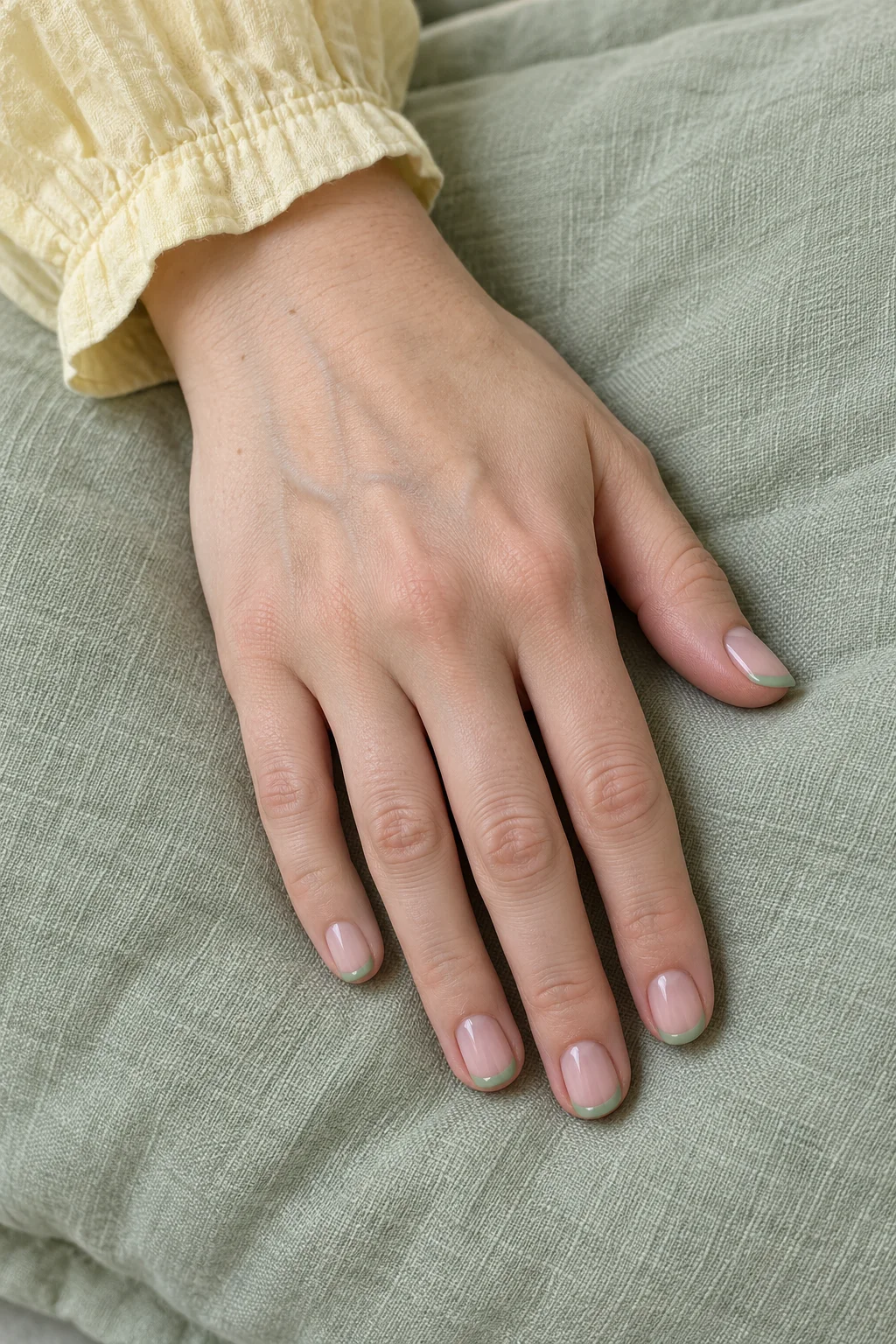
A fine sage edge gives a quieter green direction. Leave the center of each nail simple so the tip remains the focal detail.
10. Powder-blue tips
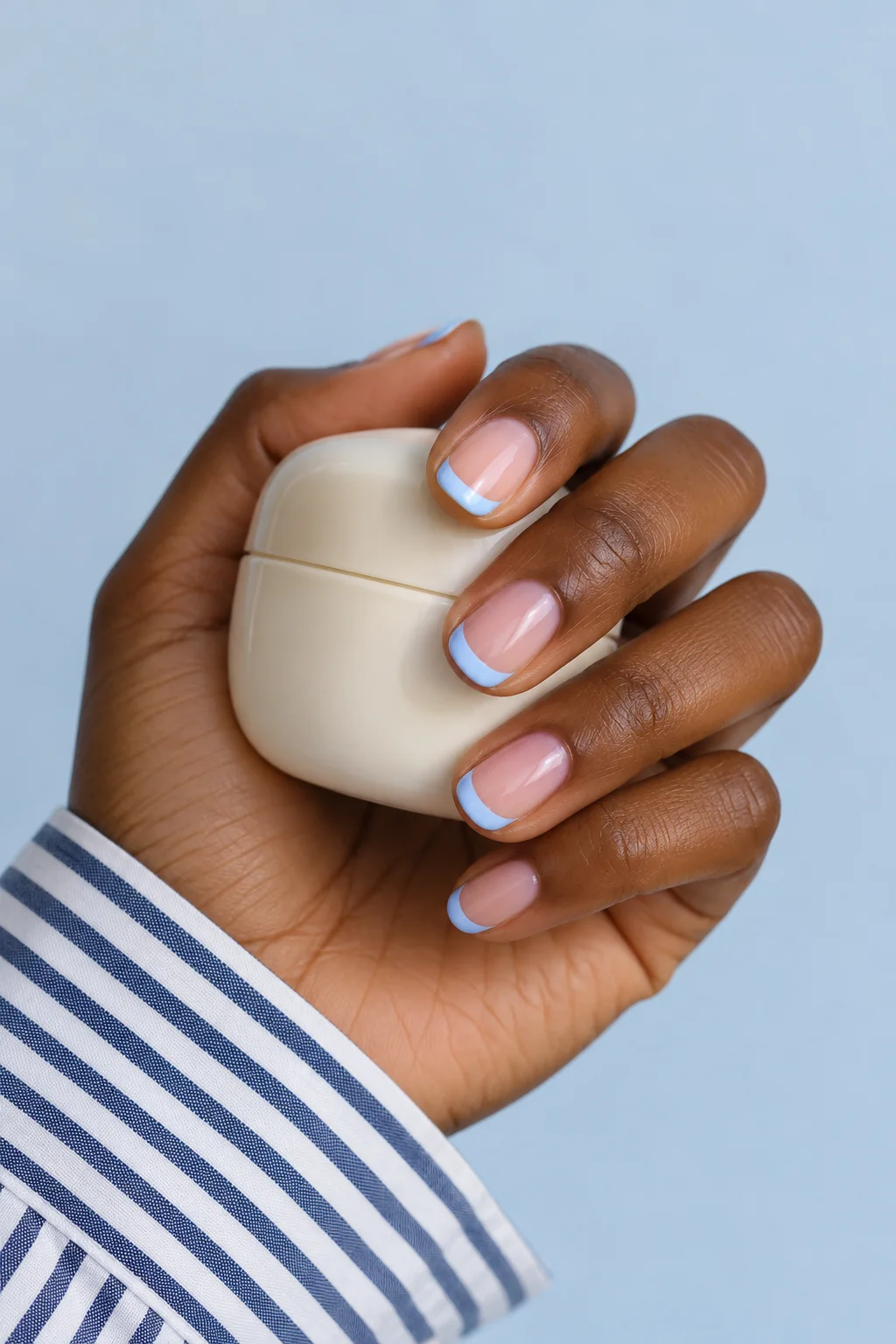
Powder blue adds a light pastel edge. This is a single-color tip design rather than a mixed pastel set.
11. Lavender tips
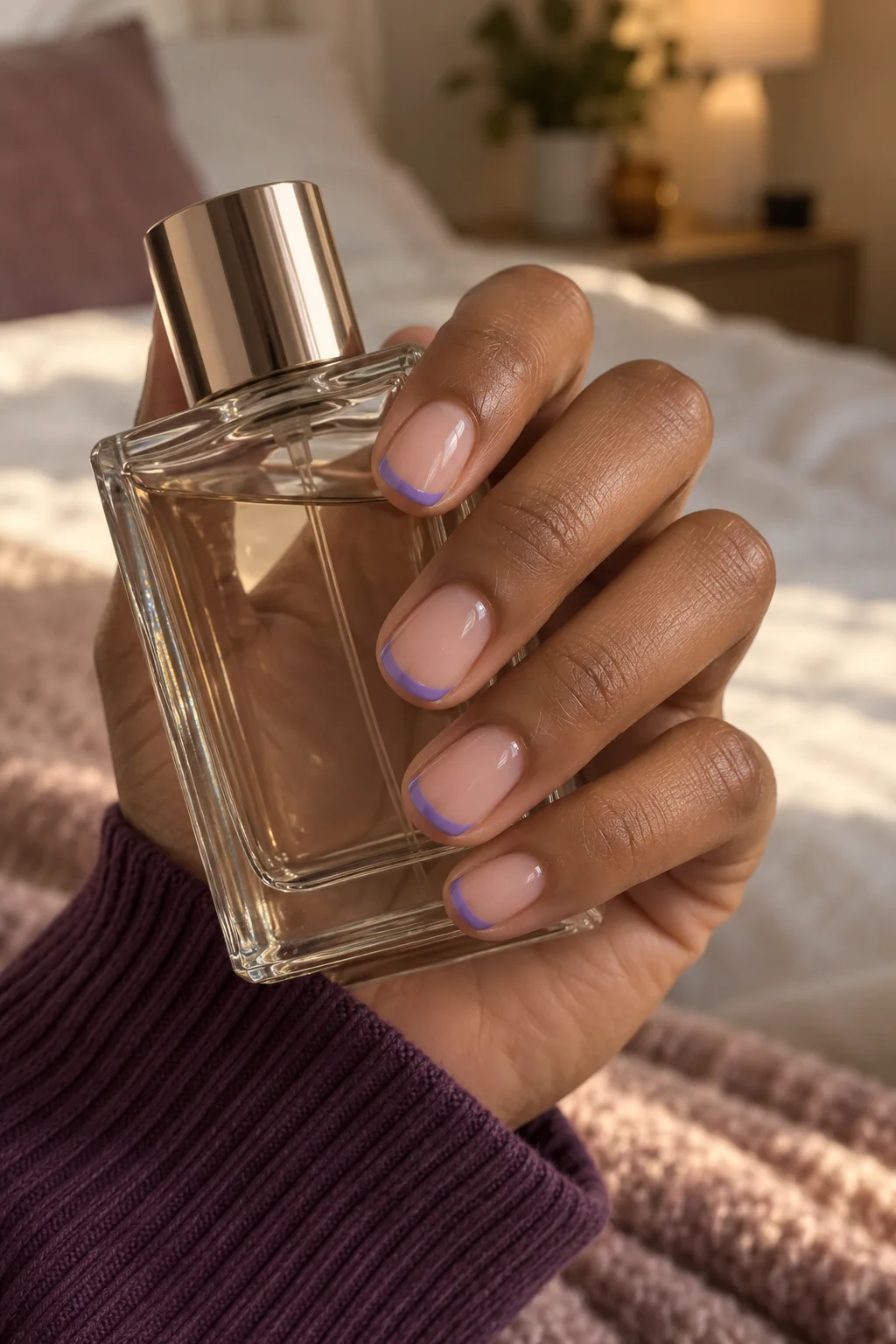
A lavender edge is useful when you want a clearly purple pastel. Neutral lighting helps distinguish it from pink.
12. Peach tips

Peach creates a warmer pastel direction. Compare the base and tip together so the edge does not disappear against a similar shade.
13. Silver edges

A slim silver edge introduces a cool metallic detail. Keep the reference restrained; a broad reflective band gives a different effect.
14. Gold edges
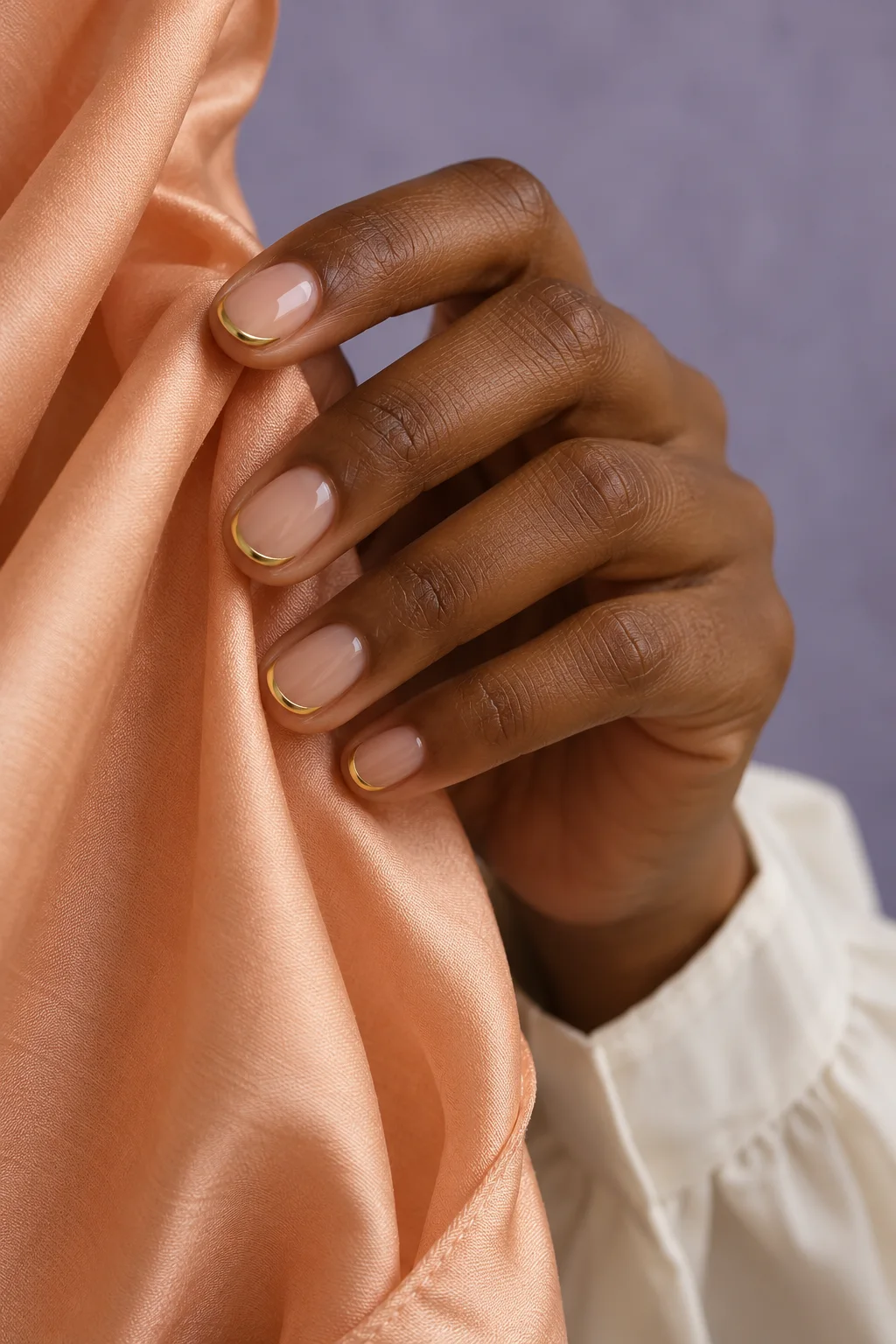
Gold gives the metallic edge a warmer tone. Use a narrow line if you want the base to remain visually dominant.
15. Double white lines
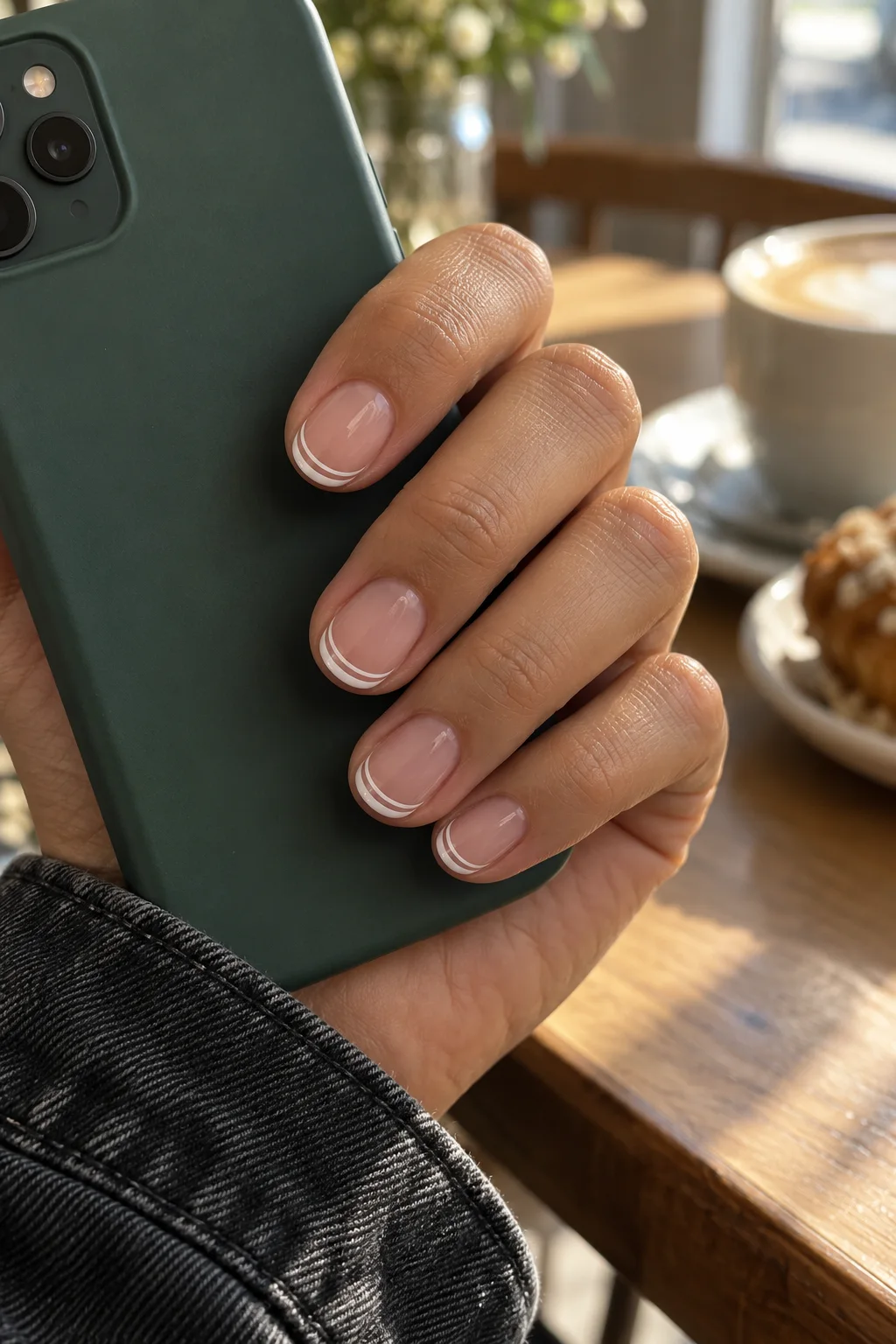
Two fine white lines with a small gap make a different pattern from one solid tip. Leave enough separation for both curves to read.
16. Angled white tips
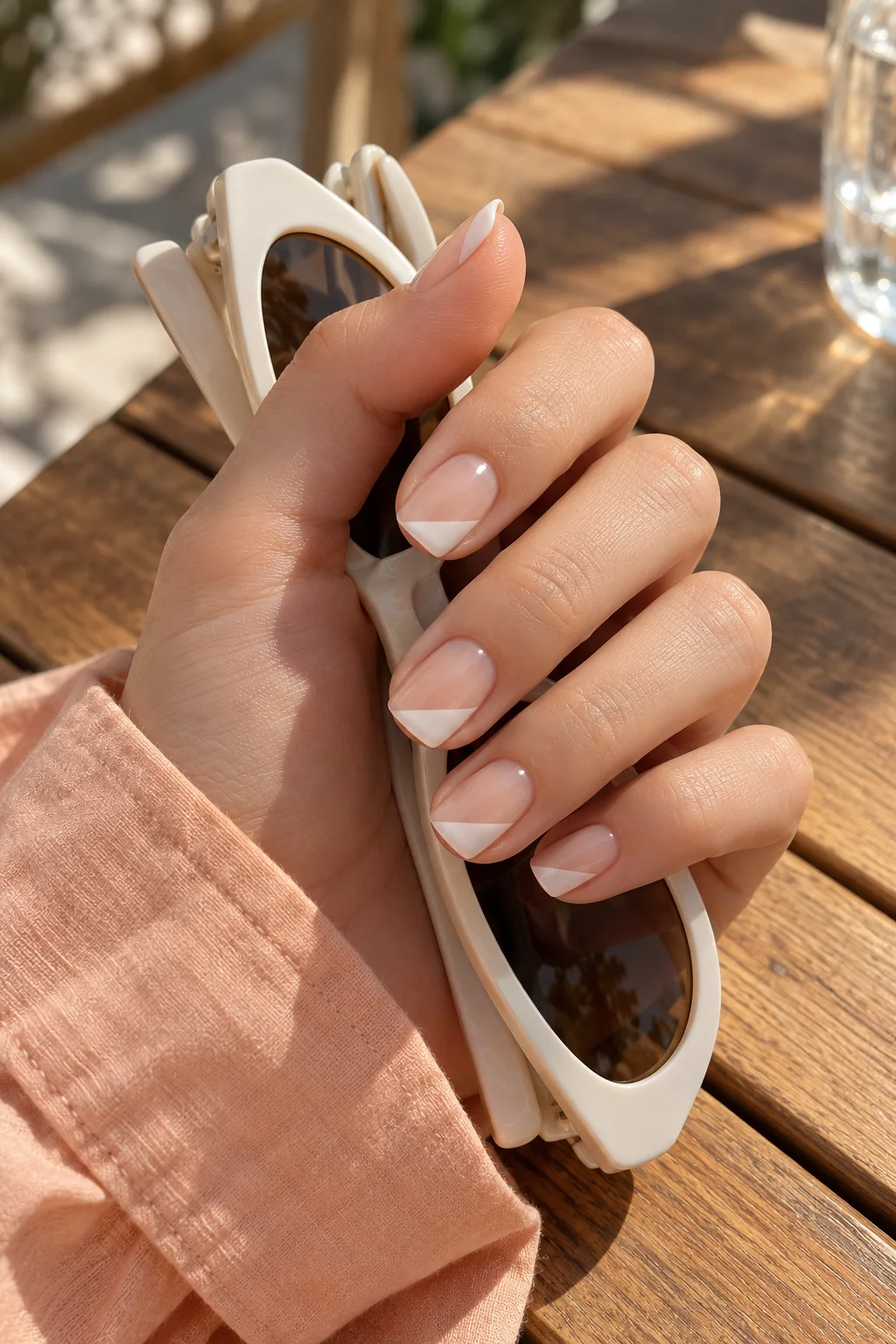
The edge runs diagonally across a corner. Match the direction across the set if you want an orderly, repeated pattern.
17. Side-sweep pink tips

This variation carries the tip slightly down one side. A clear side view helps communicate how far you want that sweep to extend.
18. White tips with tiny dots
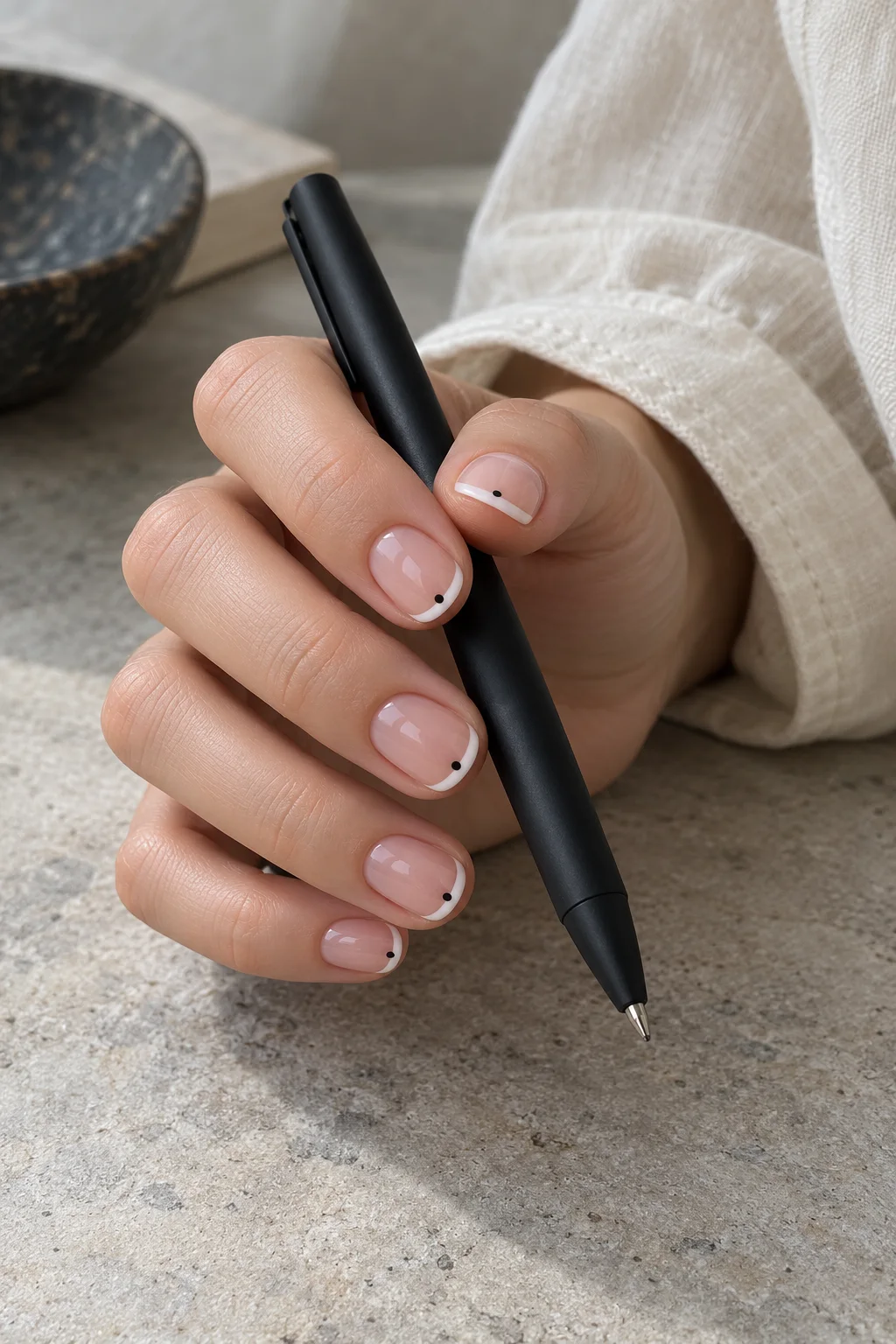
A tiny dot beneath each white edge adds one repeated accent. Keep its placement consistent rather than filling the base with a dotted pattern.
19. Daisy accent French
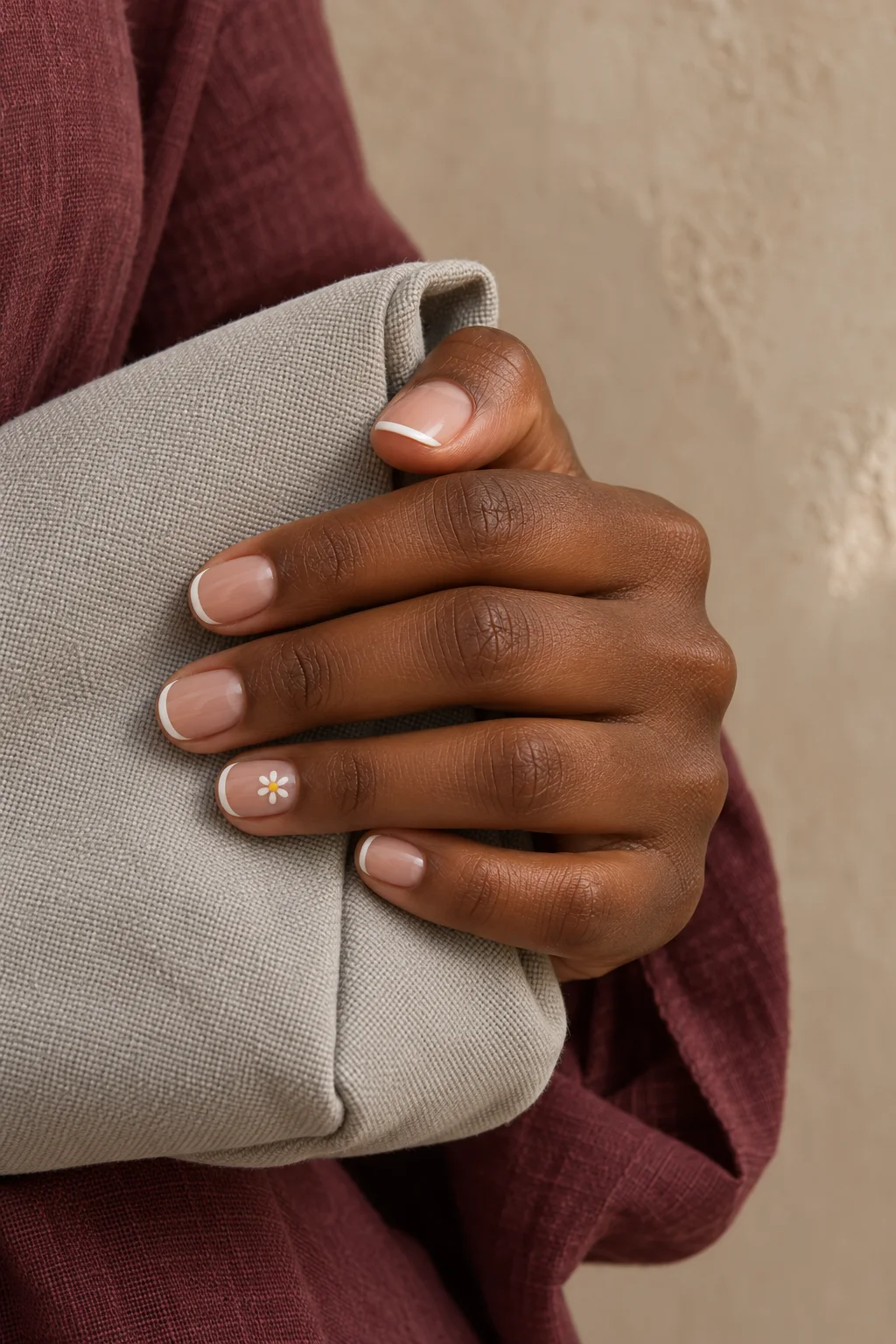
Keep the fine white edges and use one small daisy as an accent. The other nails stay plain so the flower remains a single focal detail.
20. Alternating black and white tips
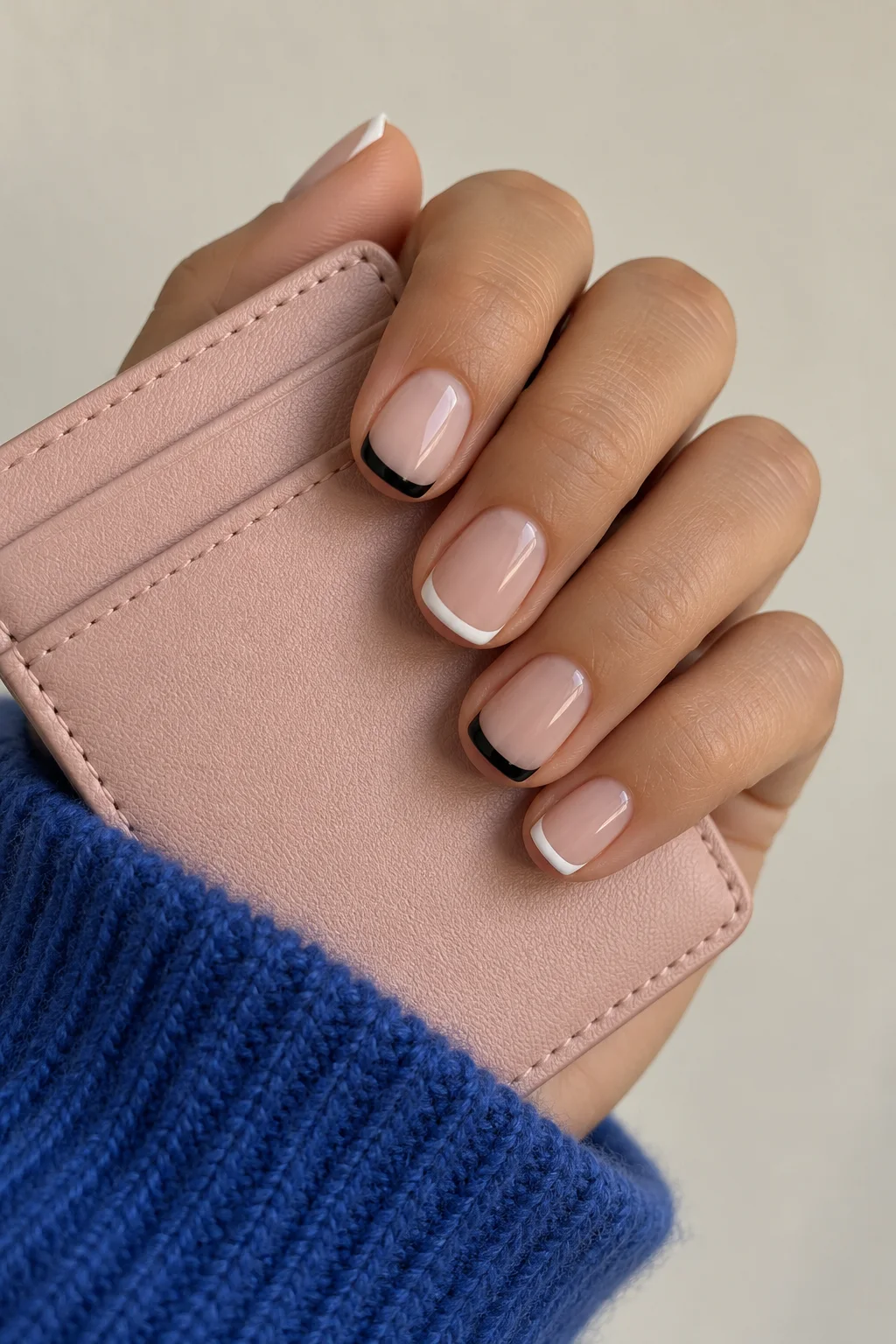
Alternate the edge colors while keeping the same base and tip width. This separates the two-color idea from a full black-and-white nail-art pattern.
Keep your reference specific
Note the base shade, tip width and accent you like. If you combine two ideas, explain which detail comes from each image.